Sample information |
|
| Picture |
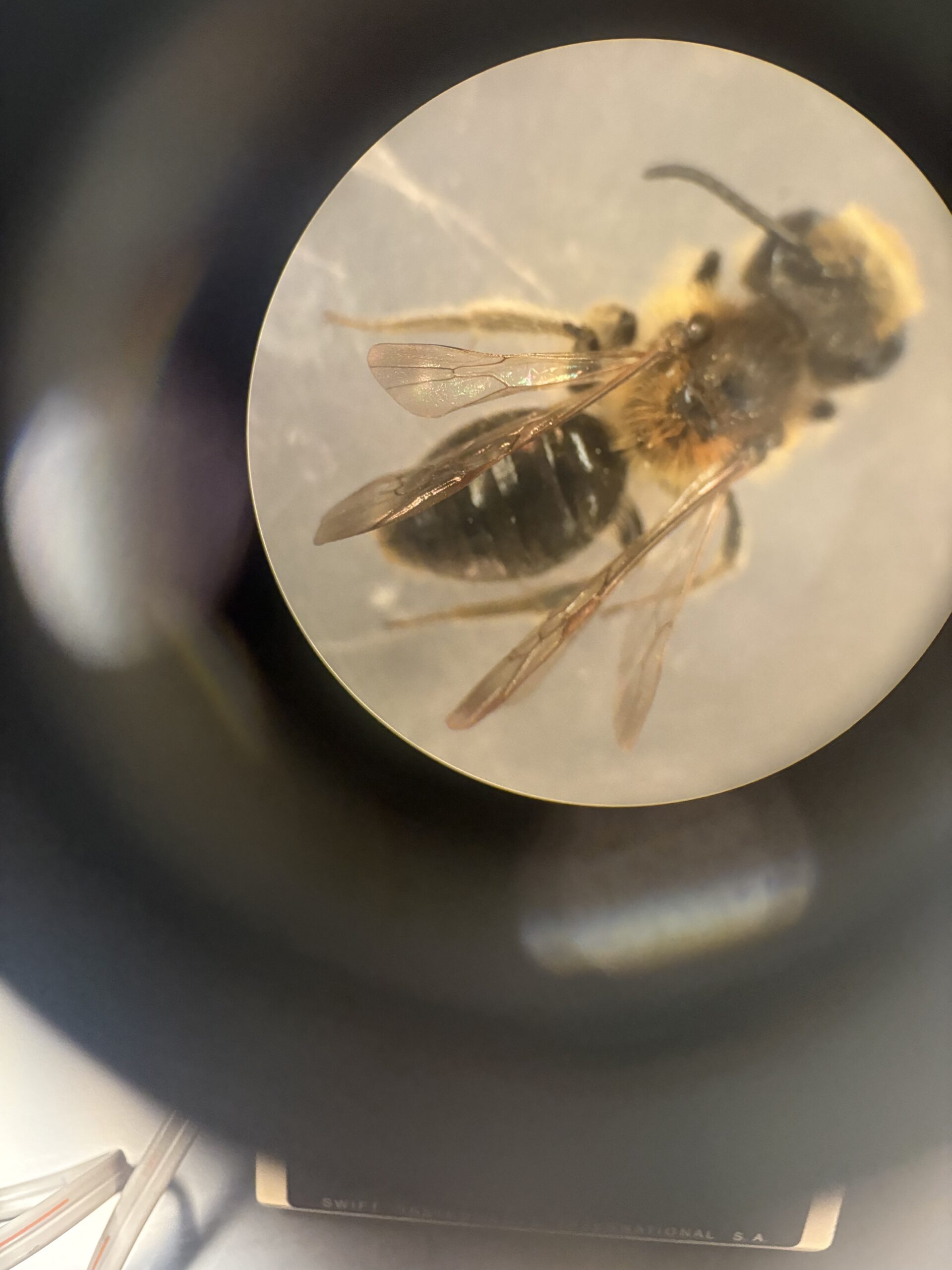
|
|---|---|
| Location | No map location data available. |
| Collection date | 04/20/2026 |
| Captive / Cultivated? | Wild-caught |
| Group | Thomas Jefferson High School for Science and Technology |
| Observations | This bee was found in one’s backyard and was collected during clear spring morning weather. |
| Putative identification | Arthropoda Insecta Hymenoptera Andrenidae Andrena |
Methods |
|
| Extraction kit | DNeasy (Qiagen) blood and tissue kit |
| DNA extraction location | Abdomen |
| Single or Duplex PCR | Single Reaction |
| Gel electrophoresis system | MiniPCR |
| Buffer | TBE |
| DNA stain | SYBR Safe |
| Gel images |
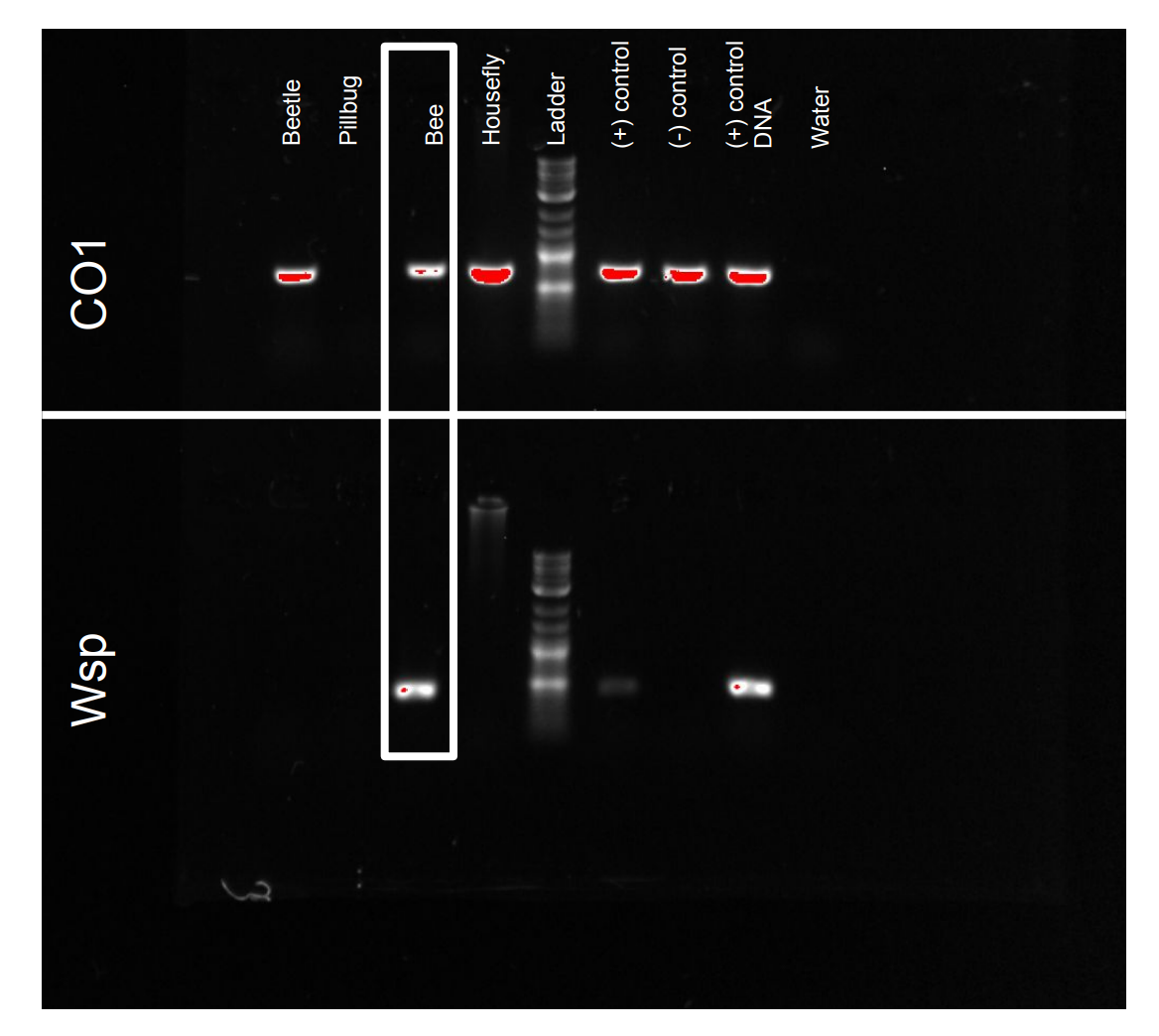
|
| Protocol notes | DNA extraction: I made sure to closely follow the protocol and crush up the arthropod really well, only extracting the abdomen. Analysis: Positive and negative controls worked successfully. Sample had both a CO1 band and a WSP band, signifying the presence of the Wolbachia gene. |
Results |
|
| Wolbachia presence | Yes |
| Confidence level | Medium |
| Explanation of confidence level | The positive control was visible and the negative control is not (expected; means no contamination) so the gel electrophoresis is accurate. However, the band for the positive control for the Wolbachia gene is lighter than the expected band, which is why I have medium confidence in my results. |
| Wolbachia 16S sequence | |
| Arthropod COI sequence | Download AB1
|
| Summary | The Andrena was found to be postive for Wolbachia. |
 (no title)
 Yellowjacket Wasp
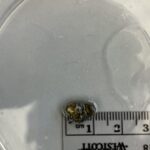 Pillbug
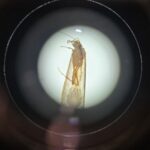 Umpachene Falls Caddisfly
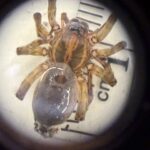 Wolf Spider