Sample information |
|
| Picture |
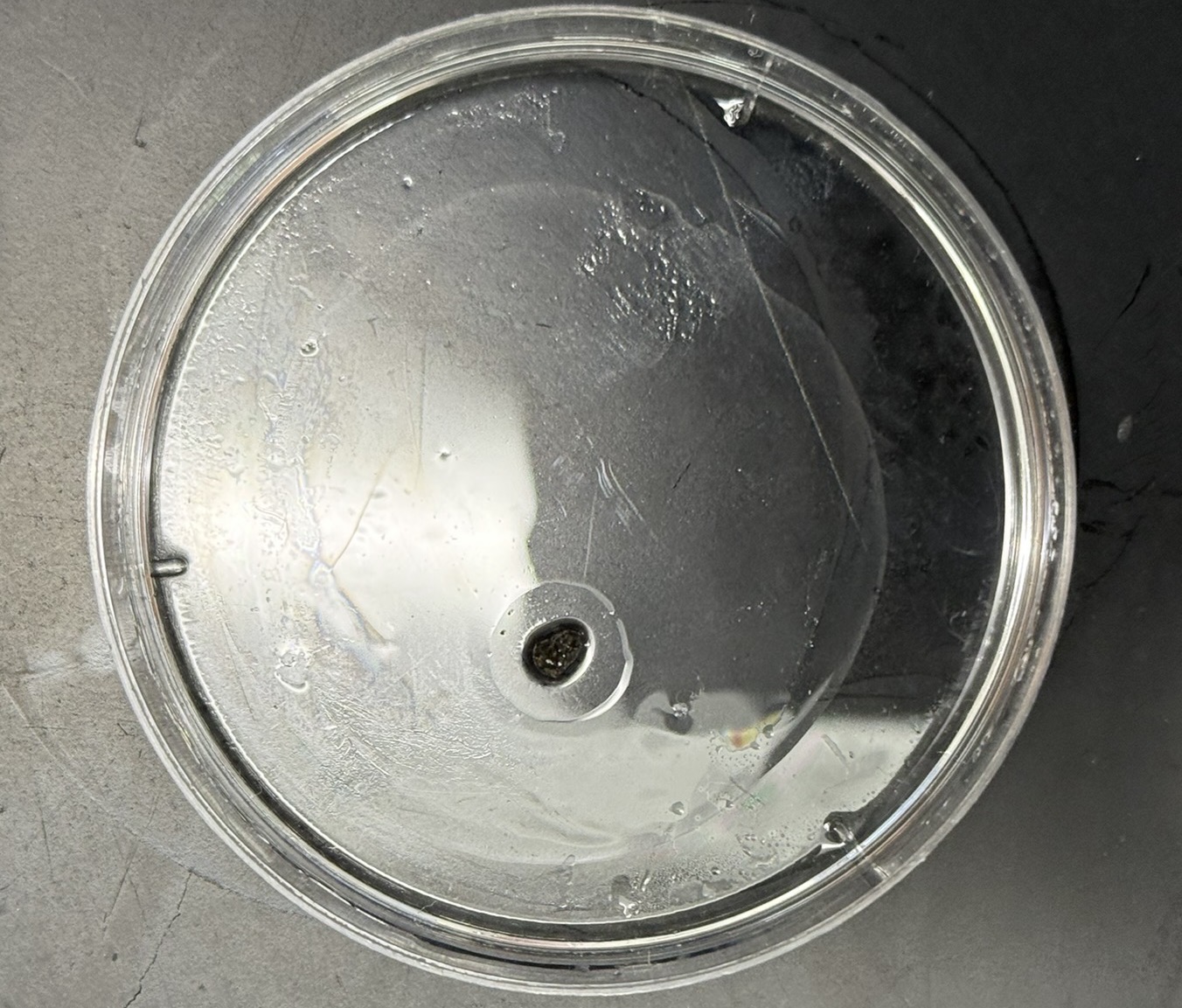
|
|---|---|
| Location | Approximate location: 38.88, -76.99 |
| Collection date | 09/05/2026 |
| Captive / Cultivated? | Wild-caught |
| Group | Edmund Burke School |
| Observations | Caught indoors, during the summer. Temperature was 80ºF/27ºC. It was caught in an urban environment. There were no wings present, 8 legs, separated eyes, non-modified foreleg and hind leg and 2 body regions. It was brown-black in color. |
| Putative identification | Arthropoda Arachnida |
Methods |
|
| Extraction kit | DNeasy (Qiagen) |
| DNA extraction location | Whole arthropod |
| Single or Duplex PCR | Single Reaction |
| Gel electrophoresis system | MiniOne |
| Buffer | TBE |
| DNA stain | GelGreen |
| Gel images |
|
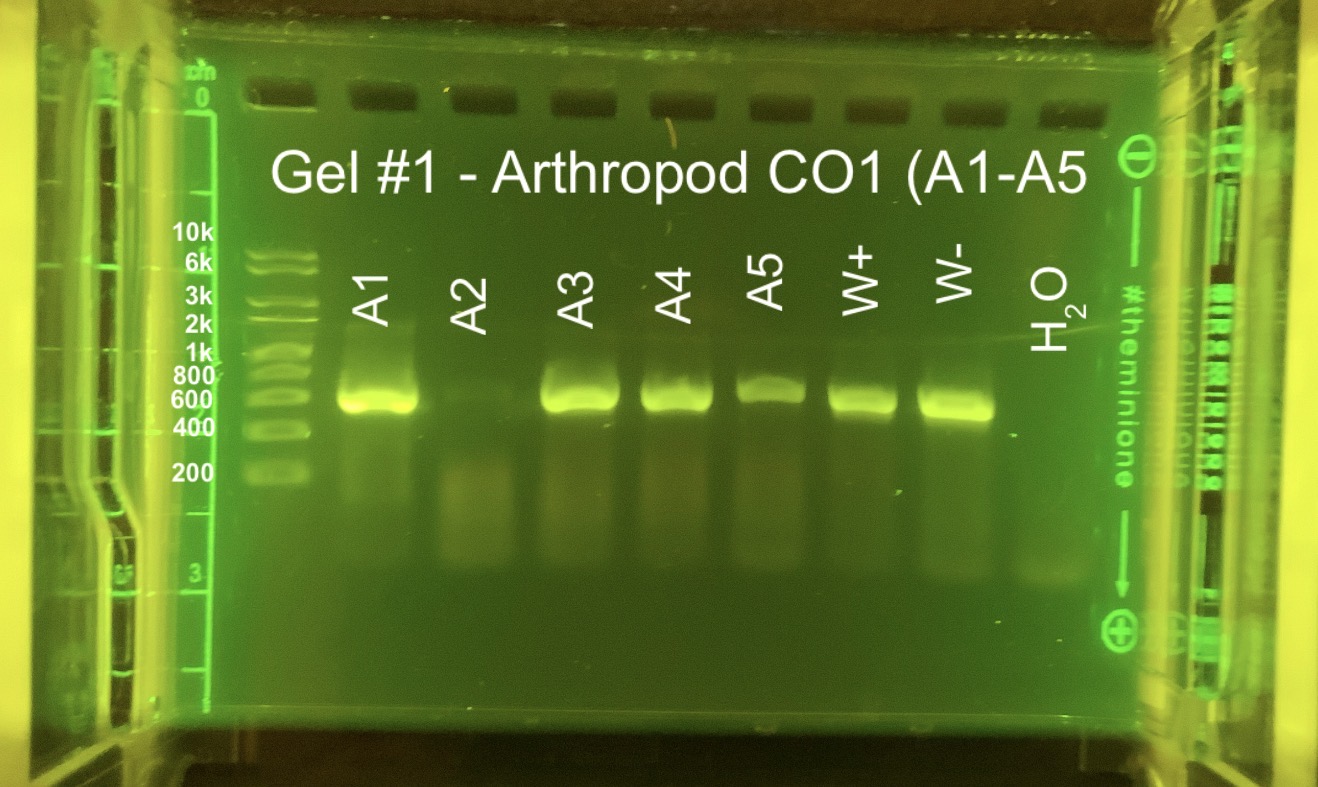
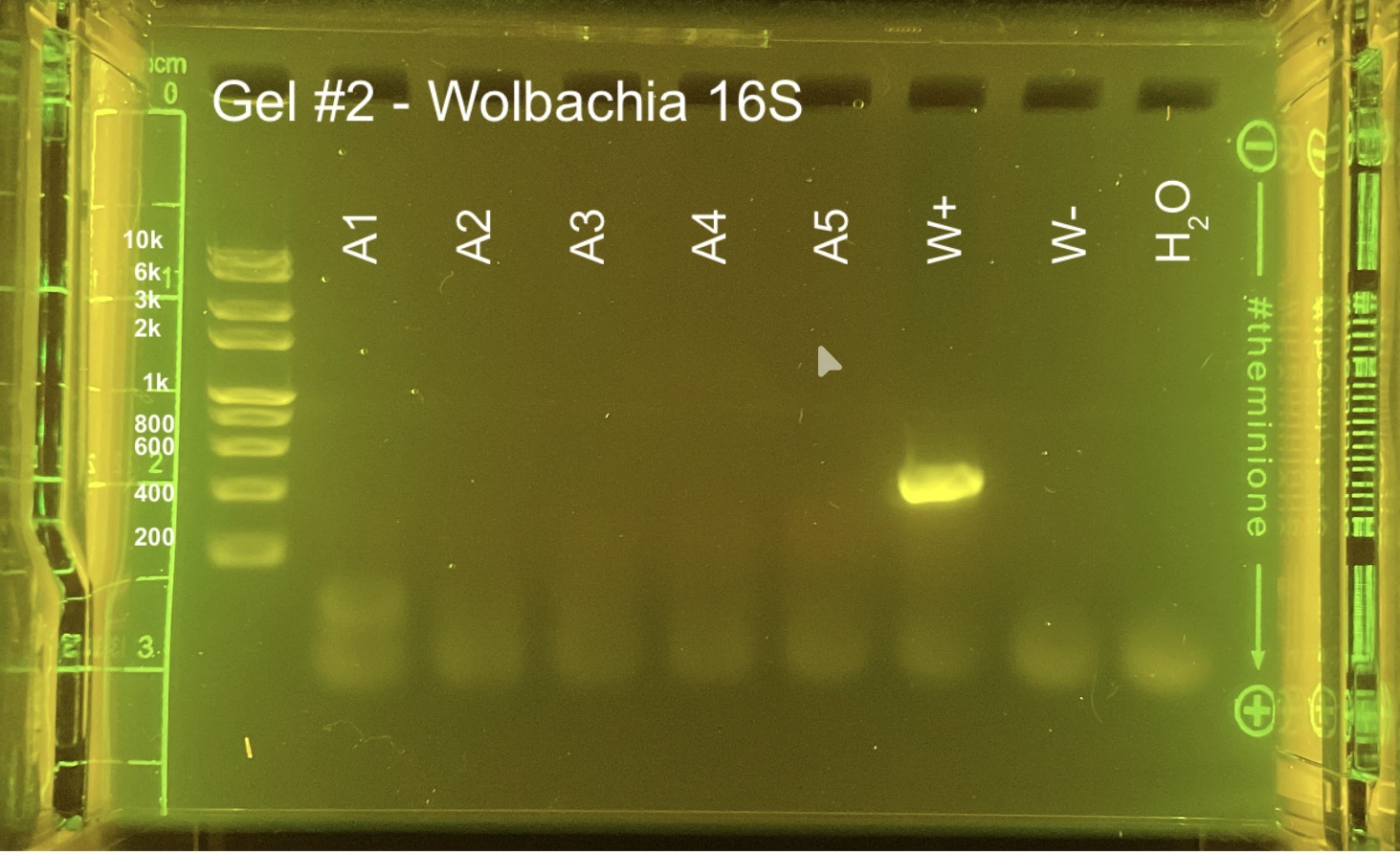
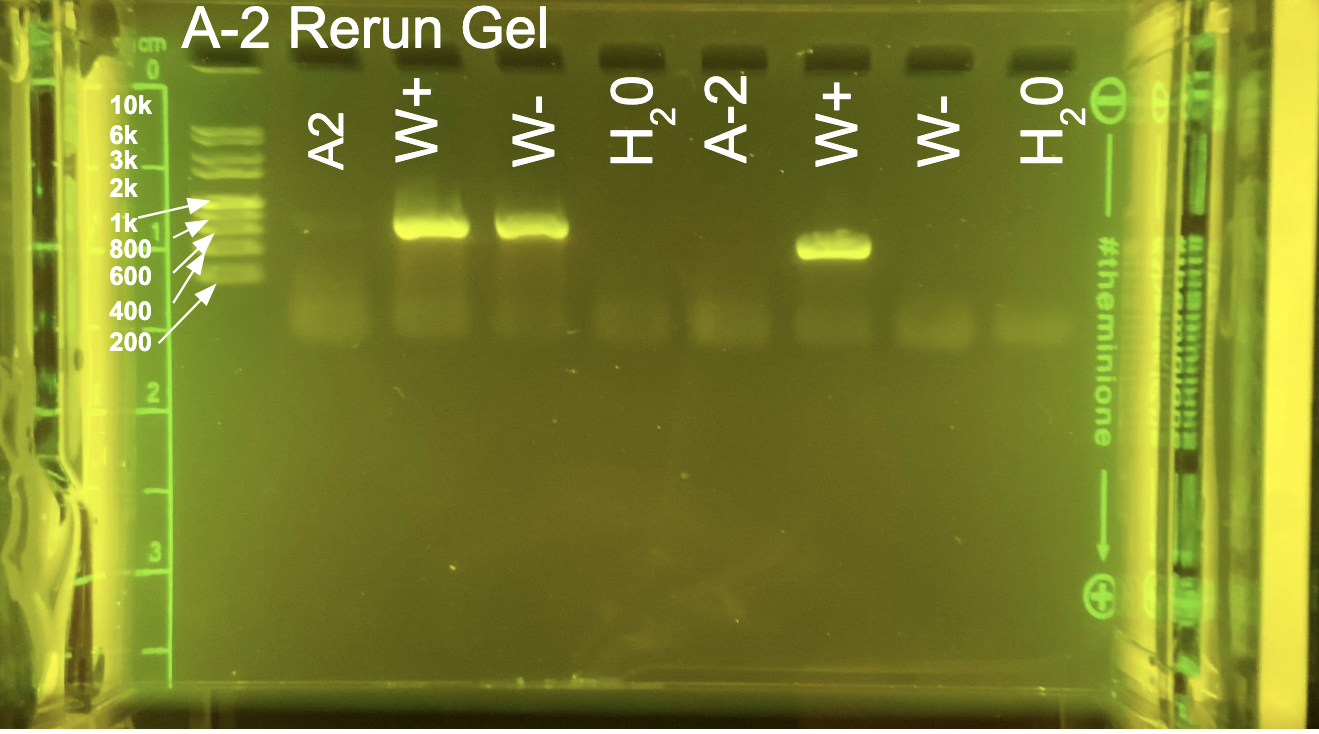
| Protocol notes | DNA Extraction: There were no mistakes made during DNA extraction, but due to the extremely small size of the sample there is a high likelihood that there was too little material to obtain ample DNA in order to amplify and sequence the CO1 and 16s genes. PCR: The PCR failed to amplify a large enough amount of DNA, mostly likely due to initial specimen size. A second PCR was run in order to guarantee that it was not a mistake in that process, so the problem most likely arose in the initial DNA extraction. Gel Electrophoresis CO1: A-2 is the in the third lane of the CO1 gel and presented no clear banding, including on rerun. The Wolbachia positive and negative control both banded which showed that the CO1 gene was successfully amplified in both, and the water control did band so there was no contamination. The sample was in lane 3 and the W+ control was in lane 7, W- was in lane 8, and water was in lane 9. Gel Electrophoresis Wolbachia: A-2 in the third lane of the Wolbachia gel and presented no clear banding. The Wolbachia positive control did band which showed that the 16s gene was successfully amplified during the PCR. The Wolbachia negative and water control did not band which showed that there was not contamination. The sample was in lane 3, W+ control was in lane 7, W- control was in lane 8, and water control was in lane 9. Repeat Gel: Both the CO1 and 16s gels were repeated in order to make certain that there was not a mistake during the PCR. There was similar results with very faint banding for CO1, but not opaque enough to be a guaranteed positive result. This indicates that the PCR may have potentially been able to amplify some of the gene, but there was not enough DNA to begin with to provide us a useable sample for the PCR and gel. Because of this we cannot be certain of anything more specific than the order of the specimen. The sample was in lanes 2 and 6, W+ control was in lanes 3 and 7, W- control was in lanes 4 and 8, and water was in lanes 5 and 9. |
Results |
|
| Wolbachia presence | Unknown |
| Confidence level | Low |
| Explanation of confidence level | The positive and negative Wolbachia controls successfully banded in the CO1 gel in both the initial and rerun, and the positive control successfully banded in the Wolbachia in both the initial and rerun. The DNA extraction is most likely the part of the process that failed. As that was the initial step everything else was based off of, there is no way to made certain of what the genus and species of the specimen was. |
| Wolbachia 16S sequence | |
| Arthropod COI sequence |
|
| Summary | |
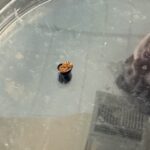 Curinus Coeruleus
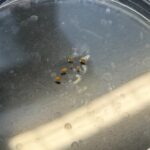 Aphid
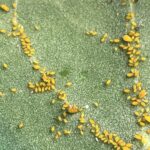 (no title)
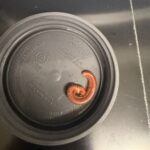 Rusty Millipede
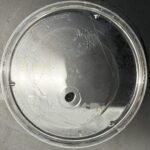 A-2 Arachnida