Sample information |
|
| Picture |
|
|---|---|
| Location | Approximate location: 33.91, -118.23 |
| Collection date | 04/27/2024 |
| Captive / Cultivated? | Wild-caught |
| Group | California Academy of Mathematics and Science |
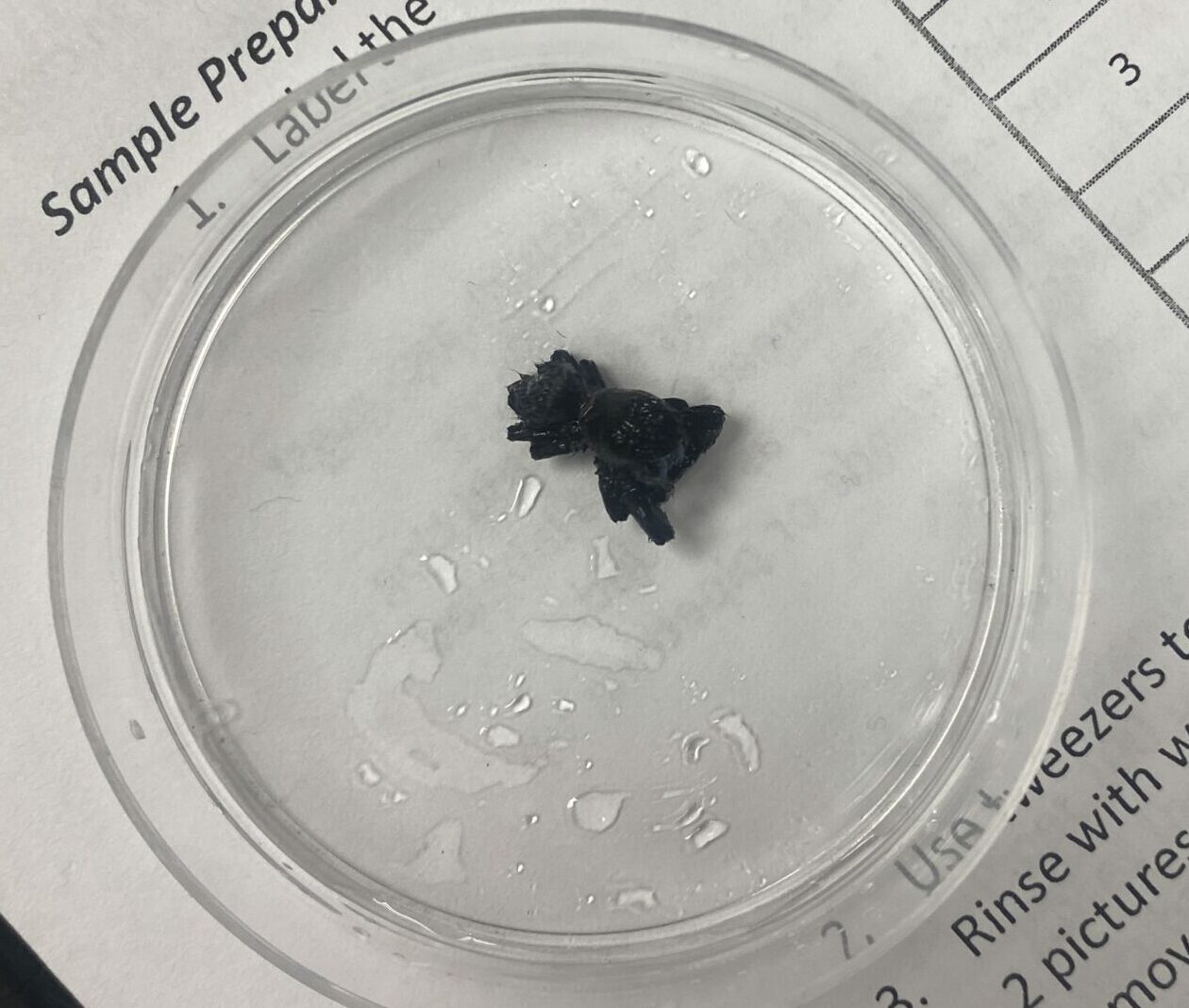
| Observations | This jumping spider was caught as it crawled along a wall inside a household. |
| Putative identification | Arthropoda Arachnida |
Methods |
|
| Extraction kit | tweezers |
| DNA extraction location | Abdomen |
| Single or Duplex PCR | Single Reaction |
| Gel electrophoresis system | Standard electrophoresis system |
| Buffer | TAE |
| DNA stain | UView |
| Gel images |
|
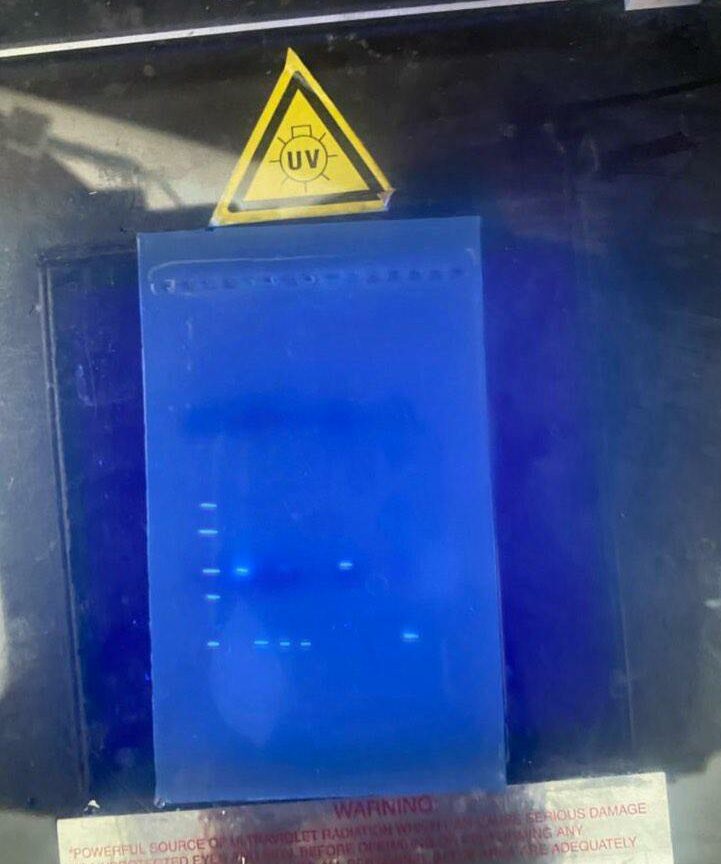
| Protocol notes | Ran gel for 60 minutes at 115 V and 60amps and visualized under UV light. |
Results |
|
| Wolbachia presence | Yes |
| Confidence level | High |
| Explanation of confidence level | Our confidence level that the jumping spider has Wolbachia because there is a matching band in lane 3(jumping spider) and lane 9(positive arthropod control) proving that there is a presence of Wolbachia in both. |
| Wolbachia 16S sequence | |
| Arthropod COI sequence |
|
| Summary | The Arachnida was found to be postive for Wolbachia. |
 Millipede
 Brown Widow
 (no title)
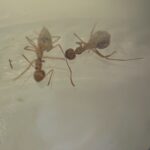 Texas Carpenter Ant
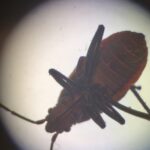 Boxelder Bug (Hemiptera)