Sample information |
|
| Picture |
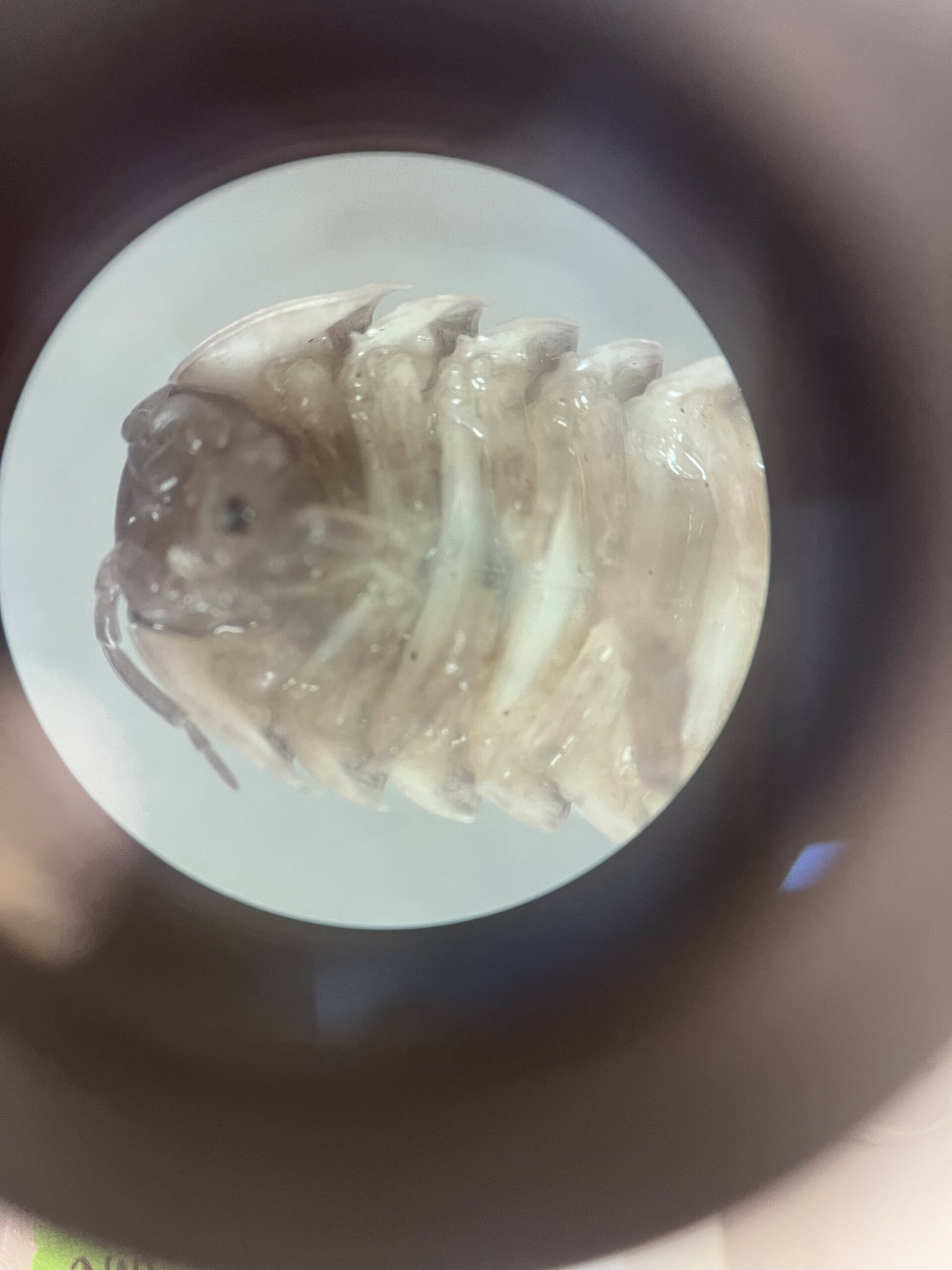
|
|---|---|
| Location | Approximate location: 37.80, -122.42 |
| Collection date | 09/09/2025 |
| Captive / Cultivated? | Wild-caught |
| Group | Galileo Academy of Science and Technology |
| Observations | It’s habitat seems to be that of dark damp areas under bushes rocks, and surrounding plants. |
| Putative identification | Arthropoda Diplopoda |
Methods |
|
| Extraction kit | BABEC |
| DNA extraction location | Partial abdomen |
| Single or Duplex PCR | Duplex Reaction |
| Gel electrophoresis system | MiniPCR |
| Buffer | 1X TAE |
| DNA stain | GelGreen |
| Gel images |
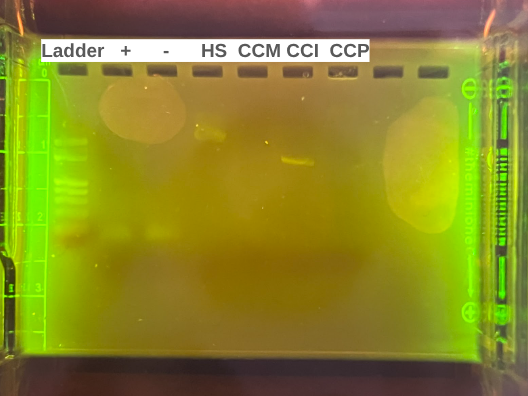
|
| Protocol notes | Used BABEC protocols. |
Results |
|
| Wolbachia presence | No |
| Confidence level | Low |
| Explanation of confidence level | We are not confident that there is no Wolbachia inside our Diplopoda as our positive and negative controls did not act as we expected them to do.
|
| Wolbachia 16S sequence | |
| Arthropod COI sequence |
|
| Summary | The Diplopoda was found to be negative for Wolbachia. |
 Millipede
 Brown Widow
 (no title)
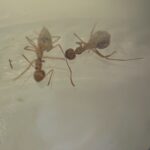 Texas Carpenter Ant
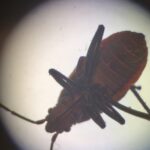 Boxelder Bug (Hemiptera)