Sample information |
|
| Picture |
|
|---|---|
| Location | Approximate location: 40.70, -80.30 |
| Collection date | 08/25/2025 |
| Captive / Cultivated? | Wild-caught |
| Group | Beaver Area School District |
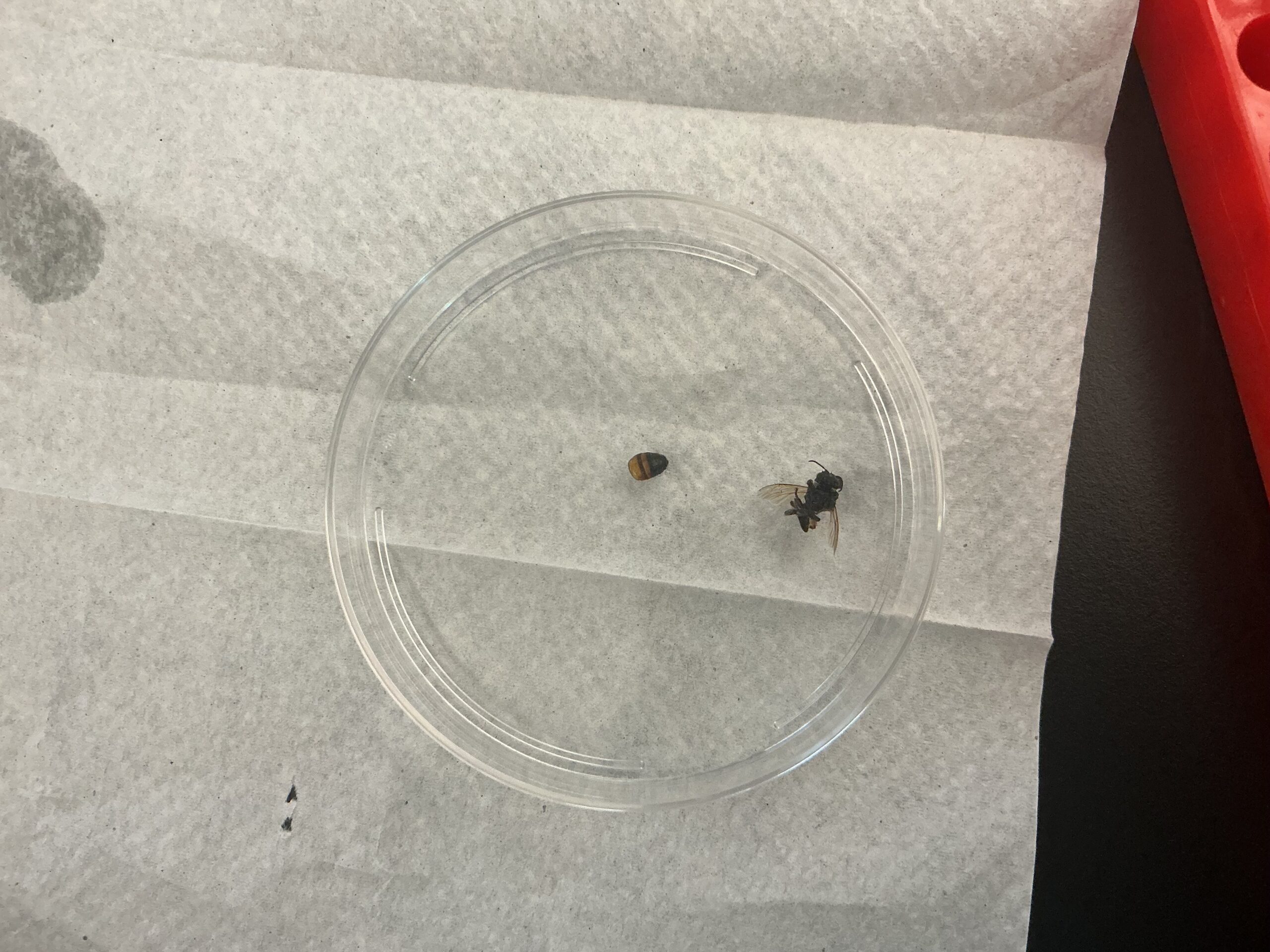
| Observations | The temperature was about 64 degrees out and the bee was collected in a forest area. It was collected around 8 AM on August 25, 2025. |
| Putative identification | Arthropoda Insecta Hymenoptera |
Methods |
|
| Extraction kit | DNeasy (Qiagen) |
| DNA extraction location | Abdomen |
| Single or Duplex PCR | Single Reaction |
| Gel electrophoresis system | BioRad |
| Buffer | TAE |
| DNA stain | UView |
| Gel images |
|
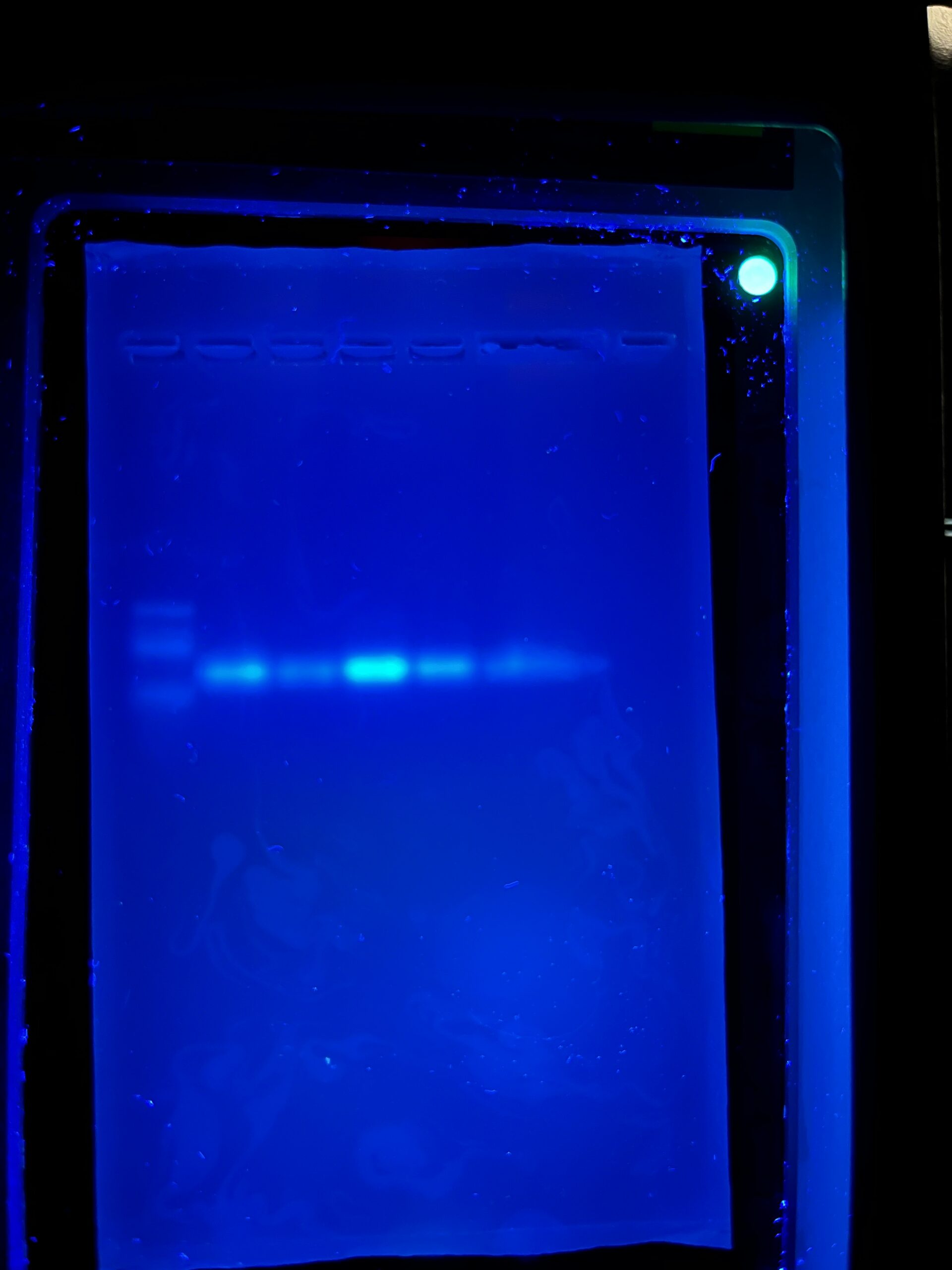
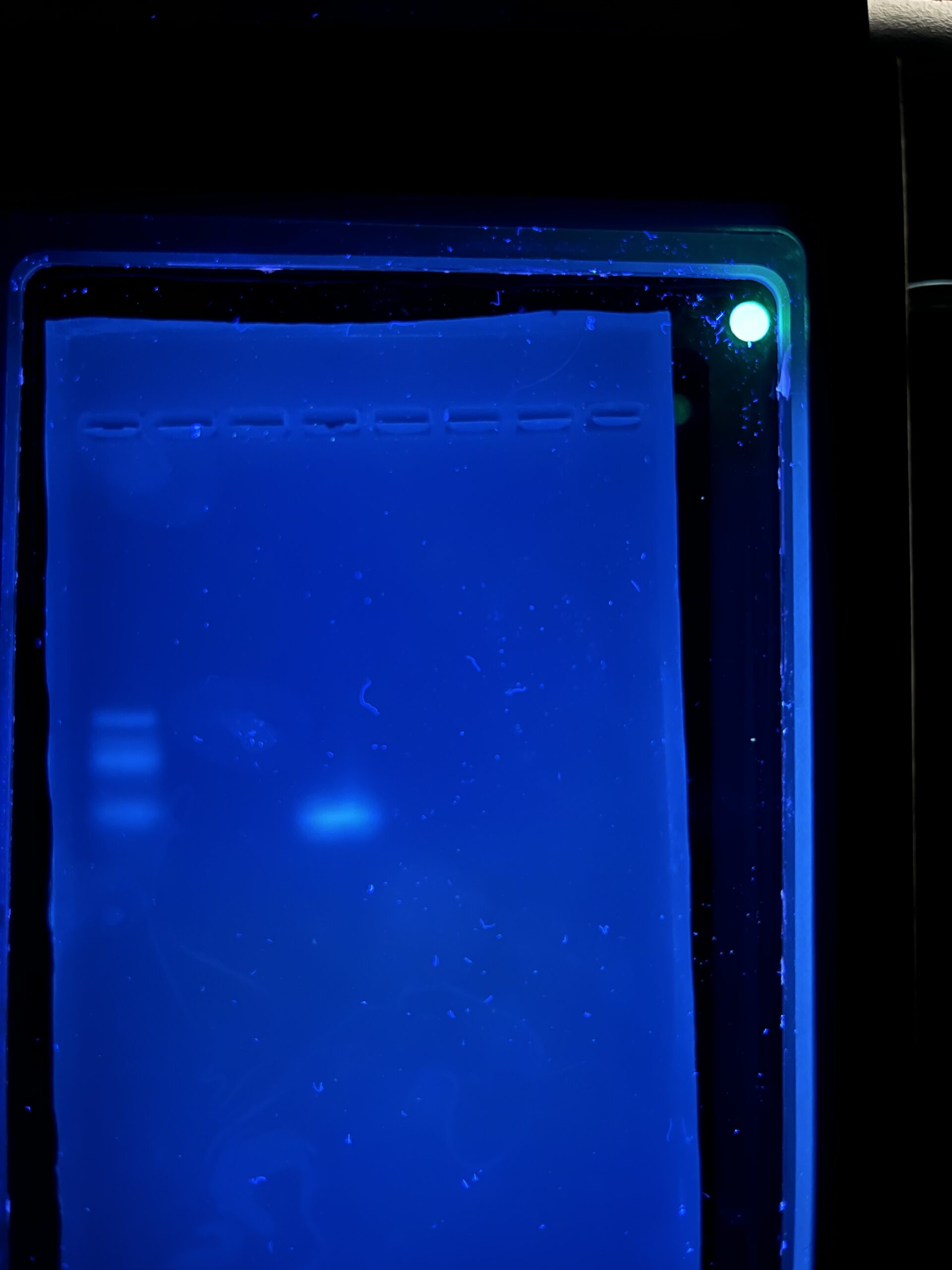
| Protocol notes | DNA Extraction: the abdomen of the bee was extracted for DNA. Lane 1: Ladder Lane 2: insect sample #1 Lane 3: insect sample #2 Lane 4: + fruit fly Lane 5: – Fruit Fly Lane 6: + DNA Lane 7: – water Analysis: all of the control bands worked. Some of lane six spilled over to lane seven so we moved lane 7’s water to lane 8. |
Results |
|
| Wolbachia presence | No |
| Confidence level | Medium |
| Explanation of confidence level | Even though we did get results on lane four, lane six did not get a band in lane six. The insect samples did not test positive for Wolbachia. |
| Wolbachia 16S sequence | |
| Arthropod COI sequence |
|
| Summary | The Hymenoptera was found to be negative for Wolbachia. |
 (no title)
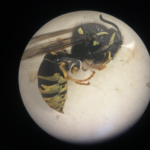 Yellowjacket Wasp
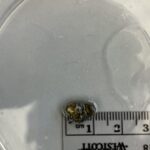 Pillbug
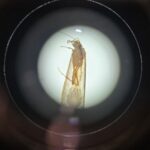 Umpachene Falls Caddisfly
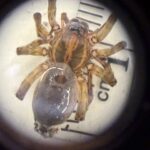 Wolf Spider