Sample information |
|
| Picture |
|
|---|---|
| Location | Approximate location: 38.97, -77.07 |
| Collection date | 09/13/2026 |
| Captive / Cultivated? | Wild-caught |
| Group | Edmund Burke School |
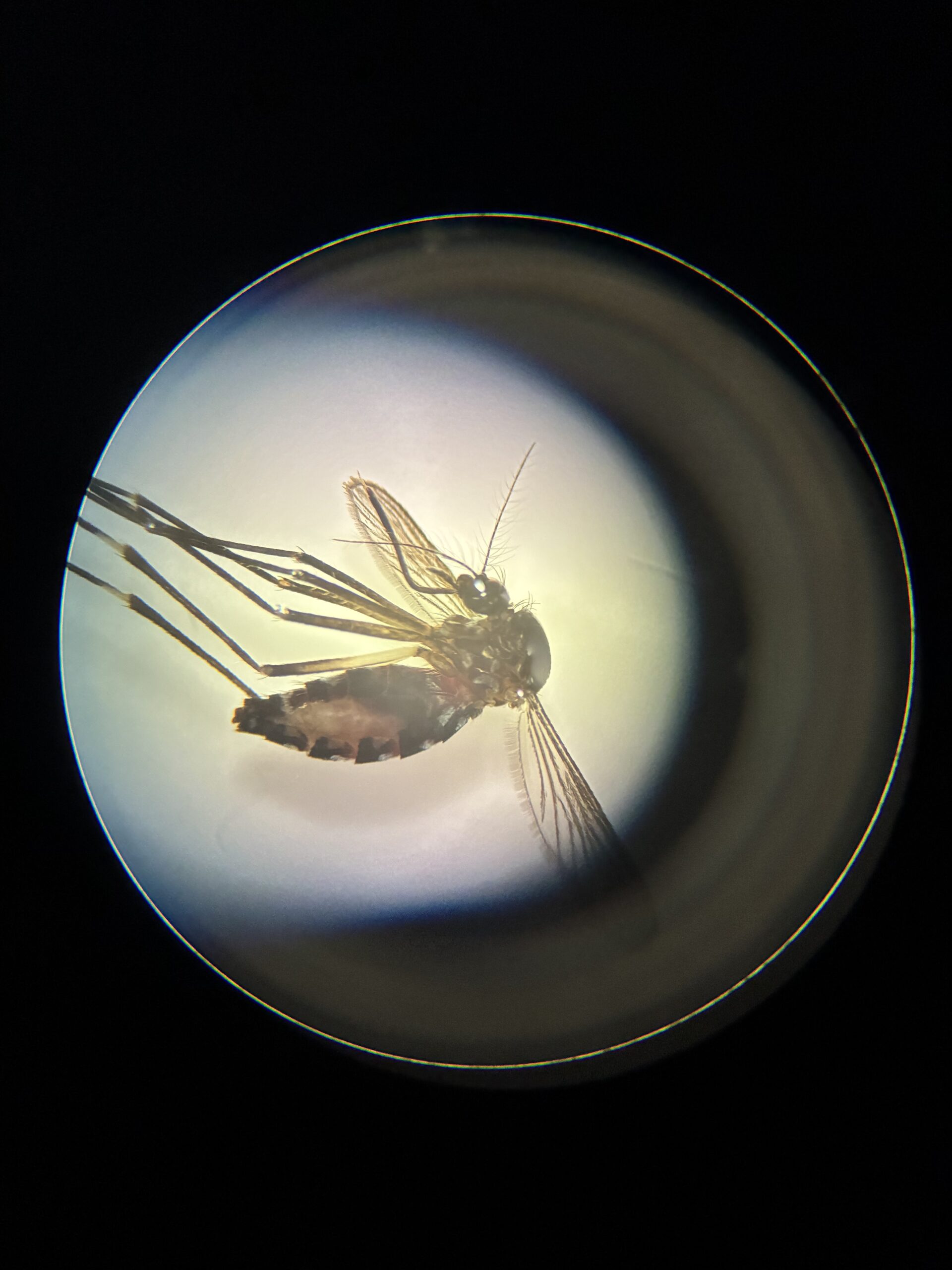
| Observations | Has six legs, two wings, long abdomen (black with white spots), and long protrusion from head. The arthropod was caught indoors during late summer, on a sunny, 80 degree Fahrenheit day. The outside environment was terrestrial and urban. |
| Putative identification | Arthropoda Insecta Diptera Culicidae Aedes Aedes albopictus |
Methods |
|
| Extraction kit | DNeasy (Qiagen) |
| DNA extraction location | Whole arthropod |
| Single or Duplex PCR | Single Reaction |
| Gel electrophoresis system | MiniOne |
| Buffer | TBE |
| DNA stain | GelGreen |
| Gel images |
|
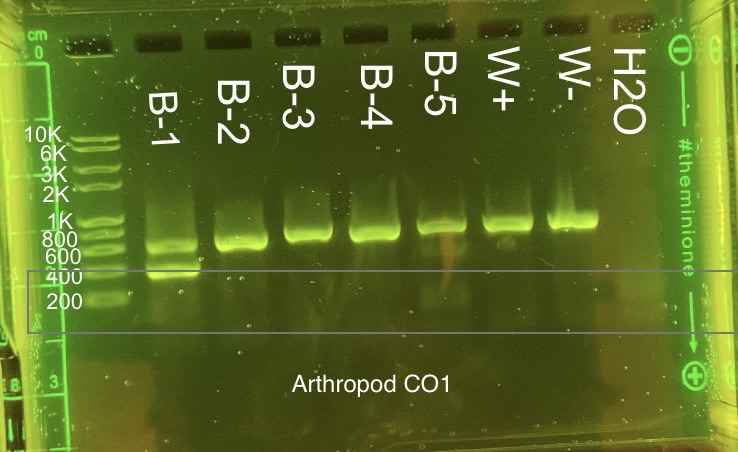
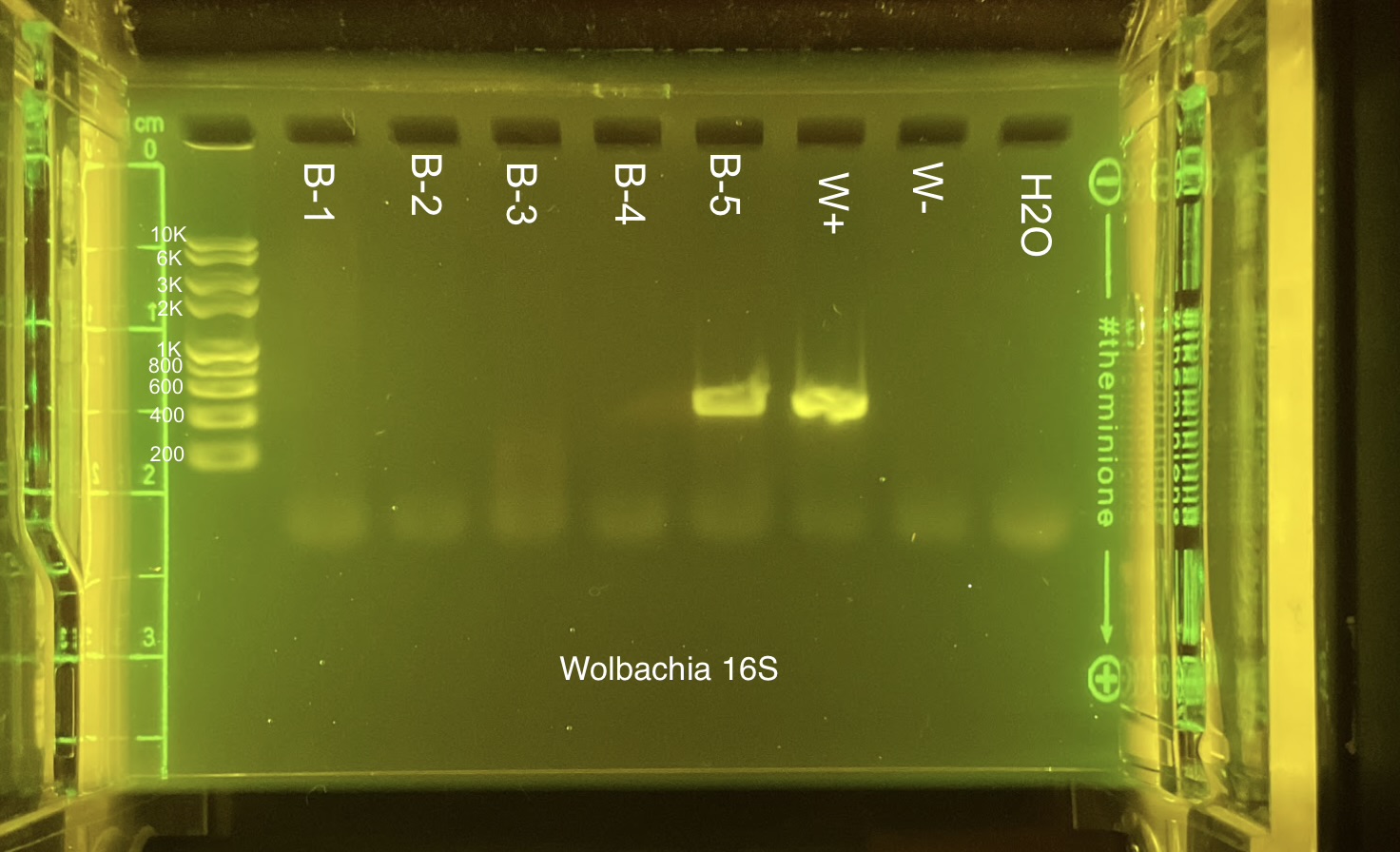
| Protocol notes | DNA extraction: Our group followed protocol exactly, and we recorded no errors. PCR: Our group followed protocol exactly, and we recorded no errors. Gel Electrophoresis, Arthropod CO1: Lane 1 was the ladder, Lane 6 was arthropod B-5. Lane 7 was the W+ control, Lane 8 was the W- control, and Lane 9 was the water control. Both W+ and W- had bands, indicating that the PCR was successful, and the water control had no band, indicating that there was no contamination. Gel Electrophoresis, Wolbachia 16S: Lane 1 was the ladder, Lane 6 was arthropod B-5, Lane 7 was the W+ control, Lane 8 was the W- control, and Lane 9 was the water control. Both B-5 and W+ had a band, indicating that not only did the PCR succeed, but that B-5 was infected with Wolbachia. The W- and water controls had no bands, indicating that there was no contamination.
|
Results |
|
| Wolbachia presence | Yes |
| Confidence level | High |
| Explanation of confidence level | The controls of the PCR ran correctly: The W+ was positive, indicating that the PCR succeeded, and the W- and water controls were negative indicating that there was no contamination. |
| Wolbachia 16S sequence | Download AB1
|
| Arthropod COI sequence | Download FASTA
Download AB1
|
| Summary | The Aedes albopictus was found to be postive for Wolbachia. |
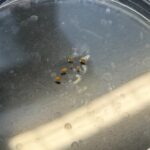
 Curinus Coeruleus
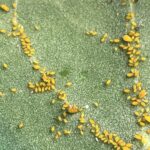
 Aphid
 (no title)
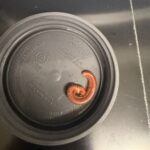 Rusty Millipede
 A-2 Arachnida