Sample information |
|
| Picture |
|
|---|---|
| Location | Approximate location: 39.03, -76.80 |
| Collection date | 08/23/2026 |
| Captive / Cultivated? | Wild-caught |
| Group | Edmund Burke School |
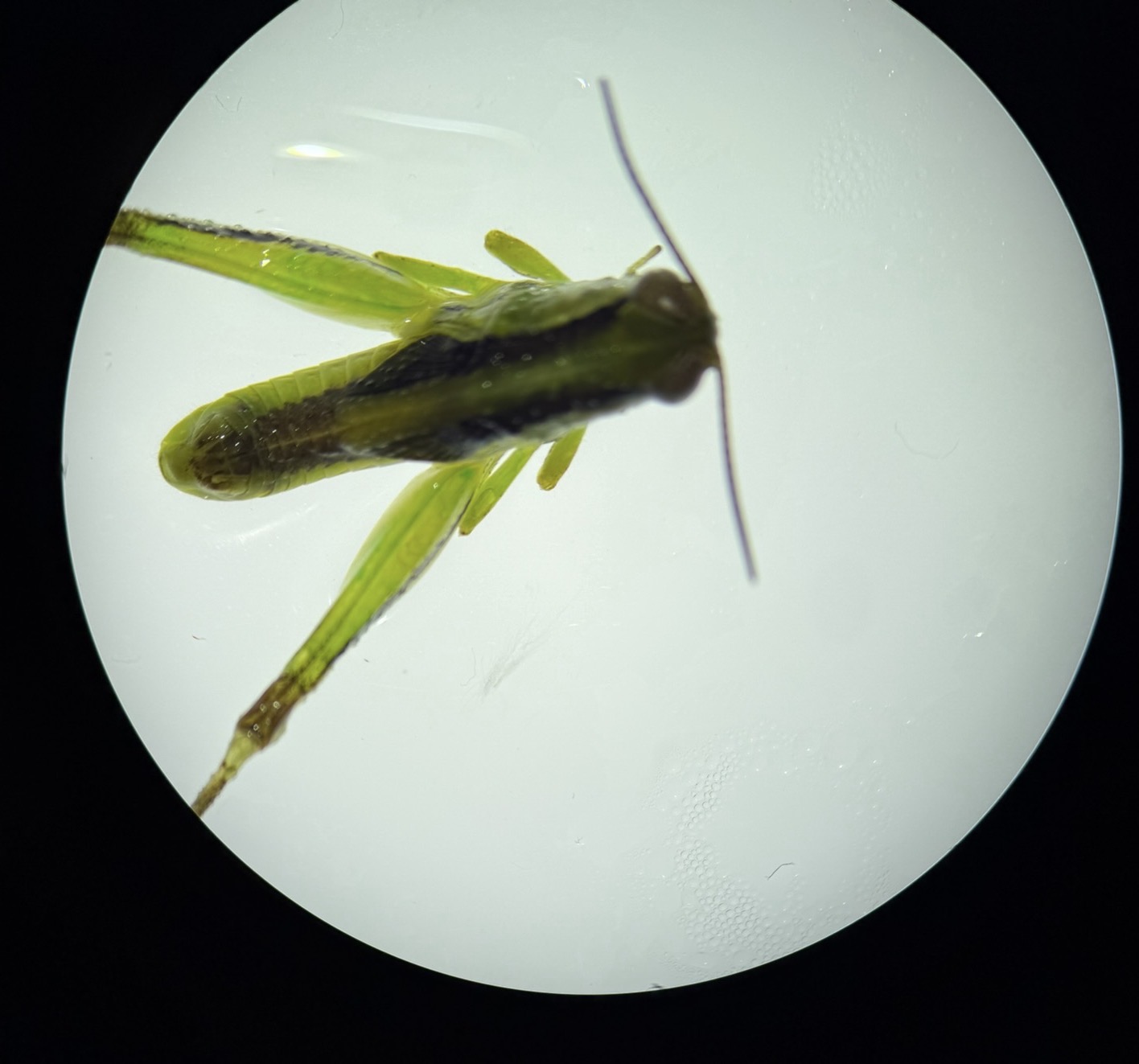
| Observations | Collected during the summer in a terrestrial habitat at 82ºF/28ºC. Green with two dark stripes down back. Four wings all same size, membranous under hard and opaque. The membranous wings had many cross veins. Separated eyes and external mandible for chewing. 6 legs, non-modified forelegs, hung legs enlarged, modified for jumping. 2 angled antennae, 3 body regions. |
| Putative identification | Arthropoda Insecta Orthoptera Acrididae Melanoplus |
Methods |
|
| Extraction kit | DNeasy (Qiagen) |
| DNA extraction location | Abdomen |
| Single or Duplex PCR | Single Reaction |
| Gel electrophoresis system | MiniOne |
| Buffer | TBE |
| DNA stain | GelGreen |
| Gel images |
|
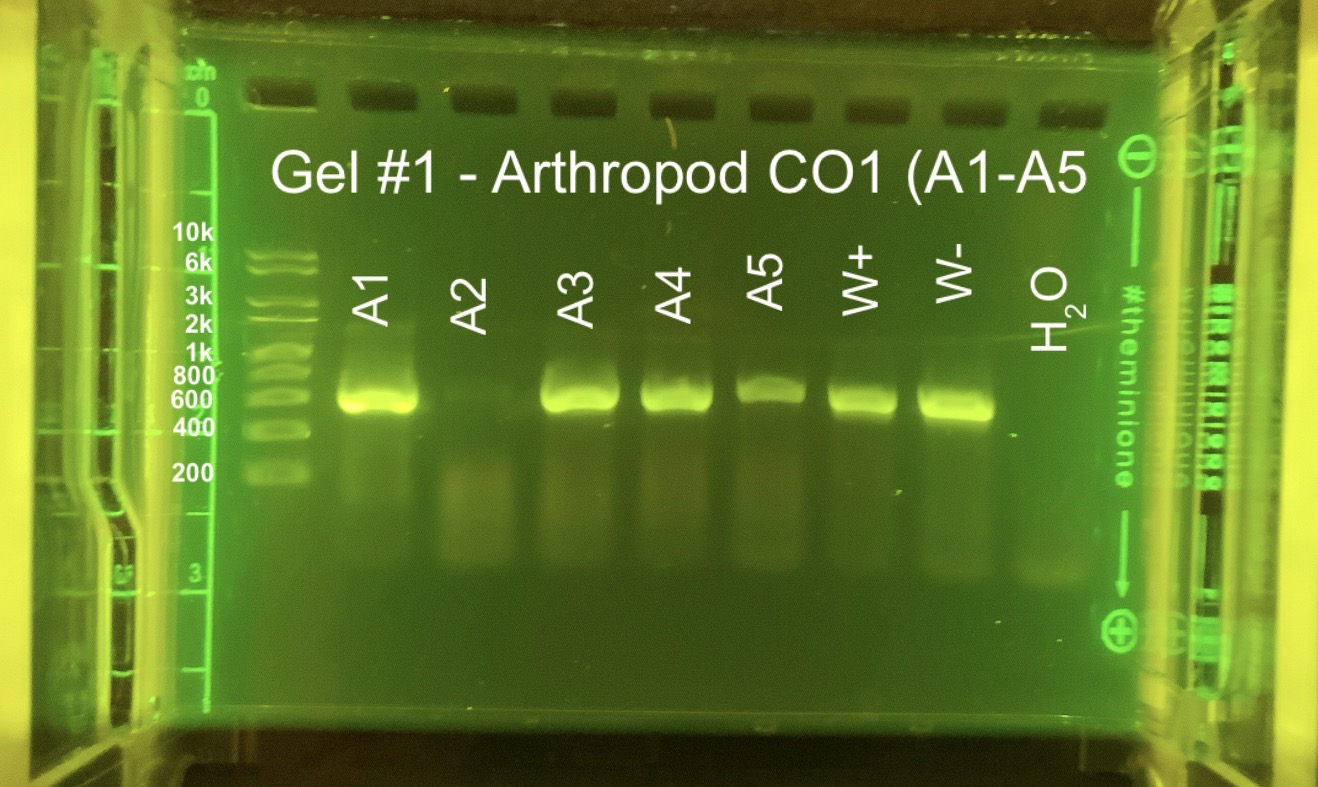
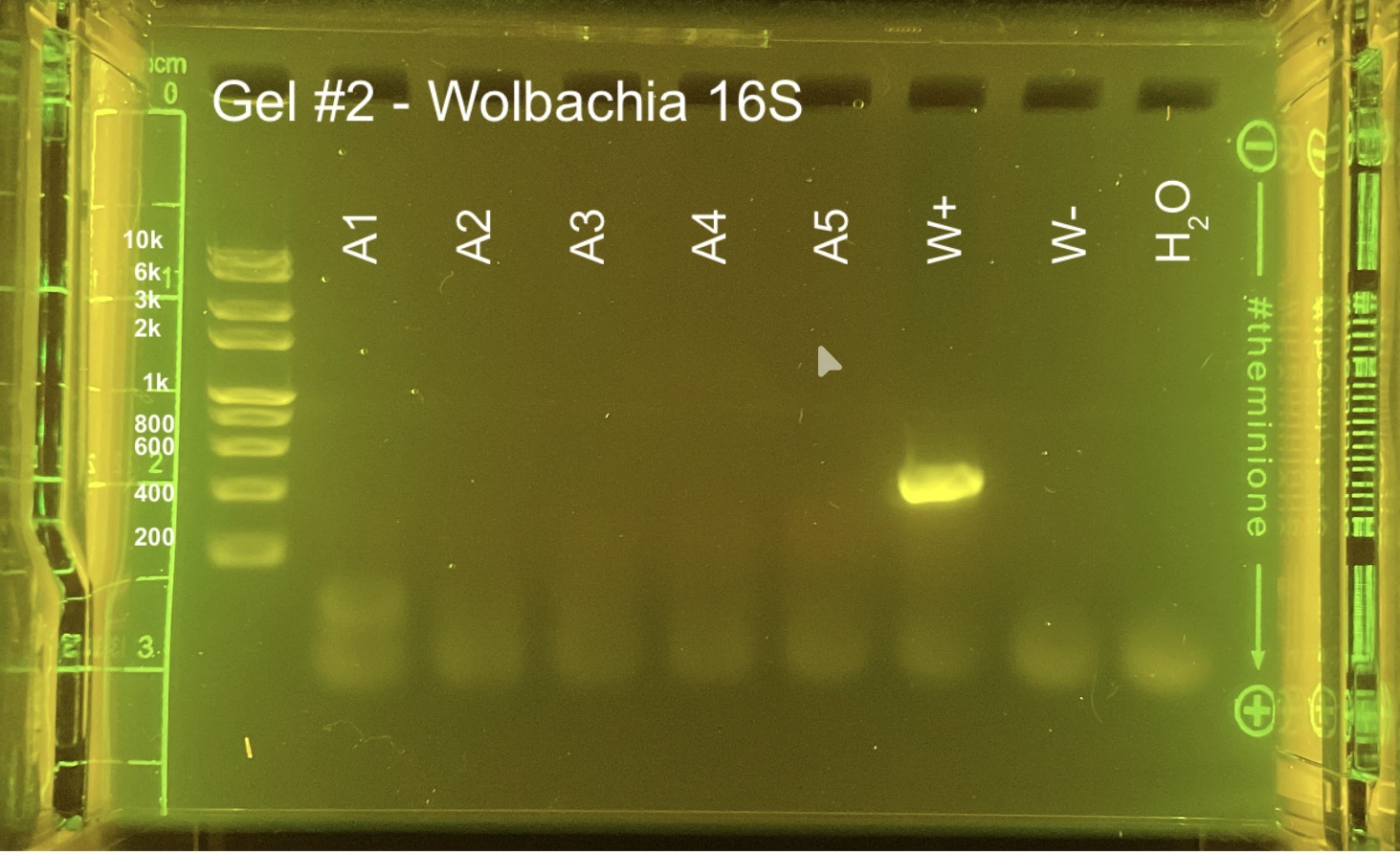
| Protocol notes | DNA Extraction – The arthropod was slightly difficult to crush, and the initial solution had a brown, murky appearance. PCR – There were no errors made during the PCR for this specimen’s genes. Gel Electrophoresis Arthropod CO1 – A-3 was in the fourth lane of this gel. No mistakes were made in loading this sample. The controls worked, with both the Wolbachia positive and negative banding and the water control being negative, showing there was no contamination between the samples and that the DNA amplification was successful in the controls. A-3 was in lane 4, the W+ control was in lane 7, the W- control was in lane 8, and the water control was in lane 9. Gel Electrophoresis Wolbachia – A-3 was in the fourth lane of this gel. There were no mistakes in the loading of this sample. All three controls worked as intended, with only the Wolbachia positive sample banding, showing that there was no contamination for the Wolbachia negative or water controls and that we successfully amplified the DNA in the W+ sample. |
Results |
|
| Wolbachia presence | No |
| Confidence level | High |
| Explanation of confidence level | Because the W+ control successfully banded, that would mean that during that PCR, the Wolbachia gene was successfully amplified and if A-3 was infected it would have banded as well. Since A-3 did not band while the control did, it is reasonable to assume that it was not infected with Wolbachia. |
| Wolbachia 16S sequence | |
| Arthropod COI sequence | Download FASTA
Download AB1
|
| Summary | The Melanoplus was found to be negative for Wolbachia. |
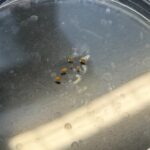
 Curinus Coeruleus
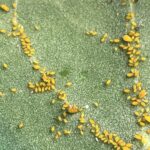
 Aphid
 (no title)
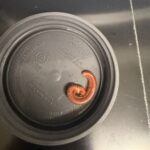 Rusty Millipede
 A-2 Arachnida