Sample information |
|
| Picture |
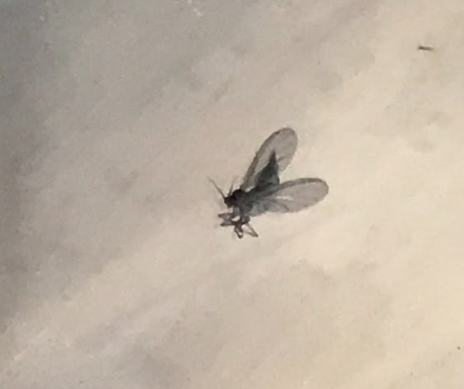
|
|---|---|
| Location | Approximate location: 41.71, -88.19 |
| Collection date | 10/04/2020 |
| Captive / Cultivated? | Wild-caught |
| Group | Neuqua Valley High School |
| Observations | The sample was found alone in the mulch near flowers. The small, black insect has the ability to fly and walks at a slow pace. |
| Putative identification | Arthropoda Insecta Diptera |
Methods |
|
| Extraction kit | Puregene (Qiagen) |
| DNA extraction location | |
| Single or Duplex PCR | |
| Gel electrophoresis system | Standard electrophoresis system |
| Buffer | LB |
| DNA stain | GelRed |
| Gel images |
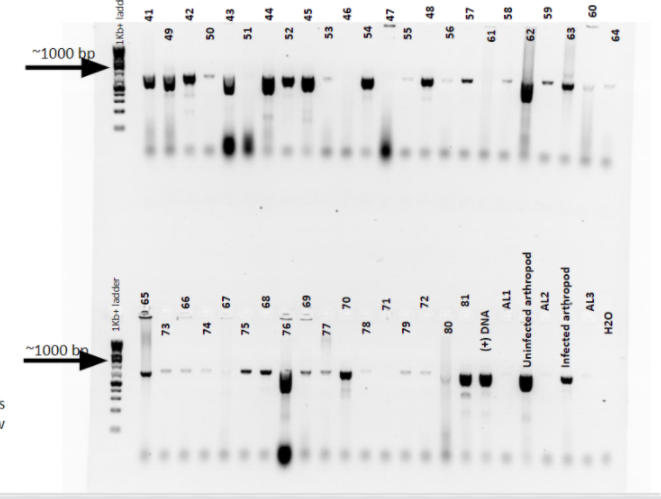
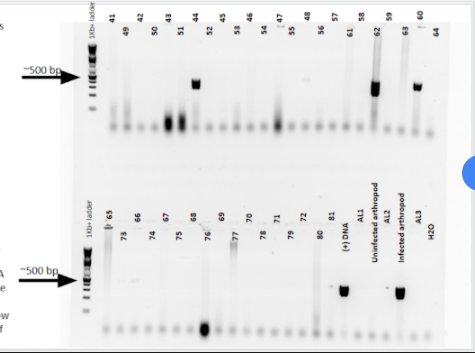
|
| Protocol notes |
|
Results |
|
| Wolbachia presence | No |
| Confidence level | High |
| Explanation of confidence level | We are highly confident because in both the lighter and darker filtered photos the gel did not show a band. Lane 54 has a smear to show the DNA was correctly collected but there is no band present. |
| Wolbachia 16S sequence | |
| Arthropod COI sequence | Download AB1
|
| Summary | The Diptera was found to be negative for Wolbachia. |
 (no title)
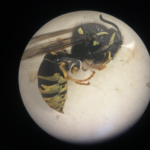 Yellowjacket Wasp
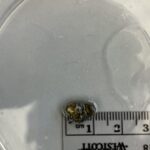 Pillbug
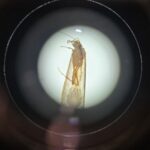 Umpachene Falls Caddisfly
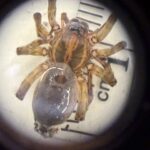 Wolf Spider