Sample information |
|
| Picture |
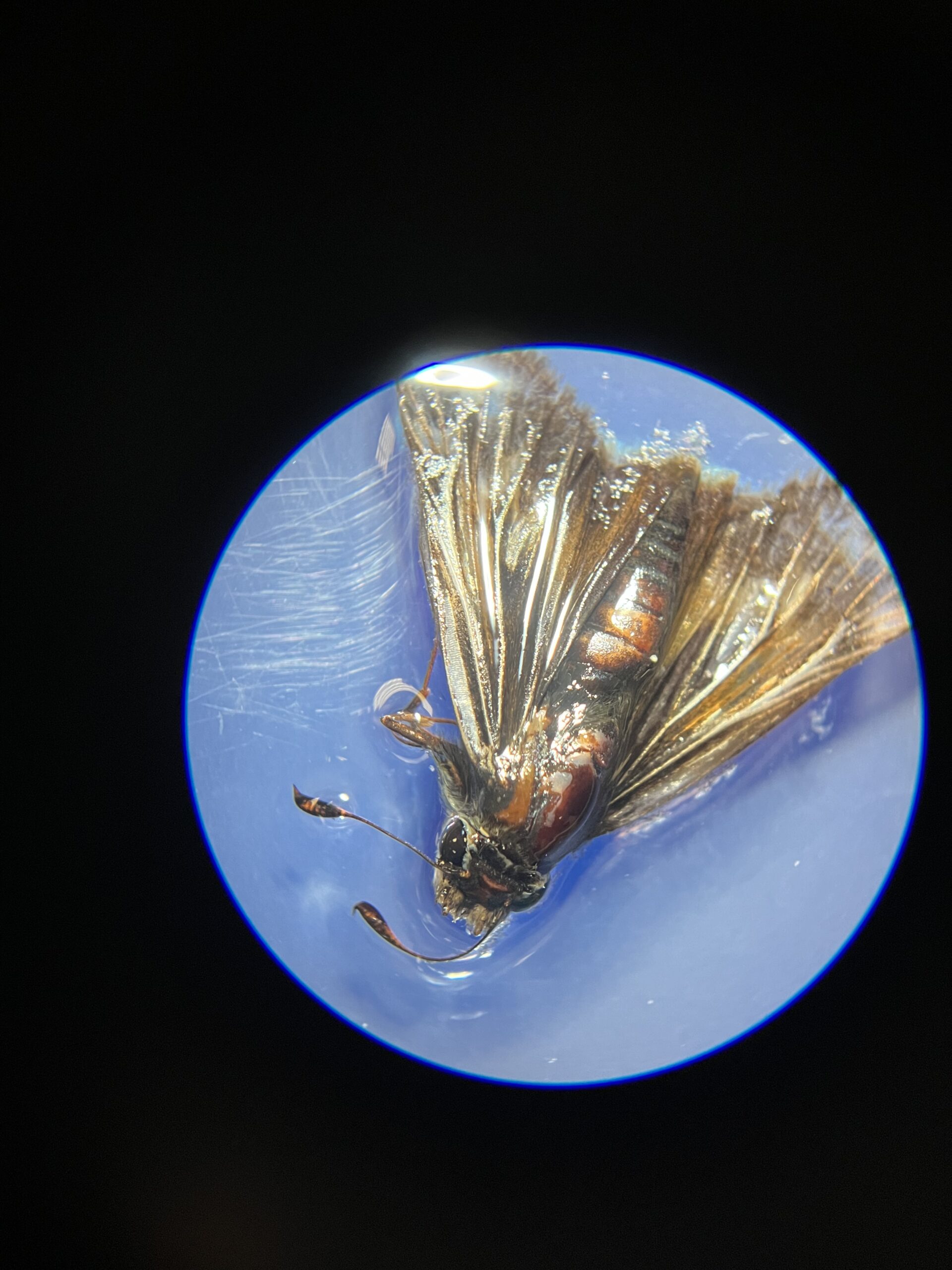
|
|---|---|
| Location | Approximate location: 37.24, -78.46 |
| Collection date | 10/31/2024 |
| Captive / Cultivated? | Wild-caught |
| Group | Longwood University |
| Observations | Found in the fall in the wildflowers near lake Mayes, a terrestrial habitat at a temperature of 78ºF |
| Putative identification | Arthropoda Insecta Lepidoptera Hesperiidae Atalopedes Atalopedes campestris |
Methods |
|
| Extraction kit | promega wizard SV |
| DNA extraction location | Abdomen |
| Single or Duplex PCR | Single Reaction |
| Gel electrophoresis system | Standard electrophoresis system |
| Buffer | TAE |
| DNA stain | Ethidium Bromide |
| Gel images |
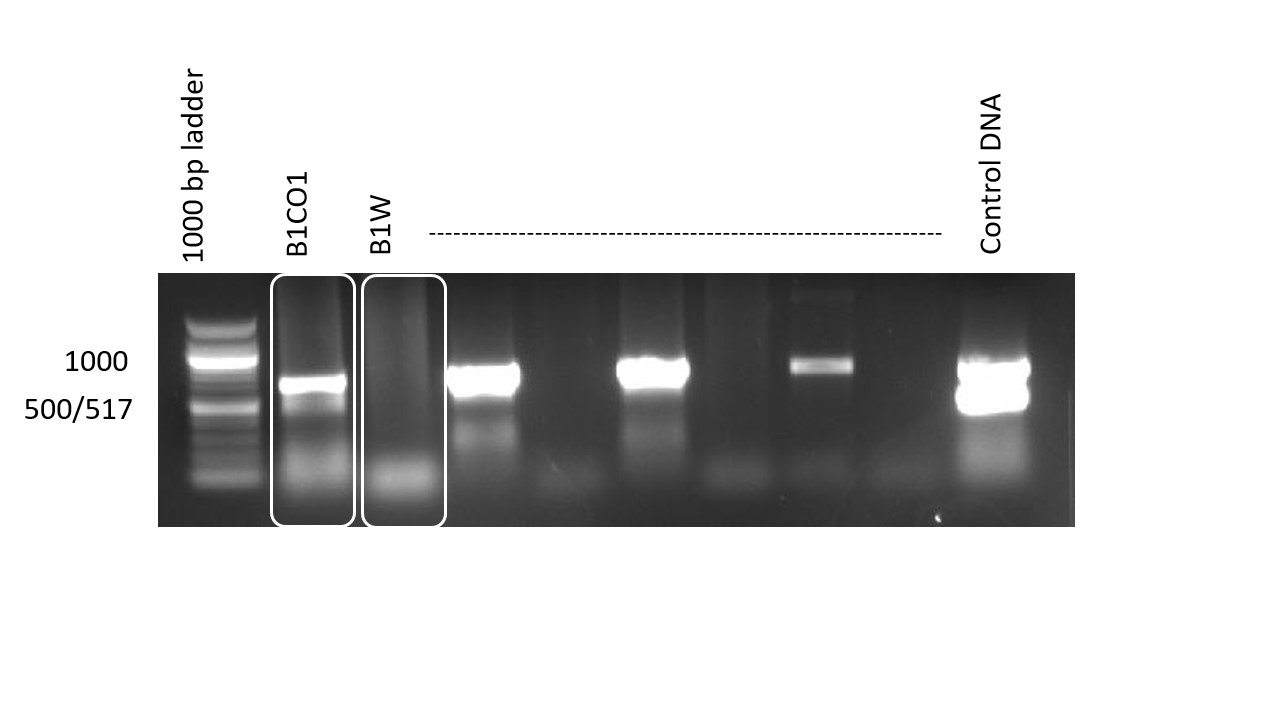
|
| Protocol notes | DNA extraction: I made sure to crush the arthropod really well dissecting the abdomen and not the exoskeleton. Gel Electrophoresis Lanes for CO1 Arthropod: 1- 1000bp ladder 2- Arthropod positive PCR Product 3- Wolbachia negative PCR Product 10- Control DNA |
Results |
|
| Wolbachia presence | Yes |
| Confidence level | High |
| Explanation of confidence level | All controls worked as expected. The arthropod band did appear on my gel as expected with no band appearing on the gel for Wolbachia. I had no problems with the protocol. So I am confident my arthropod is not infected with Wolbachia. |
| Wolbachia 16S sequence | |
| Arthropod COI sequence | Download AB1
|
| Summary | The Atalopedes campestris was found to be postive for Wolbachia. |
 (no title)
 Yellowjacket Wasp
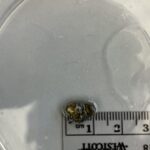 Pillbug
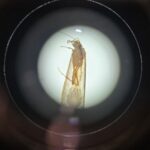 Umpachene Falls Caddisfly
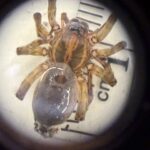 Wolf Spider