Sample information |
|
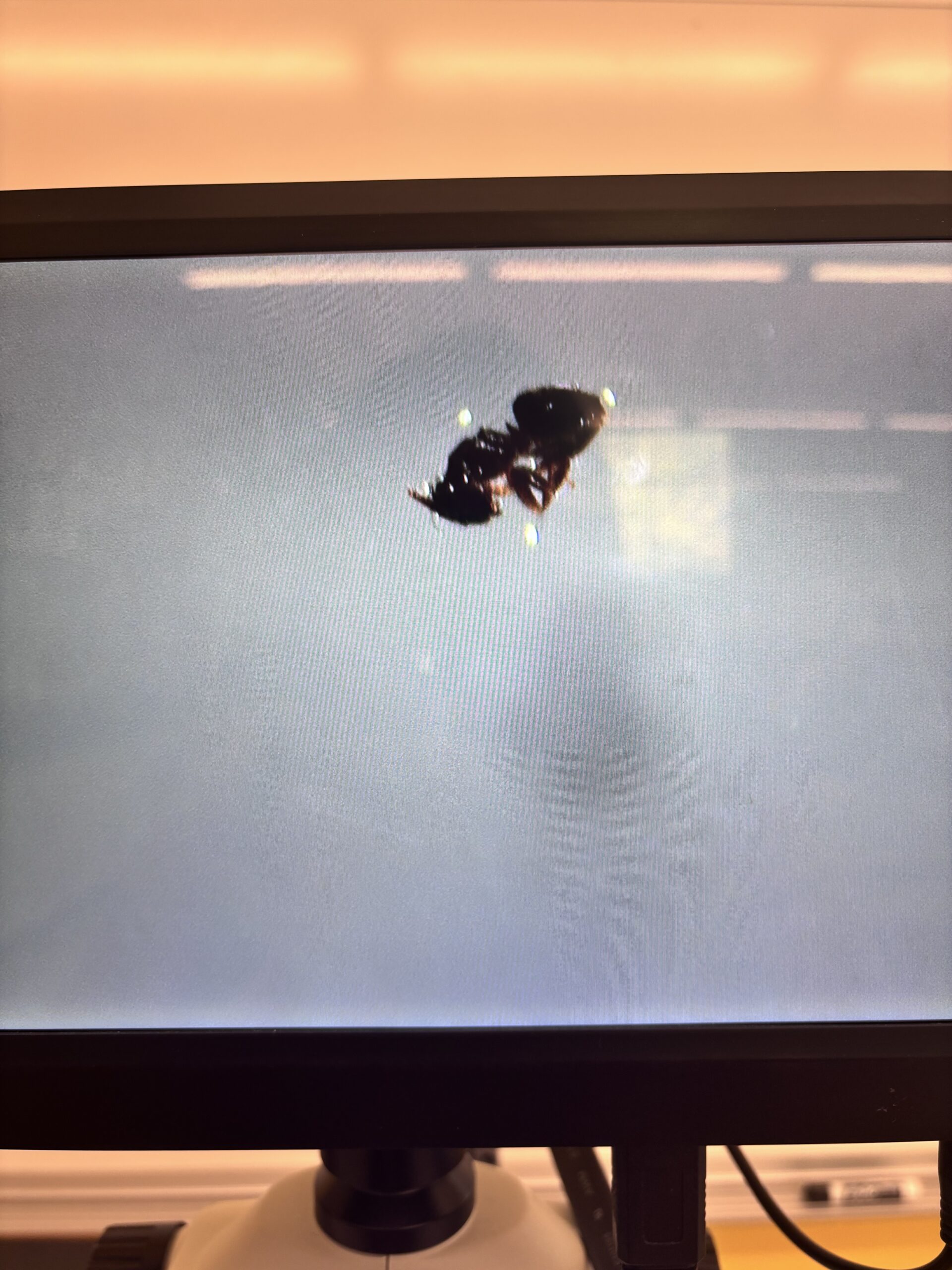
| Picture |
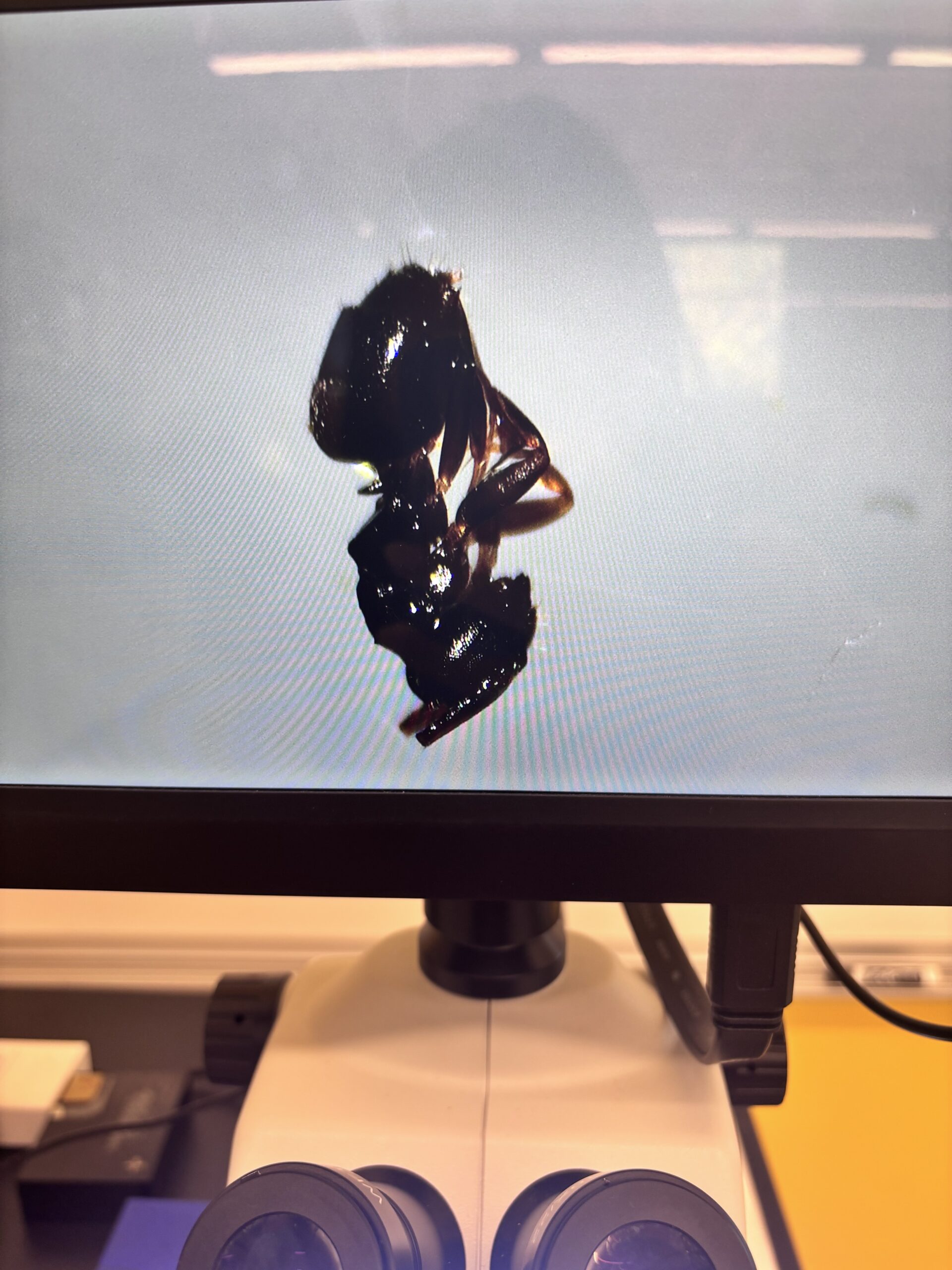
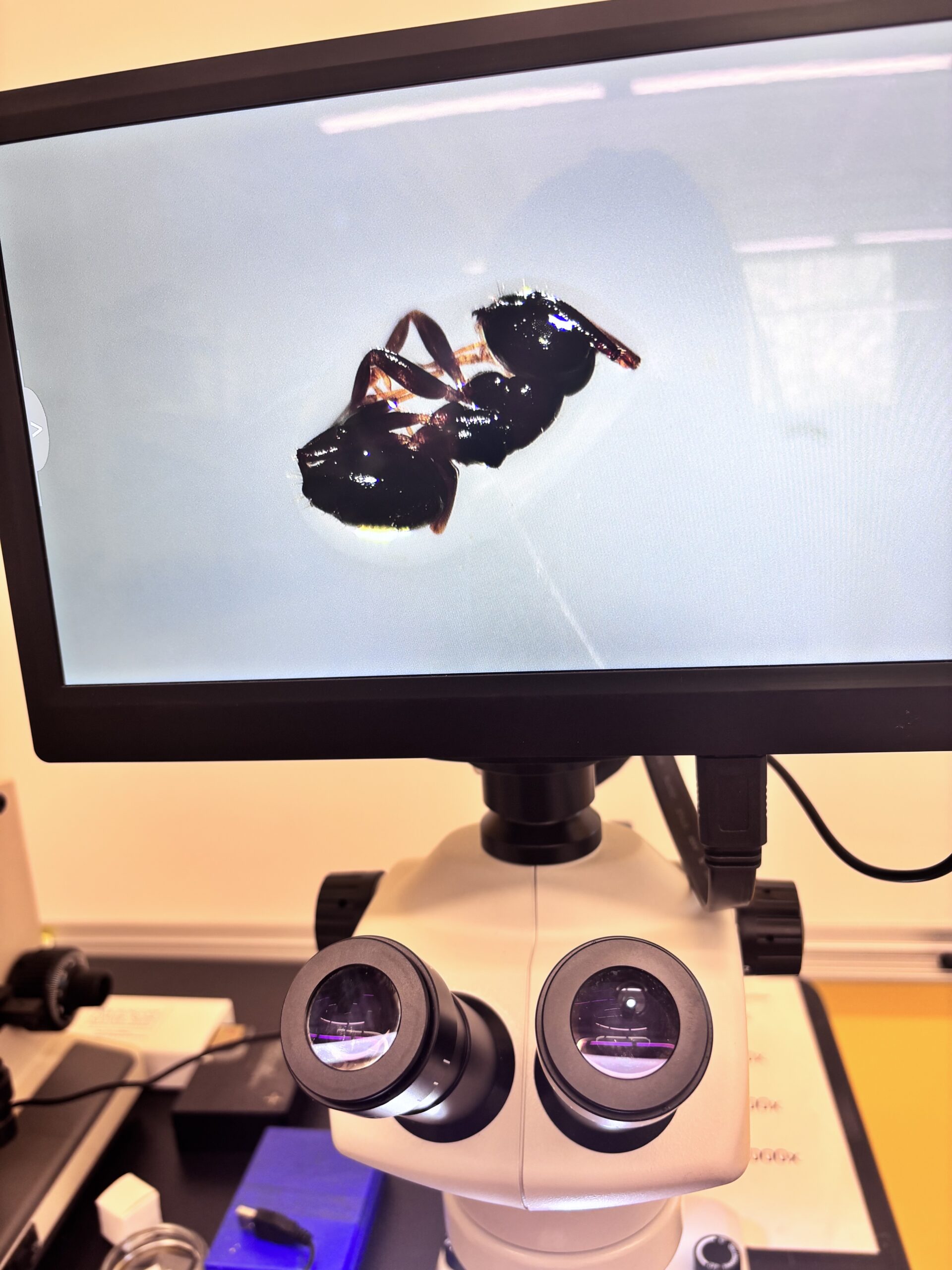
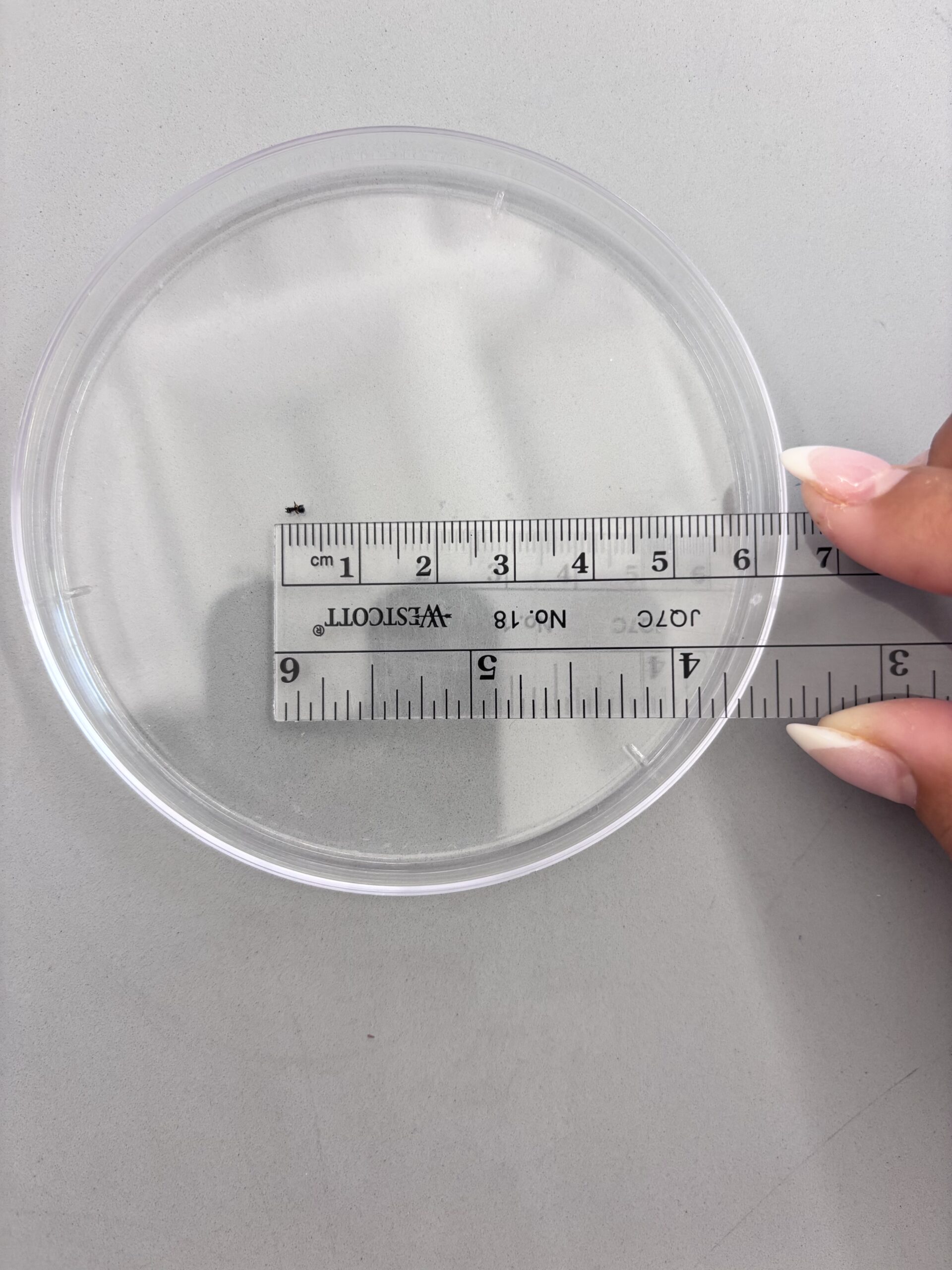
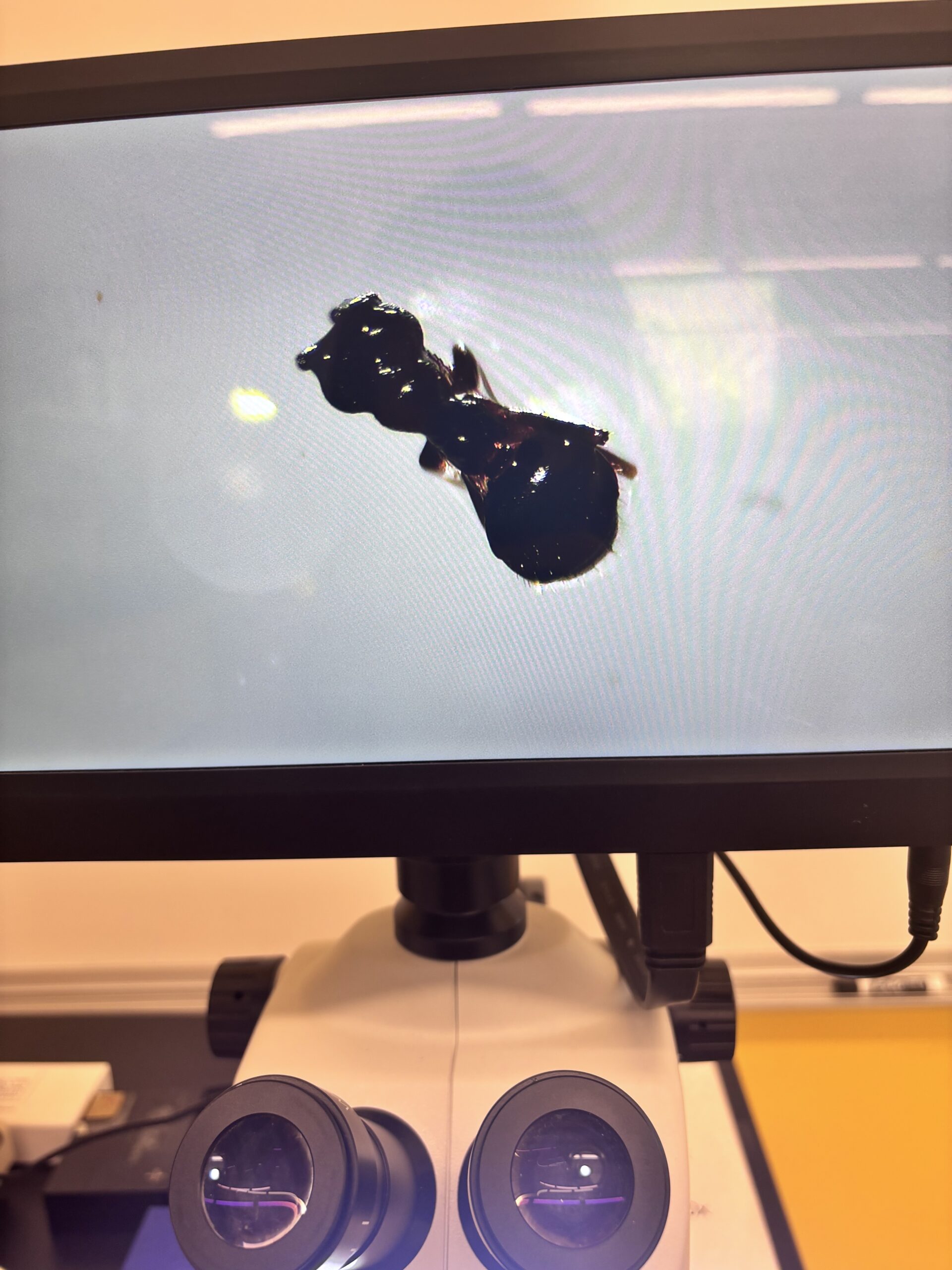
|
|---|---|
| Location | Approximate location: 42.46, -73.25 |
| Collection date | 09/29/2025 |
| Captive / Cultivated? | Wild-caught |
| Group | Berkshire Community College |
| Observations | Arthropod was collected outdoors in a dirt area. |
| Putative identification | Arthropoda Insecta Hymenoptera Formicidae Lasius Lasius alienus |
Methods |
|
| Extraction kit | Monarch DNA extraction (NEB) |
| DNA extraction location | Whole arthropod |
| Single or Duplex PCR | Duplex Reaction |
| Gel electrophoresis system | Edvotek Gel Electrophoresis |
| Buffer | 1X TAE |
| DNA stain | SYBR Safe |
| Gel images |
|
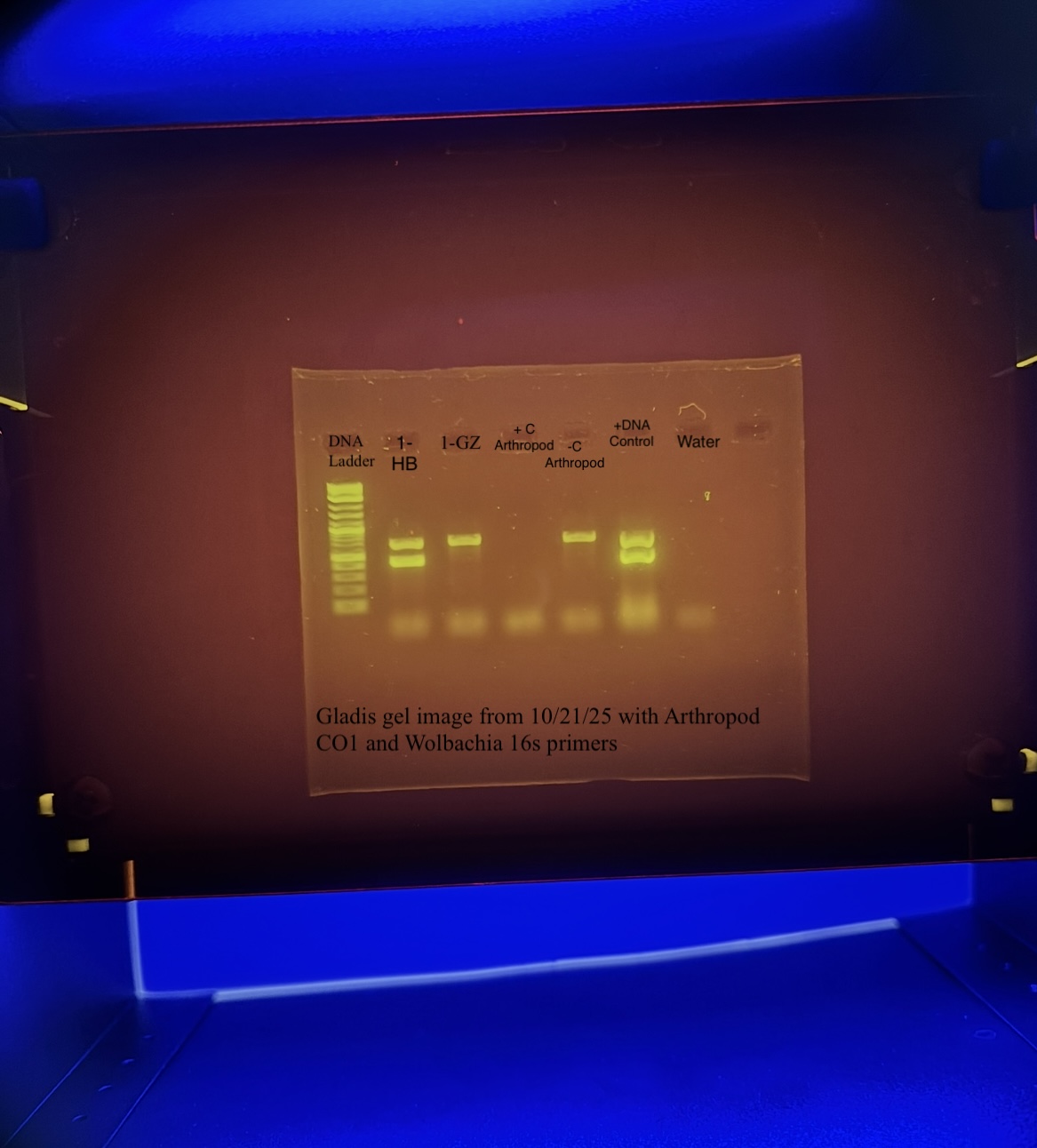
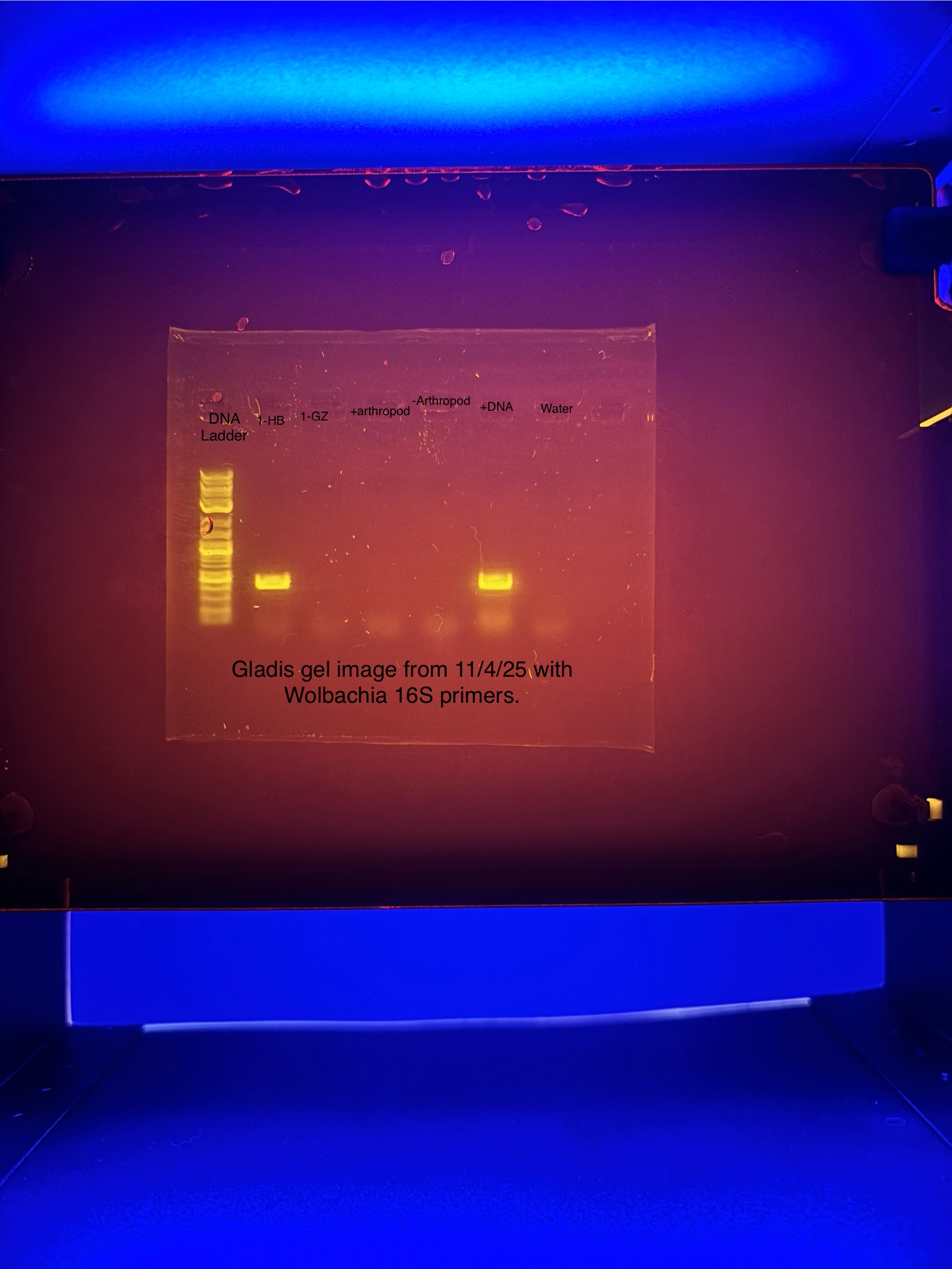
| Protocol notes | We used a dna extraction protocol based on the insect adaptation of New England biolabs monarch spin gDNA extraction kit (product #T3010) the specimen was incubated for 30 minutes in a hot water bath at 56 degrees C. Our first PCR was set up on 10/14/25 and was a duplex reaction because we used both the arthropod CO1 and Wolbachia 16S Primers together. Used an annealing temperature of 49 degrees Celsius. Used this TAQ polymerase: New England Biolabs OneTaq Hot start Quick Load 2X Master Mix with standard buffer (#M0488S). Our first gel image was taken on 10/21/25 and was run at 125 volts for 22 minutes. Used this DNA Ladder : New England Biolabs 1 kb Plus DNA Ladder for safe stains (product #N0559S) Our second PCR reaction was set on 10/28/25 used the same Taq polymerase as the first PCR reaction, and was a single reaction that used Wolbachia F and R primers. Used an annealing temperature of 55 degrees Celsius. Our second gel image was taken on 11/4/25 and was run at 125 volts for 27 minutes. |
Results |
|
| Wolbachia presence | No |
| Confidence level | Medium |
| Explanation of confidence level | Confidence level will increase with more testing to prove accurate results. Controls matched expectations, except +arthropod control was not detected at all. My arthropod had a band around 700bp but no band for Wolbachia. 11/4/25 Confidence level for the second gel electrophoresis is high moderate. My arthropod still detected no Wolbachia like the previous one, but the +arthropod control still did not show any bands present. Confidence will increase as more testing is done. |
| Wolbachia 16S sequence | |
| Arthropod COI sequence | Download AB1
AAATTTATAACTCTATAGTTACAAGGCATGCATTTGTTATAATTTTCTTCATAGTTATACCTTTCATAATTGGTGGATTTGGTAATTTTCTTGTACCTTTAATATTAGGTTCACCTGATATGGCTTACCCCCGTATAAATAATATAAGATTTTGACTTTTACCCCCCTCTATTTCTCTTCTCCTTTTAAGAAATTTCATTAATGATGGAGTCGGAACAGGATGAACCATTTATCCTCCTTTAGCCTCAAACATCTTCCATAATGGCCCTTCAGTTGATTTAACTATTTTCTCTCTTCACATCGCTGGAATATCTTCTATTCTAGGGGCTATTAATTTTATTTCAACTATCATAAACATACACCATAAAAATTTTTCTATTGATAAAATTCCACTACTTGTATGATCAATCTTAATTACTGCAATTTTACTACTTCTATCCCTTCCTGTTCTTGCAGGAGCTATTACTATACTTTTAACTGACCGTAACCTTAATACTTCATTTTTTGACCCATCAGGAGGTGGTGATCCTATTTTATATCAACATCTTTTCTGA
BLAST at The Wolbachia Project BLAST at NCBI
|
| Summary | The Lasius alienus was found to be negative for Wolbachia. |
 (no title)
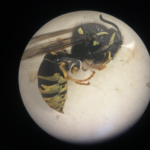 Yellowjacket Wasp
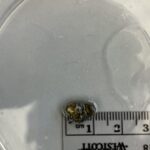 Pillbug
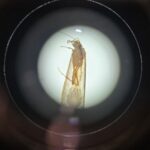 Umpachene Falls Caddisfly
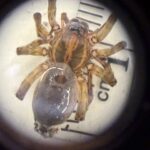 Wolf Spider