Sample information |
|
| Picture |
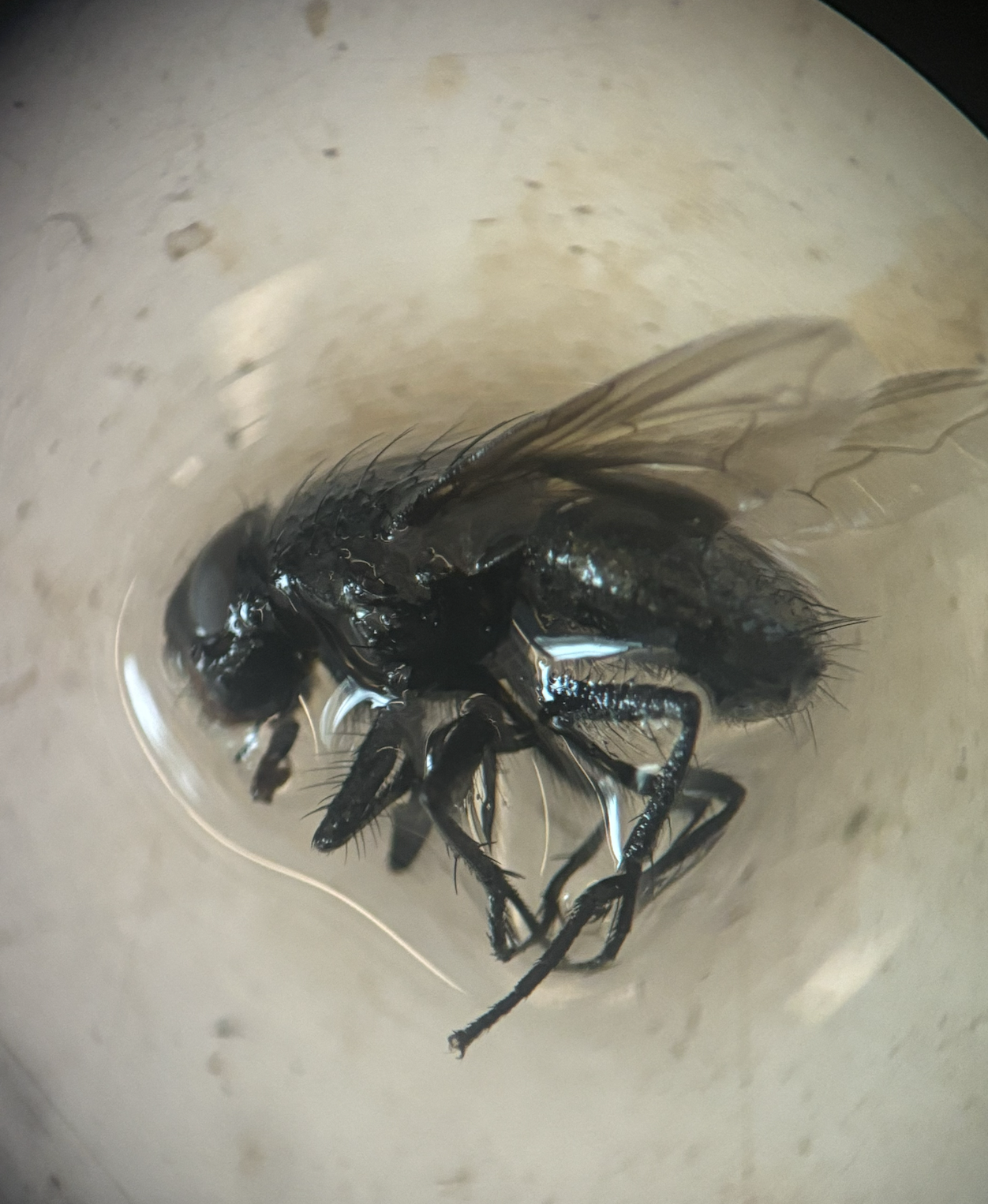
|
|---|---|
| Location | Approximate location: 42.23, -73.32 |
| Collection date | 02/15/2026 |
| Captive / Cultivated? | Wild-caught |
| Group | Berkshire Community College |
| Observations | Captured inside of home after specimen had entered through opening in window during winter. Likely seeking warmth and food source. Killed the specimen before collection. |
| Putative identification | Arthropoda Insecta Diptera Muscidae Musca Musca domestica |
Methods |
|
| Extraction kit | Monarch DNA extraction (NEB) |
| DNA extraction location | Abdomen |
| Single or Duplex PCR | Duplex Reaction |
| Gel electrophoresis system | Edvotek Gel Electrophoresis |
| Buffer | 1X TAE |
| DNA stain | SYBR Safe |
| Gel images |
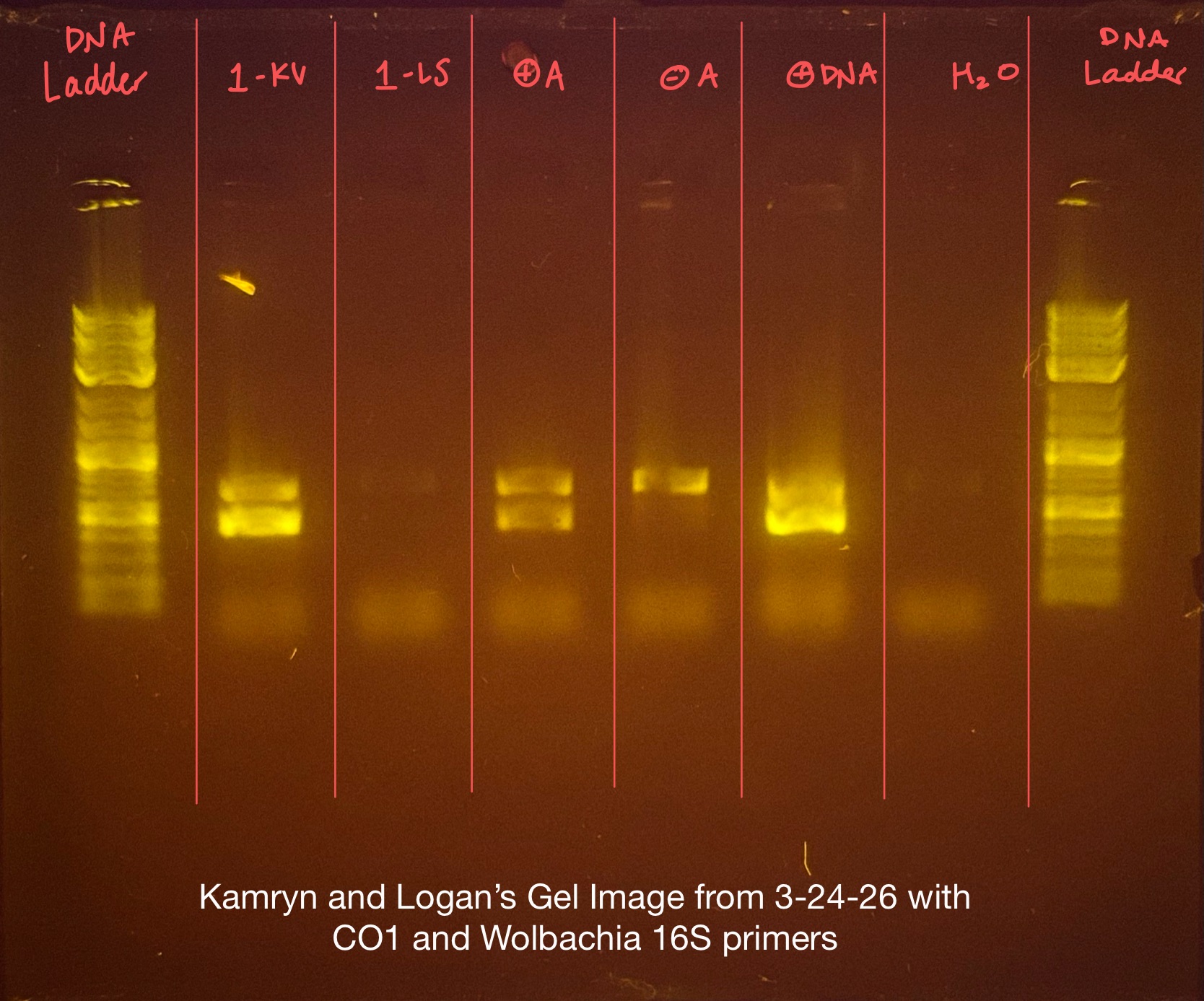
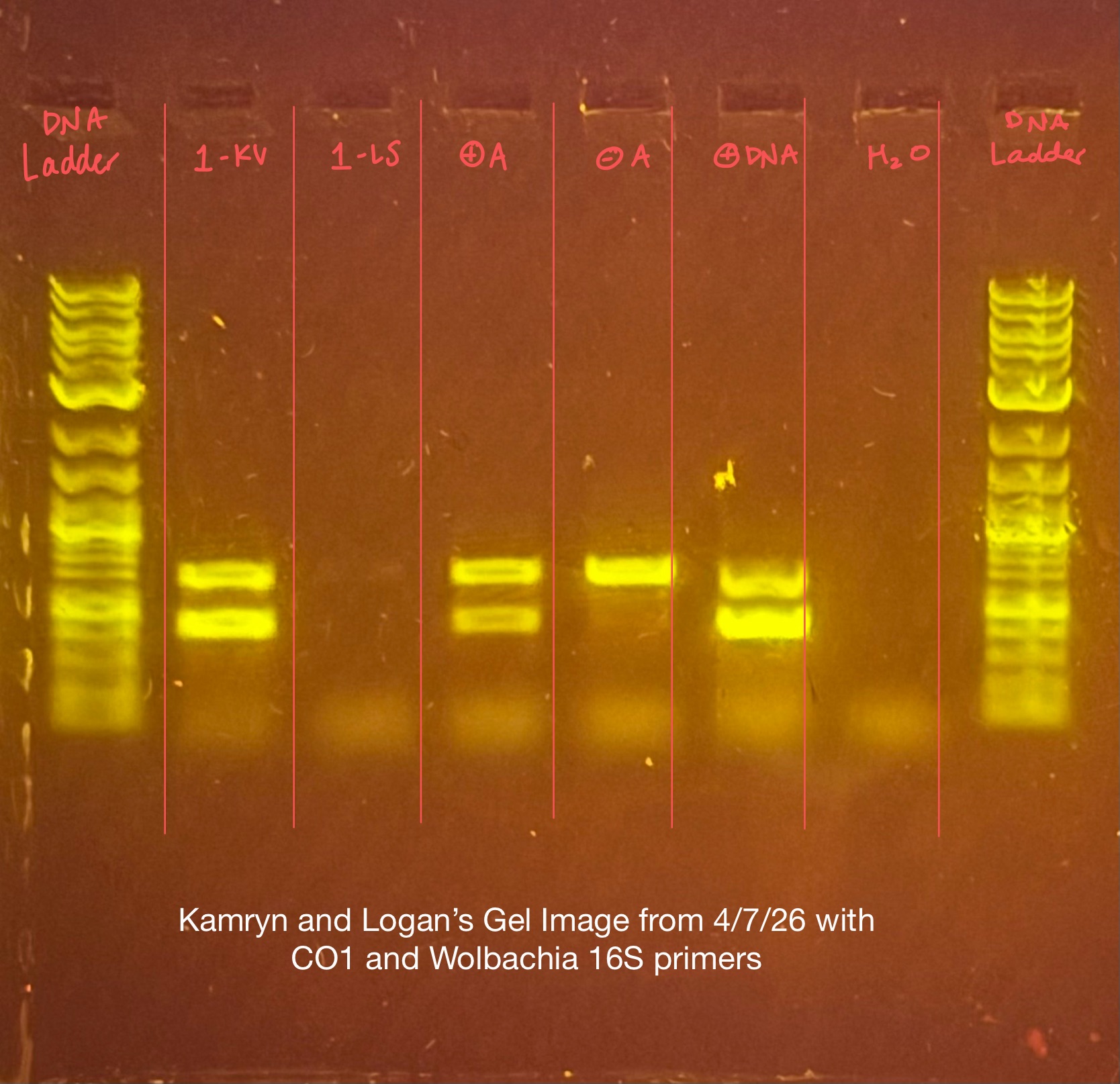
|
| Protocol notes | We used a DNA extraction protocol based on the insect adaptation of New England Biolabs’ Monarch Spin gDNA Extraction kit (Product # T3010). The specimen was incubated for 53 minutes in a hot water bath at 56 degrees C. The written protocol was followed closely. Our first PCR reaction was set up on 10 March 2026, and was a duplex reaction because we used both the Arthropod CO1 and Wolbachia 16S primers together. We used an annealing temperature of 49 degrees celcius and Taq polymerase – New England Biolabs OneTaq Hot Start Quick-Load 2X Master Mix with Standard Buffer (#M0488S). The second PCR was set up on 7 April 2026 and was also a duplex PCR reaction and was a repeat of the same protocol above. Our first gel image was taken on 3-24-2026 and was run at 120V for 25 minutes using the New England Biolabs 1 kb Plus DNA Ladder for Safe Stains (product # N0559S). Our second gel image taken on 4-7-2026 and was run at 125 volts for 37 minutes using the same DNA Ladder as before. |
Results |
|
| Wolbachia presence | Yes |
| Confidence level | High |
| Explanation of confidence level | For the 3/24/2026 gel electrophoresis confidence was high because the results of the positive (+A) and negative (-A) arthropod controls were as expected, as well as the DNA control results. This shows that PCR was successful and that contamination of the samples did not take place. Following the 4/7/2026 gel electrophoresis, confidence remained high because the results of the positive (+A) and negative (-A) arthropod controls were as expected, as well as the DNA control results. This shows that PCR was successful and that contamination of the samples did not take place. |
| Wolbachia 16S sequence | |
| Arthropod COI sequence |
|
| Summary | The Musca domestica was found to be postive for Wolbachia. |
 (no title)
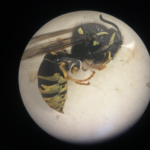 Yellowjacket Wasp
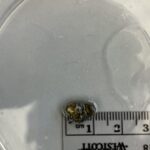 Pillbug
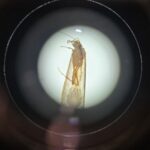 Umpachene Falls Caddisfly
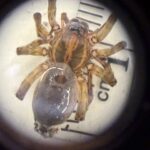 Wolf Spider