Sample information |
|
| Picture |
|
|---|---|
| Location | Approximate location: 36.14, -120.36 |
| Collection date | 12/11/2025 |
| Captive / Cultivated? | Wild-caught |
| Group | Coalinga High School |
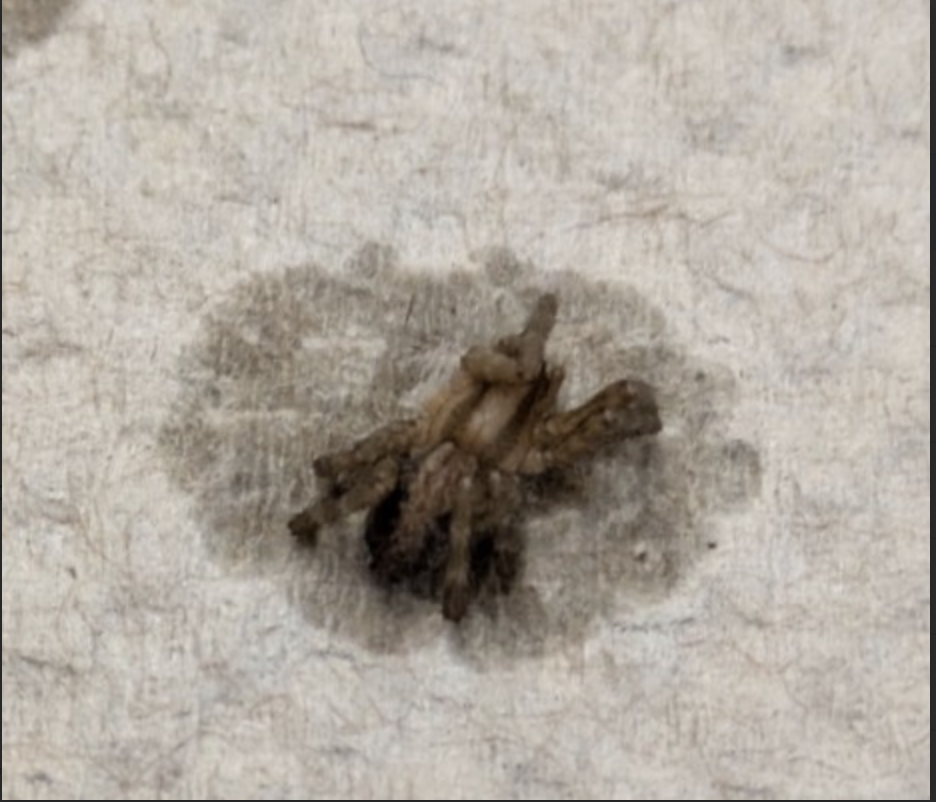
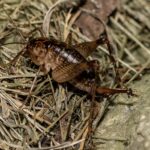
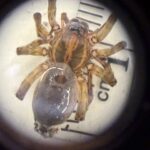
| Observations | The spider was collected in Fatima’s home’s backyard. |
| Putative identification | Arthropoda Arachnida Araneae |
Methods |
|
| Extraction kit | DNeasy (Qiagen) |
| DNA extraction location | Abdomen |
| Single or Duplex PCR | Single Reaction |
| Gel electrophoresis system | MiniOne |
| Buffer | TBE |
| DNA stain | GelGreen |
| Gel images |
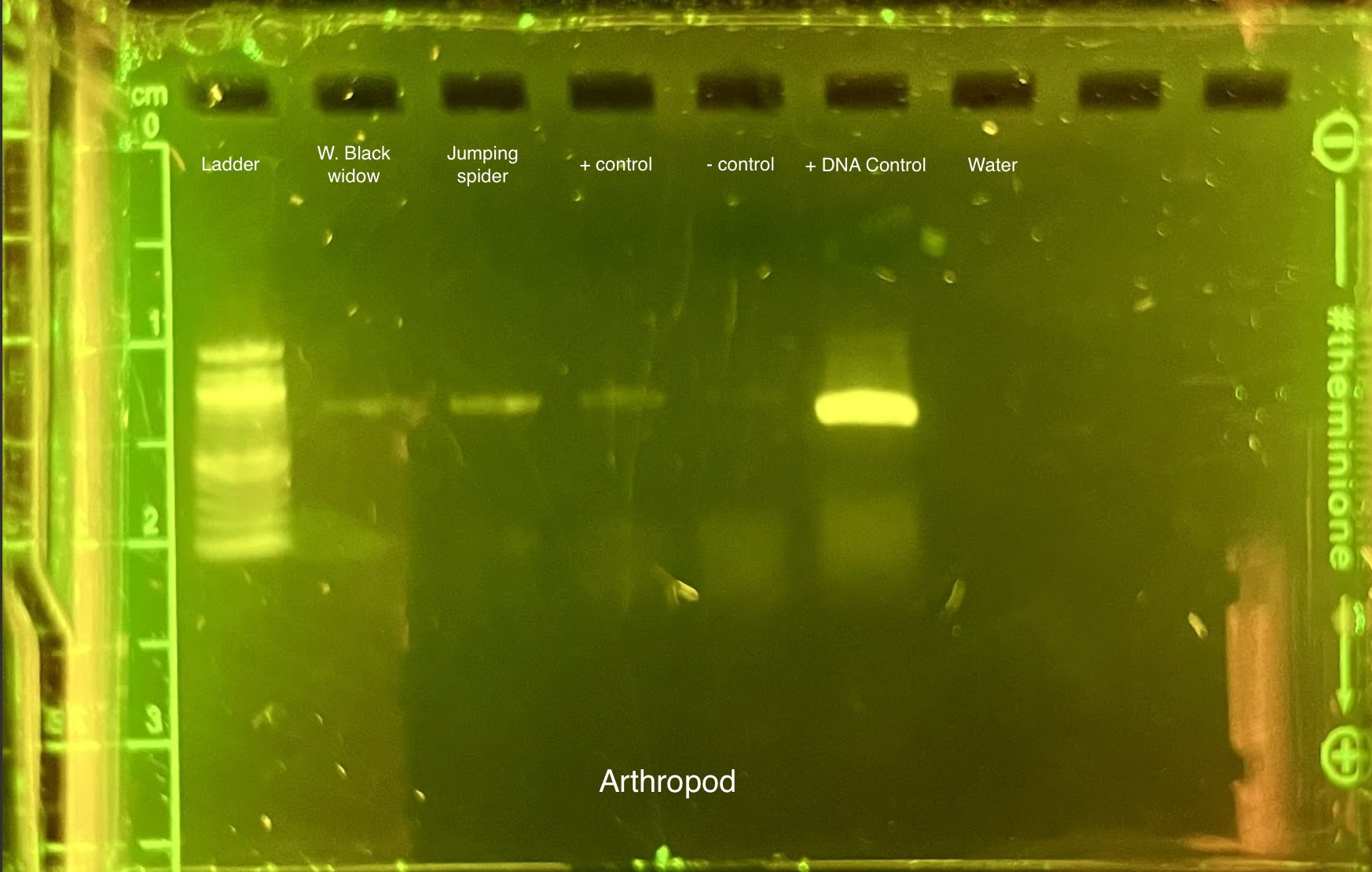
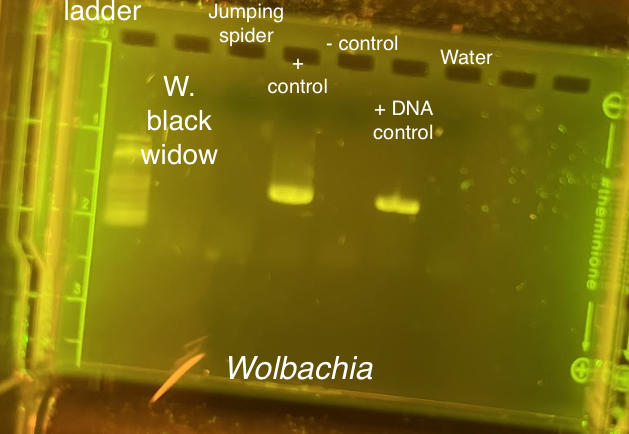
|
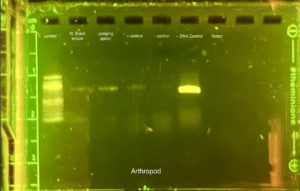
| Protocol notes | DNA Extraction: I crushed the arthropod’s abdomen throughly with some help from my groupmates. I also made sure there was no exoskeleton. Lane 4. Positive control, showed up for both runs. Lane 5. Negative control, barely showed up in CO1 arthropod run. Lane 6. Positive DNA control, showed up for both runs. Lane 7: Water, showed in neither run.
|
Results |
|
| Wolbachia presence | No |
| Confidence level | High |
| Explanation of confidence level | The reason why we are confident in our observations is that the water was uncontaminated and there was no positive wolbachia bands on our negative control. Plus, all of the bands showed up for the arthropod run (it’s very faint for well 5, sorry if it’s hard to see). Seeing that there are no errors, we are confident that our arthropod is uninfected. |
| Wolbachia 16S sequence | |
| Arthropod COI sequence |
|
| Summary | The Araneae was found to be negative for Wolbachia. |
 (no title)
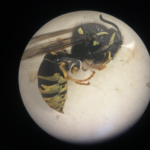 Yellowjacket Wasp
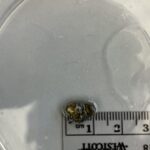 Pillbug
 Umpachene Falls Caddisfly
 Wolf Spider