Sample information |
|
| Picture |
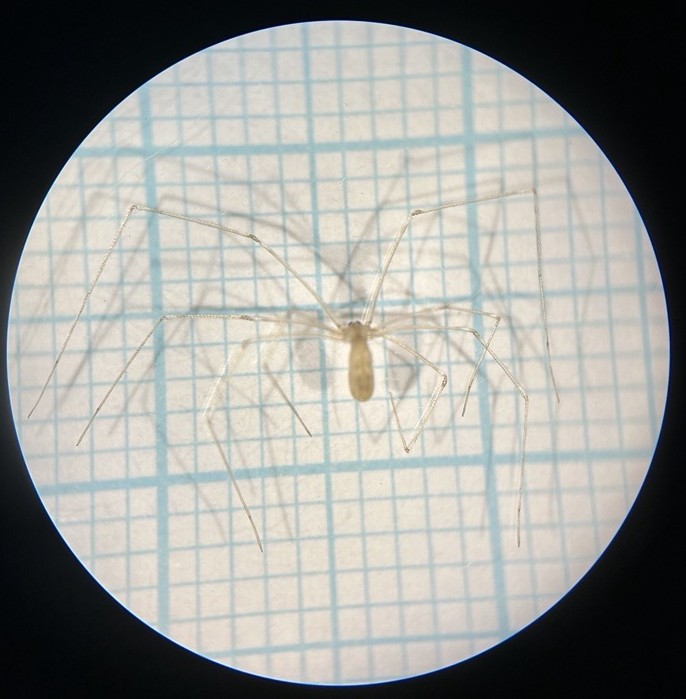
|
|---|---|
| Location | Approximate location: 47.09, 8.45 |
| Collection date | 03/26/2026 |
| Captive / Cultivated? | Wild-caught |
| Group | |
| Observations | |
| Putative identification | Arthropoda Arachnida Araneae Pholcidae Pholcus Pholcus phalangioides |
Methods |
|
| Extraction kit | Edwards Buffer |
| DNA extraction location | Gonads dissected |
| Single or Duplex PCR | Duplex Reaction |
| Gel electrophoresis system | MiniOne |
| Buffer | TAE |
| DNA stain | Cyber Green |
| Gel images |
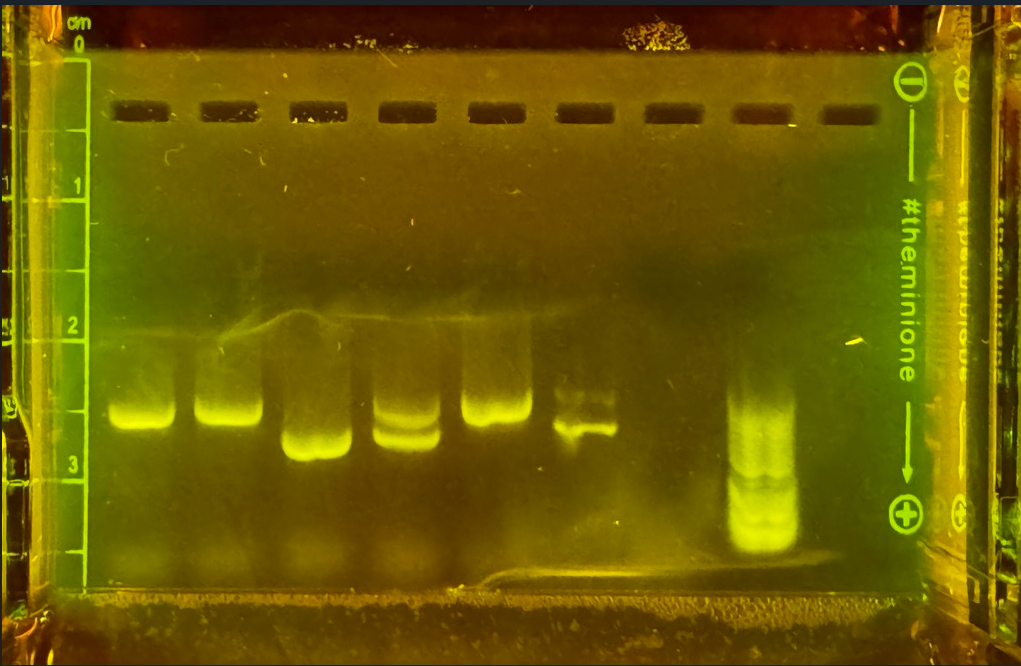
|
| Protocol notes | We tested three insect samples for the presence of Wolbachia. DNA was extracted from the insect sample and then amplified using PCR. The PCR products were analysed with gel electrophoresis using the MiniOne gel electrophoresis system, TAE buffer and Cyber Green DNA stain. The Wolbachia DNA control worked and showed the expected positive result. The water control also worked and showed no contamination. The positive and negative controls for animal DNA also gave the expected results. Overall, the controls show that the experiment worked correctly. Gel image explanation: Columns:
|
Results |
|
| Wolbachia presence | Yes |
| Confidence level | Low |
| Explanation of confidence level | The spider sample (column 3) showed a band for Wolbachia DNA, but no band for animal DNA. Normally, a positive result should contain both an animal DNA band and a Wolbachia band. The animal DNA band is important because it confirms that the DNA extraction and PCR worked for the sample. Since this band is missing, the result cannot be interpreted as a reliable positive result. It should therefore be considered suspicious and would need to be repeated or checked again. The controls worked as expected: the Wolbachia DNA control was positive (column 6) and the animal DNA controls also gave the correct results, with a positive and a negative result (columns 4 and 5). This shows that the DNA extraction, PCR and gel electrophoresis worked properly and that there was no contamination in the controls. It is hard to say if the spider actually had Wolbachia DNA since the animal DNA is missing. The missing animal DNA band could mean that the DNA extraction did not work well, that the DNA concentration was too low, that the animal DNA was degraded, or that something inhibited the PCR. Another possible explanation could be a pipetting error or contamination of the sample with Wolbachia DNA. Therefore, the sample cannot be clearly classified as Wolbachia-positive. |
| Wolbachia 16S sequence | |
| Arthropod COI sequence |
|
| Summary | The Pholcus phalangioides was found to be postive for Wolbachia. |
 (no title)
 Yellowjacket Wasp
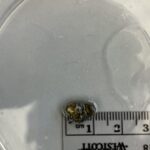 Pillbug
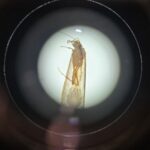 Umpachene Falls Caddisfly
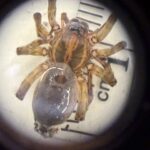 Wolf Spider