Sample information |
|
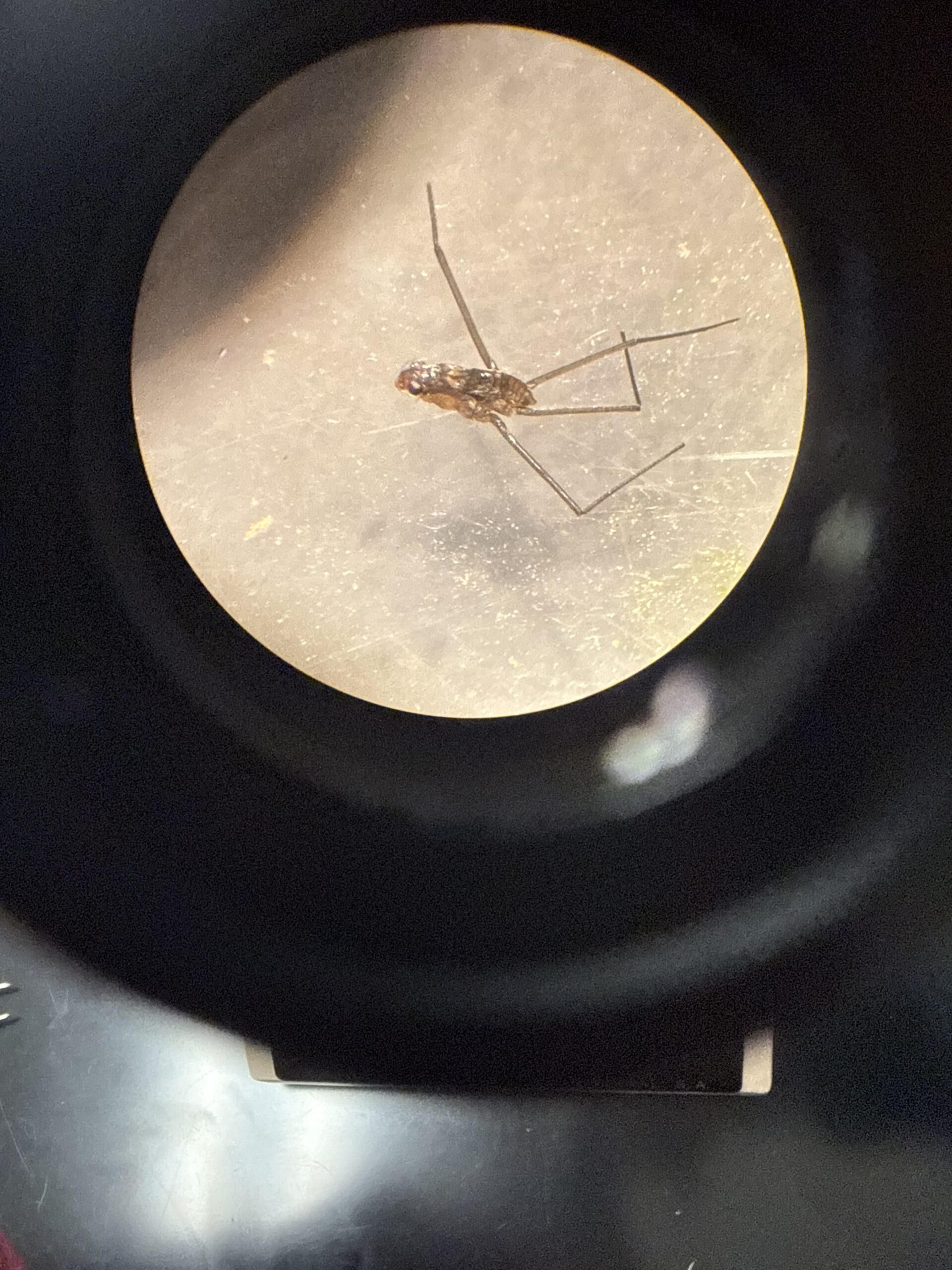
| Picture |
|
|---|---|
| Location | Approximate location: 38.82, -77.18 |
| Collection date | 04/22/2026 |
| Captive / Cultivated? | Wild-caught |
| Group | Thomas Jefferson High School for Science and Technology |
| Observations | Collected in a small stream. Weather was fairly warm and standard for spring. Stream was slow moving and the water strider was in a shallow section. |
| Putative identification | Arthropoda Insecta Hemiptera Gerridae Aquarius Aquarius remigis |
Methods |
|
| Extraction kit | DNeasy (Qiagen) blood and tissue kit |
| DNA extraction location | Whole arthropod |
| Single or Duplex PCR | Single Reaction |
| Gel electrophoresis system | MiniPCR |
| Buffer | TBE |
| DNA stain | SYBR Safe |
| Gel images |
|
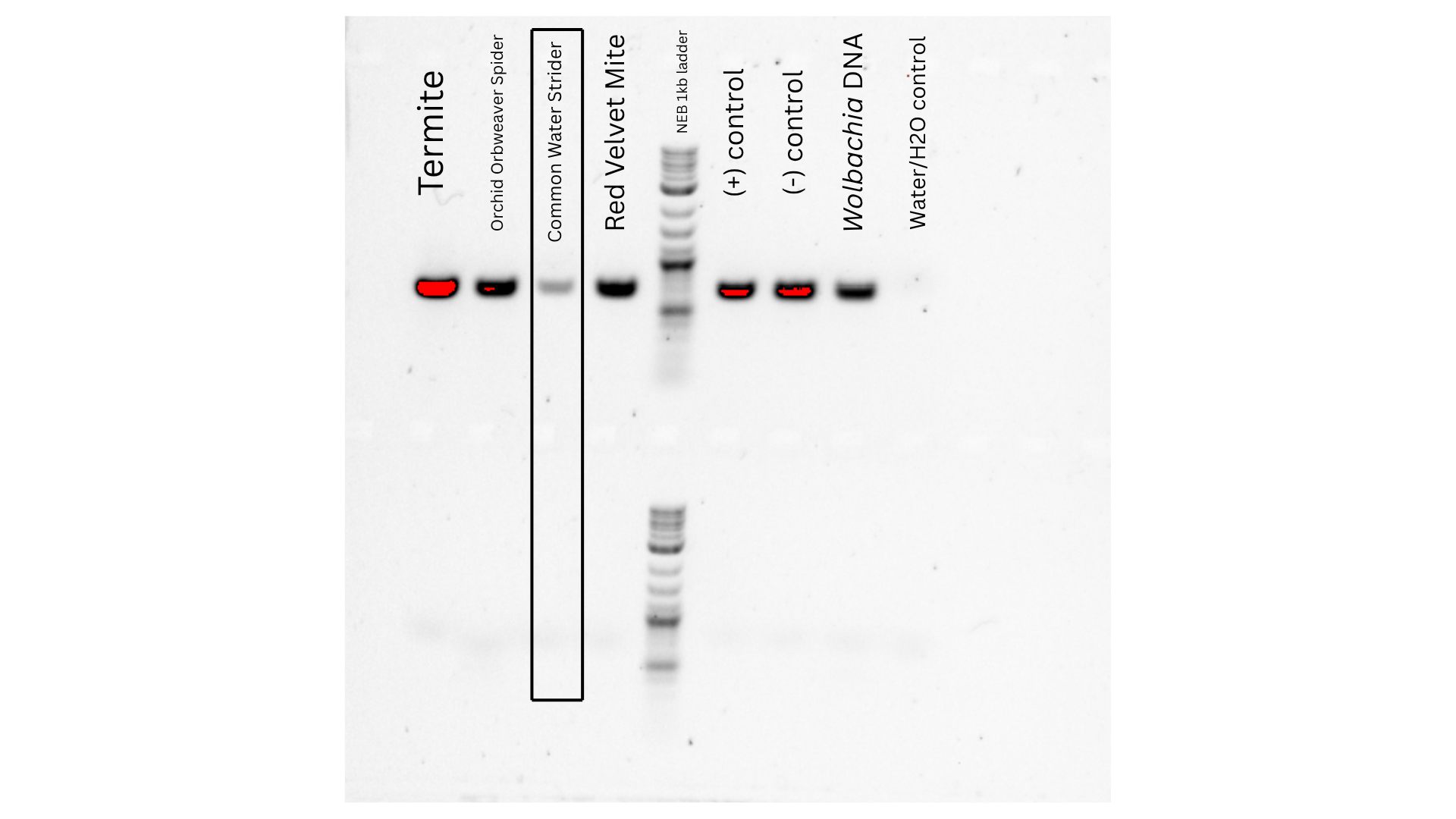
| Protocol notes | DNA Extraction: I used all of my bug in the protocol and ground it up with a mortar and a few pieces of silica sand. Analysis: My sample received a band for the CO1 gene, with all of the controls working as expected. My sample did not receive a band for the Wolbachia, but our positive controls also failed to produce a band, which shows a possible error in our experiment. |
Results |
|
| Wolbachia presence | No |
| Confidence level | Medium |
| Explanation of confidence level | I cannot be fully confident that my sample is Wolbachia negative because the positive controls failed to produce bands. |
| Wolbachia 16S sequence | |
| Arthropod COI sequence | Download AB1
|
| Summary | The Aquarius remigis was found to be negative for Wolbachia. |
 (no title)
 Yellowjacket Wasp
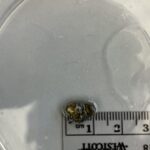 Pillbug
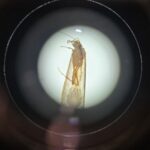 Umpachene Falls Caddisfly
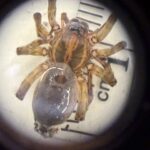 Wolf Spider