Sample information |
|
| Picture |
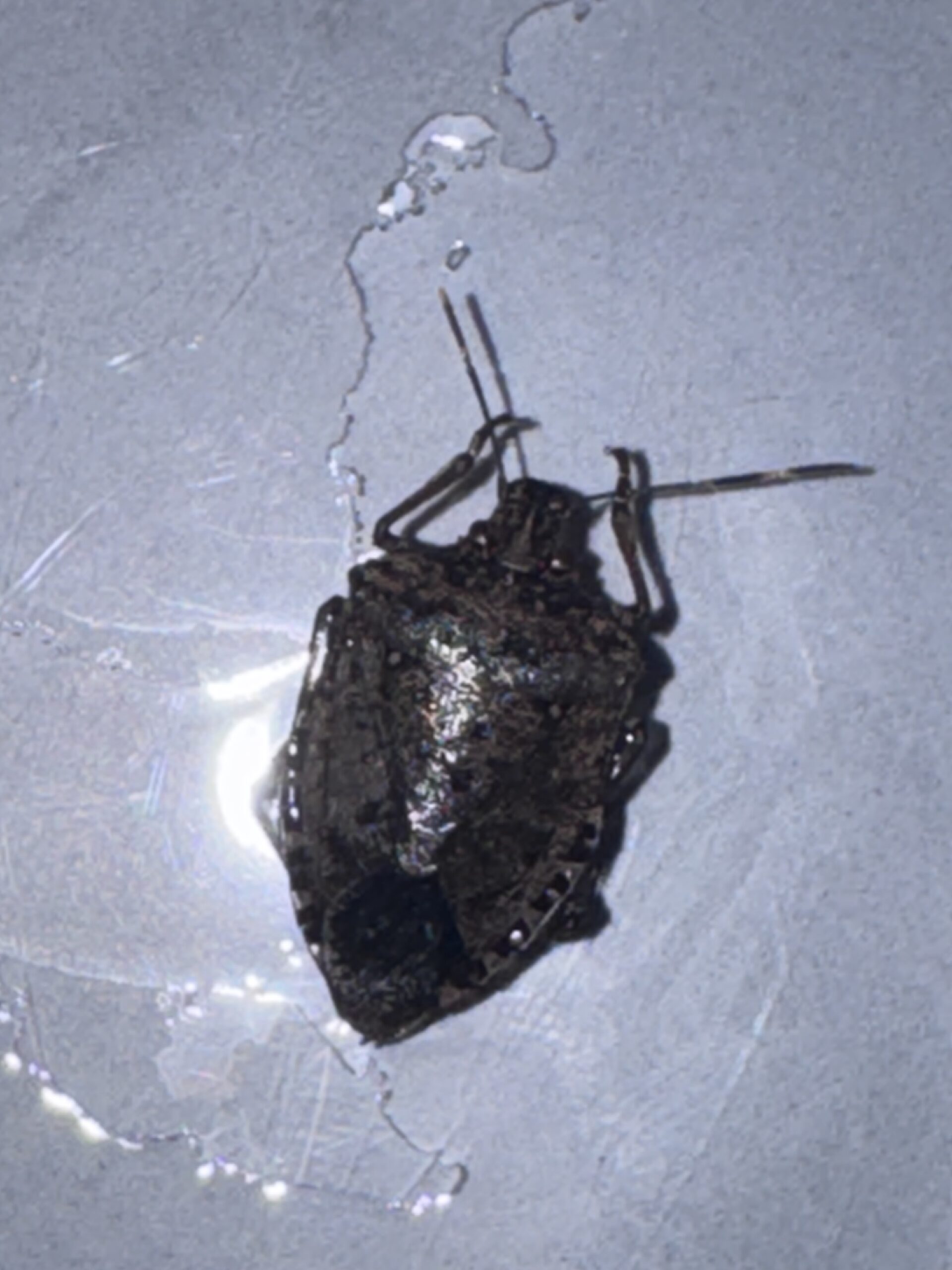
|
|---|---|
| Location | Approximate location: 42.45, -73.26 |
| Collection date | 09/29/2026 |
| Captive / Cultivated? | Wild-caught |
| Group | Berkshire Community College |
| Observations | Was still when found, light-colored white bands near the tip on the antenna shield-shaped body with brown-grey specks |
| Putative identification | Arthropoda Insecta Hemiptera |
Methods |
|
| Extraction kit | |
| DNA extraction location | Abdomen |
| Single or Duplex PCR | Duplex Reaction |
| Gel electrophoresis system | |
| Buffer | |
| DNA stain | |
| Gel images |
|
| Protocol notes | We used a DNA extraction protocol based on the insect adaptation of New England Biolabs’ Monarch Spin gDNA Extraction kit (Product # T3010). The specimen was incubated for 45 minutes in a hot water bath at 56 degrees |
Results |
|
| Wolbachia presence | |
| Confidence level | |
| Explanation of confidence level | Our first PCR reaction was set up on 10/20 and was a duplex reaction because we used both the arthropod CO1 and wolbachia 16S primers together. Used an annealing temperature of 49 degrees Celsius. New England Biolabs OneTaq hot start Quick load 2x master Mix with standard Buffer (M0488S) |
| Wolbachia 16S sequence | |
| Arthropod COI sequence |
|
| Summary | |
 DEM-EPC
 DEM-HED Hemiptera
 DEMDDB Blattodea
 DEMAMH Hymenoptera
 DEMKAP – Diptera