Sample information |
|
| Picture |
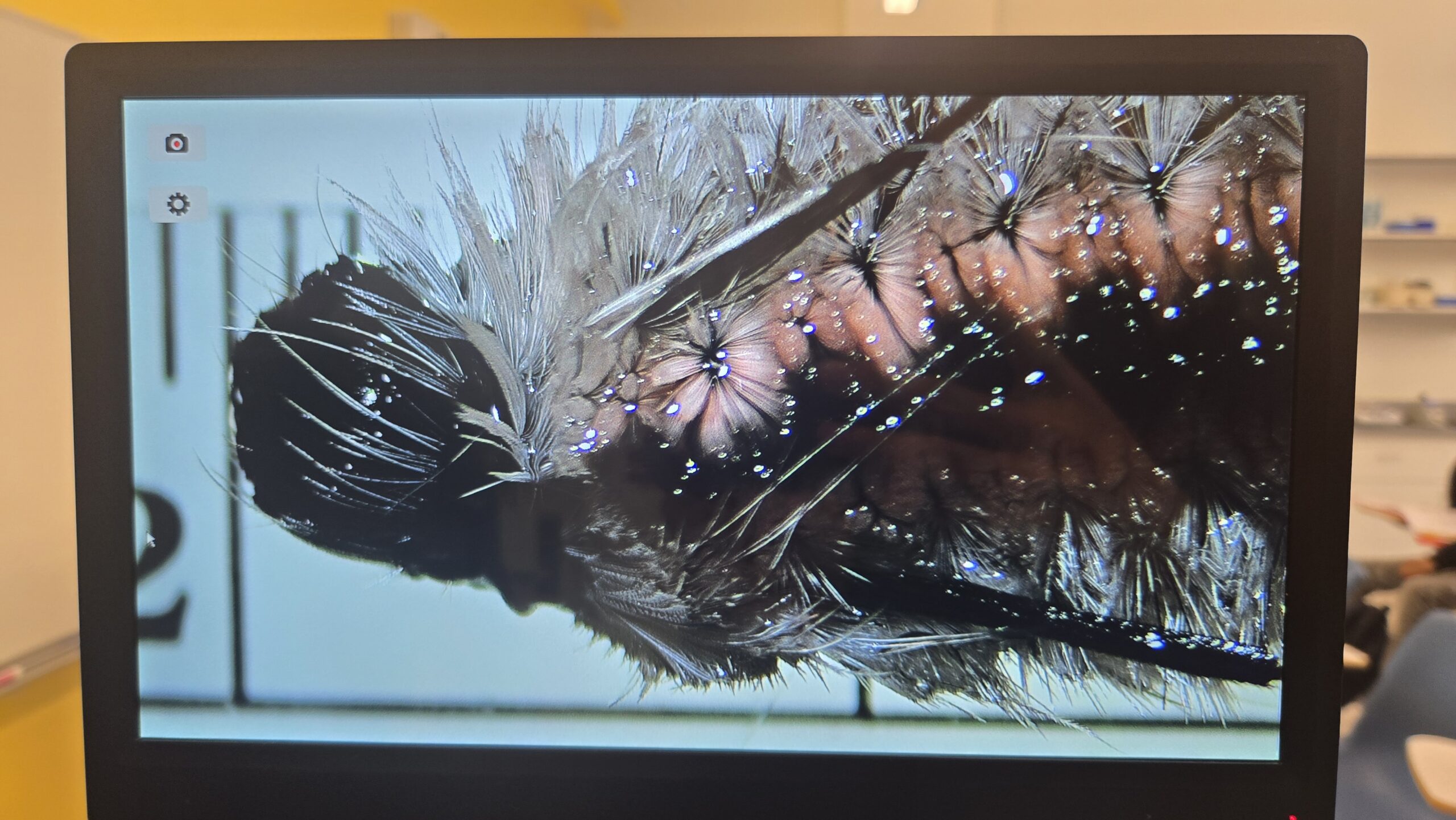
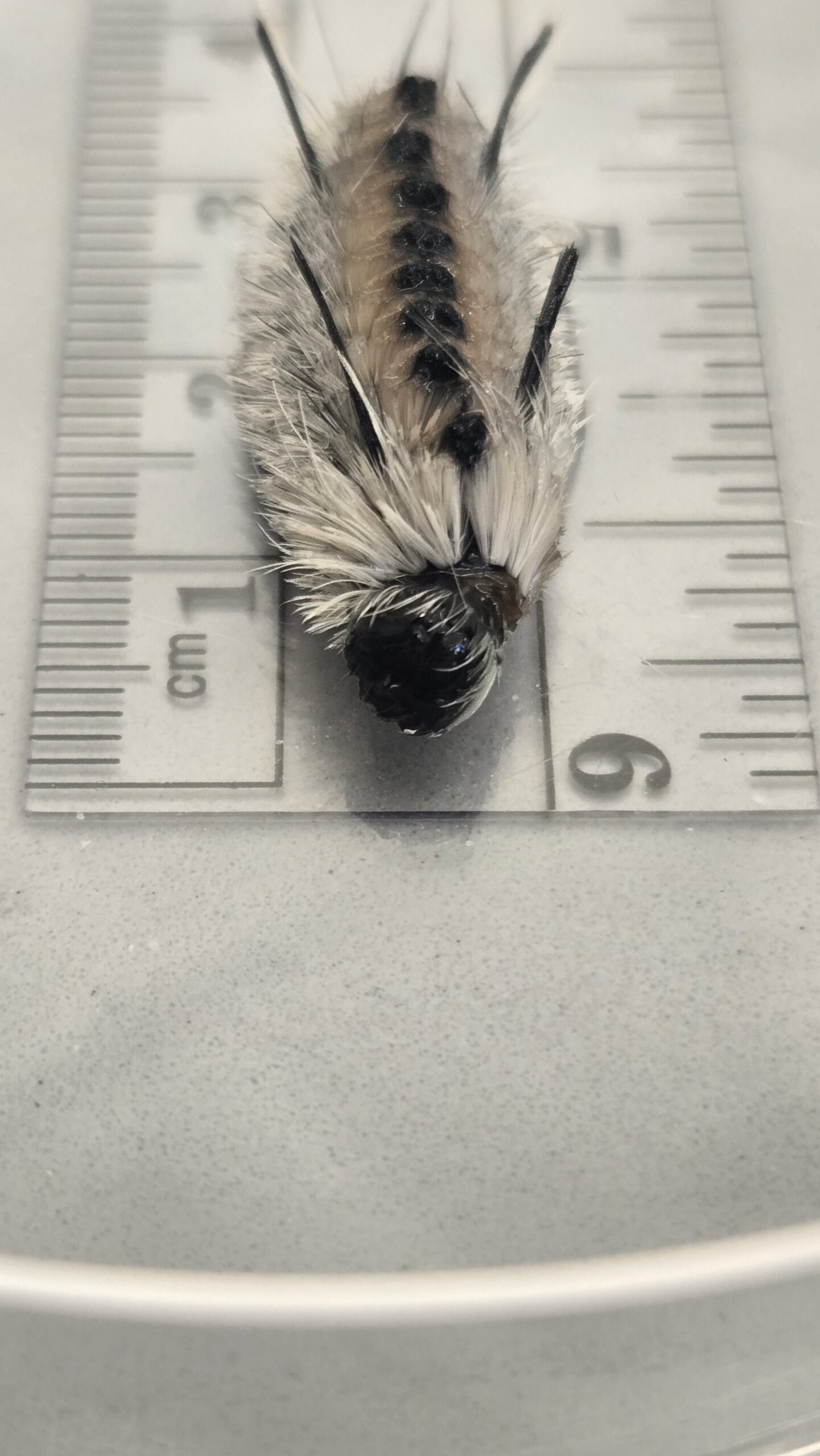
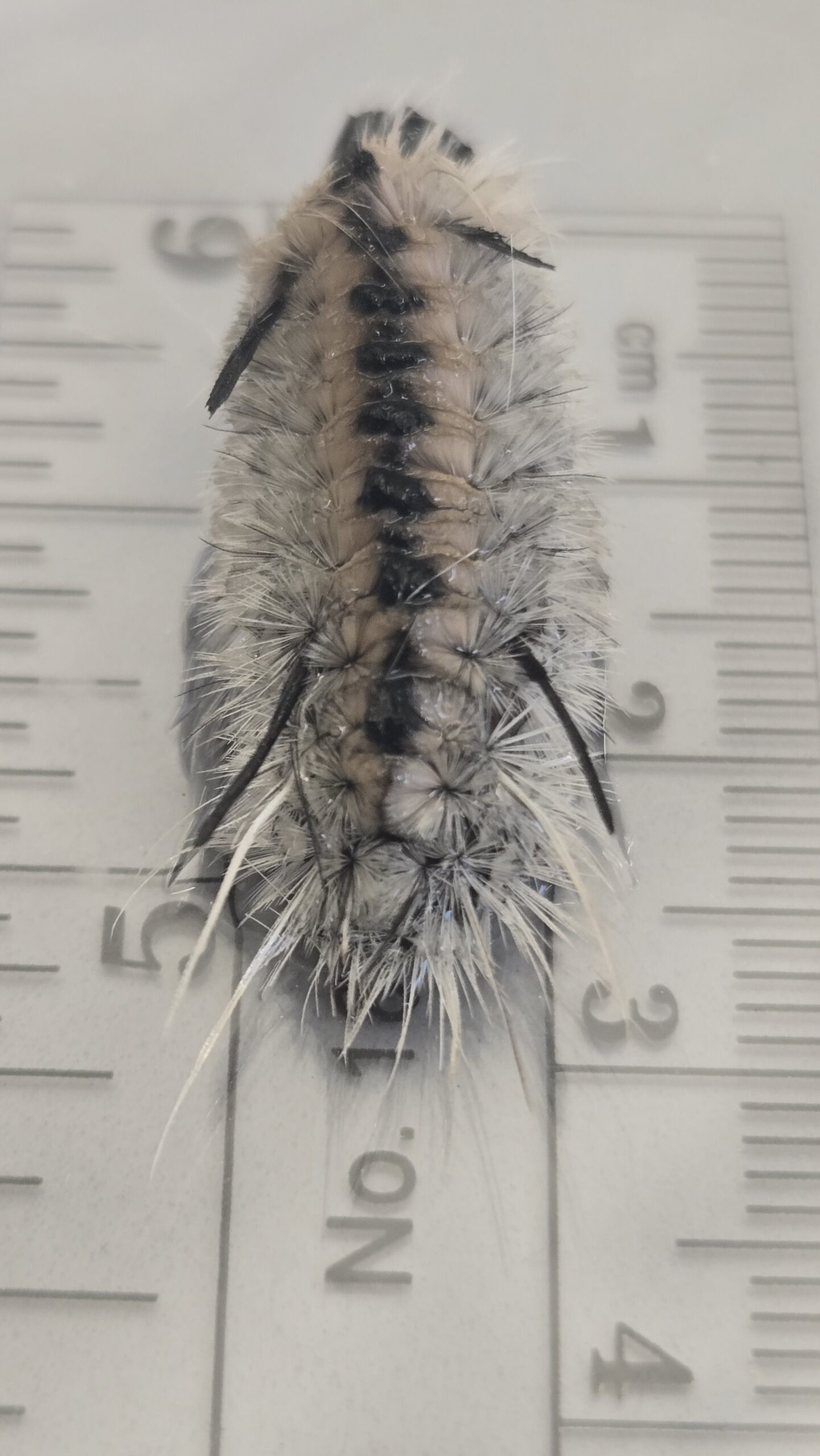
|
|---|---|
| Location | Approximate location: 42.46, -73.32 |
| Collection date | 10/01/2026 |
| Captive / Cultivated? | Wild-caught |
| Group | Berkshire Community College |
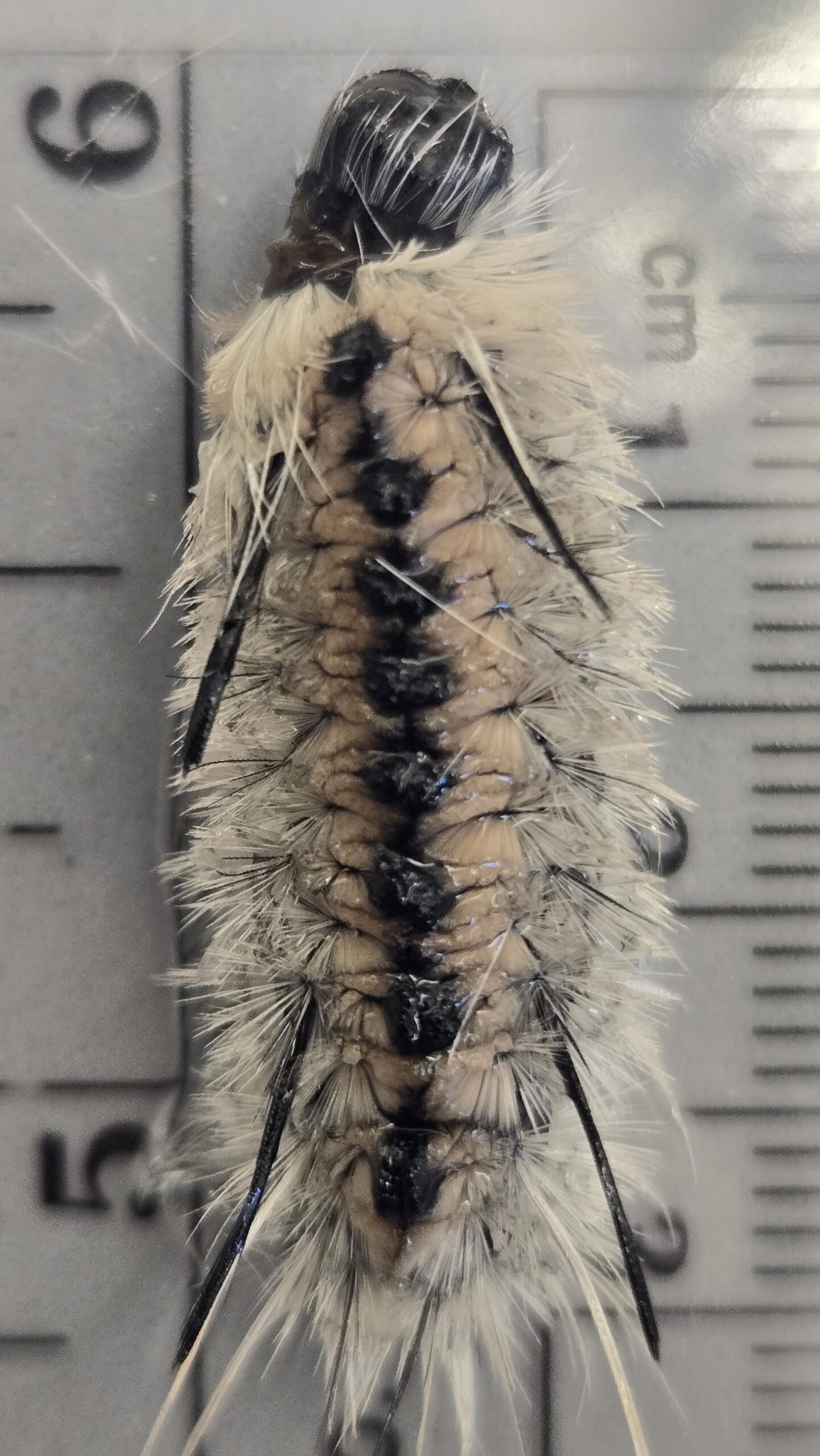
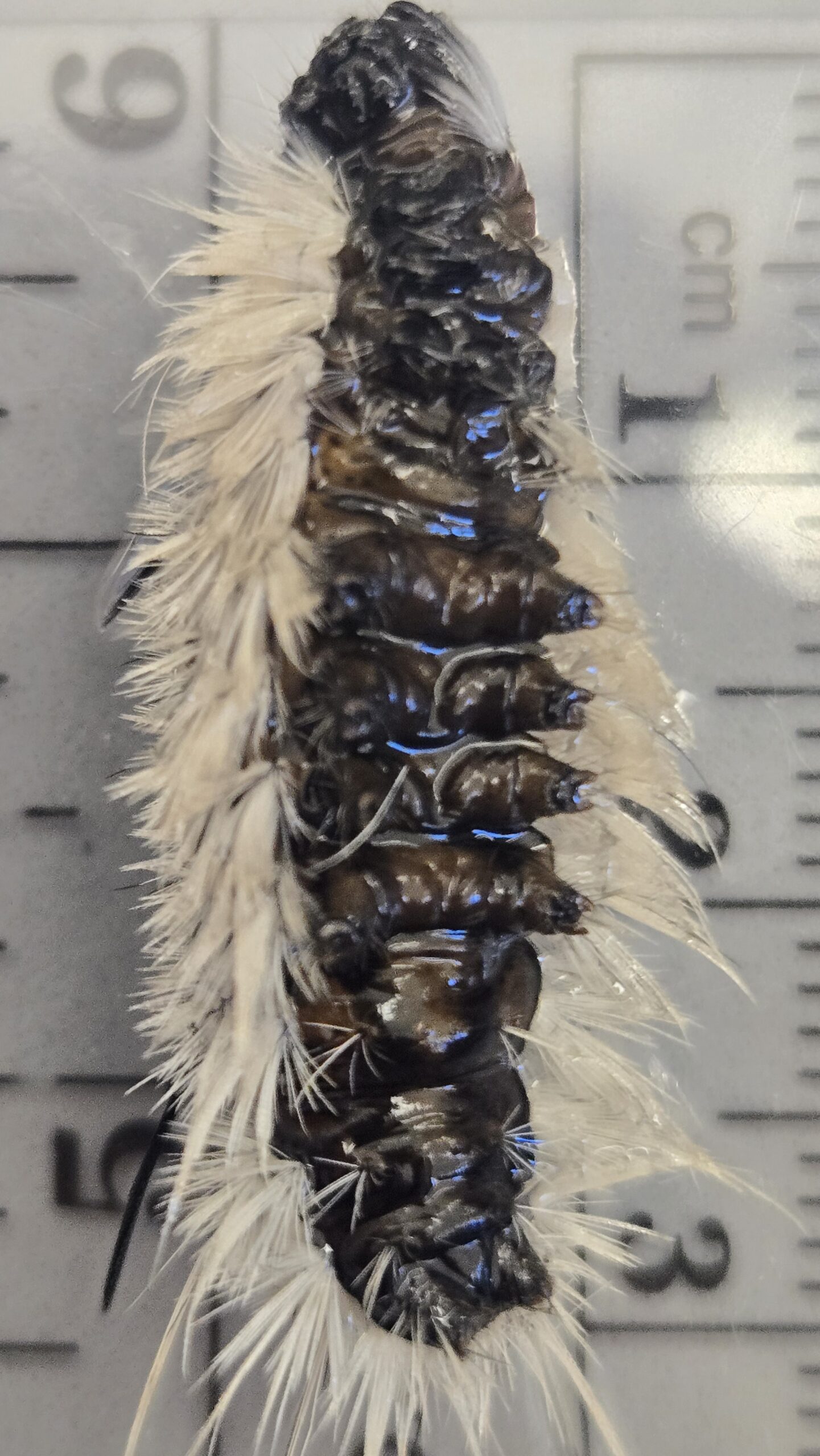
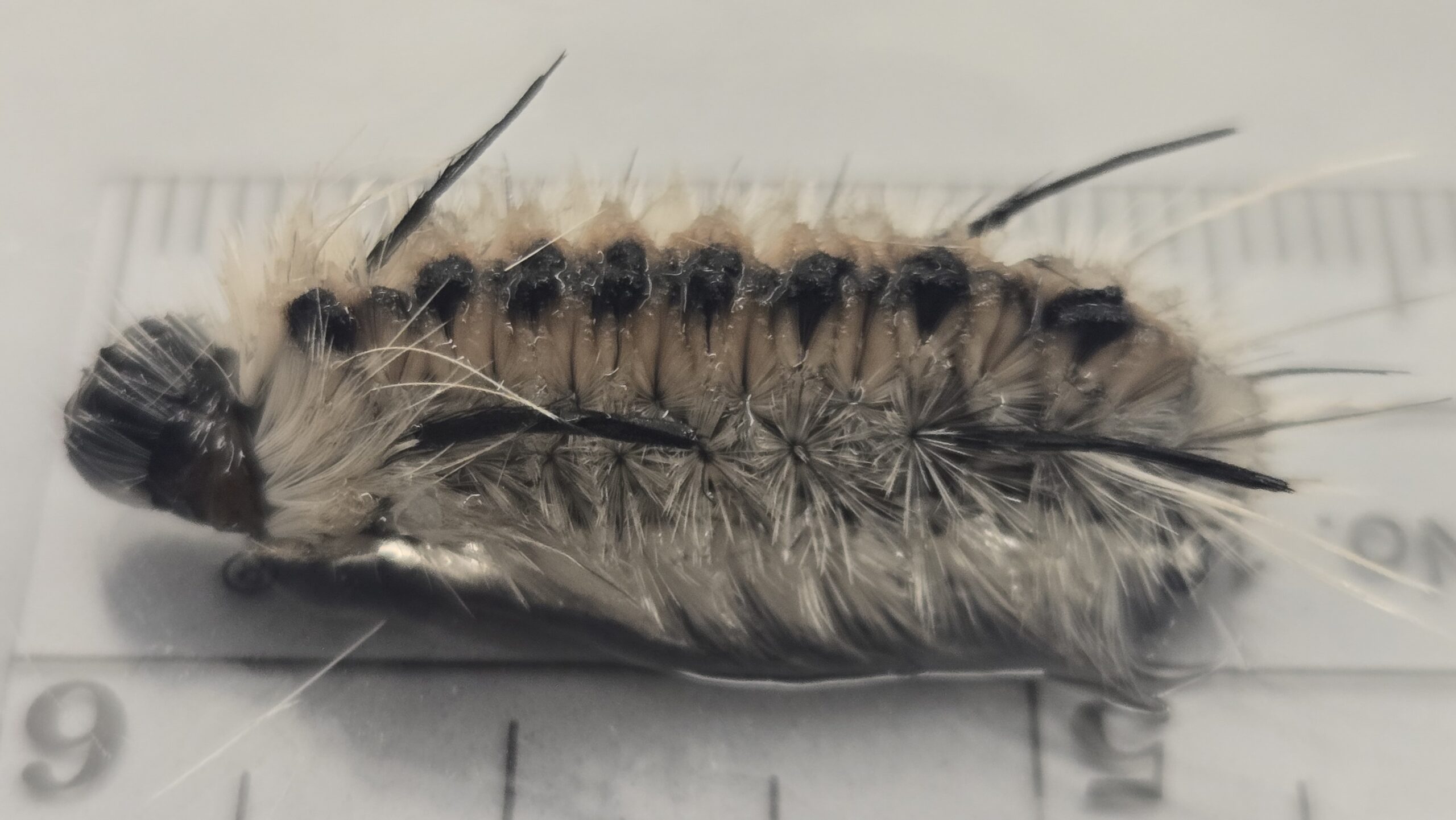
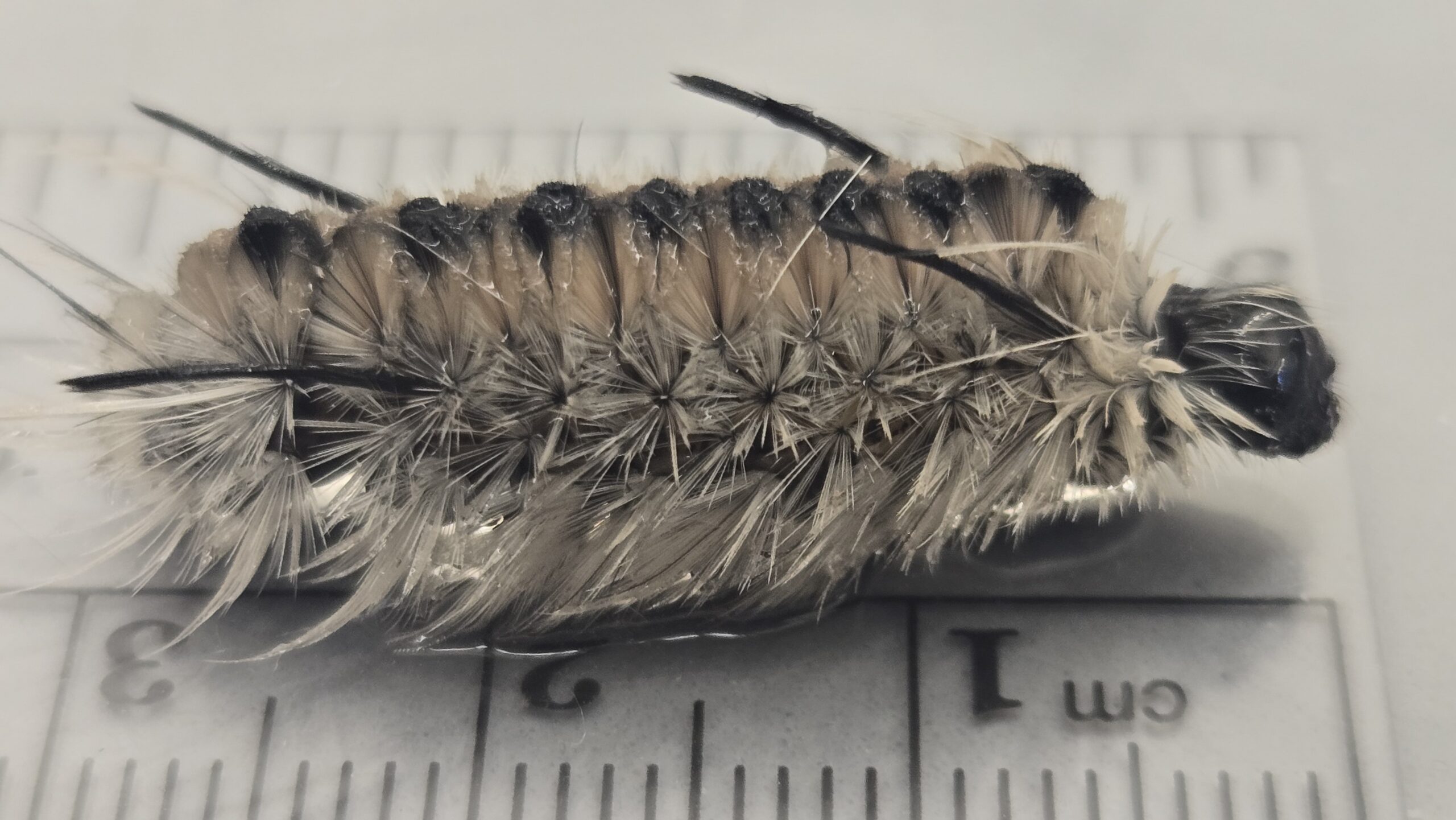
| Observations | The caterpillar has a black head, 3 segments behind the head are part of the thorax, with each segment bearing two legs. The remaining ~10 segments appear to be part of the abdomen. It has 6 thoracic legs and 10 prolegs. It features no wings, fuzzy white hair across the body, and a black stripe down the middle of the body. |
| Putative identification | Arthropoda Insecta Lepidoptera Erebidae Lophocampa Lophocampa caryae |
Methods |
|
| Extraction kit | Monarch DNA extraction (NEB) |
| DNA extraction location | Abdomen |
| Single or Duplex PCR | Duplex Reaction |
| Gel electrophoresis system | |
| Buffer | |
| DNA stain | |
| Gel images |
|
| Protocol notes | We used a DNA extraction protocol based on the insect adaptation of New England Biolabs’ Monarch Spin gDNA Extraction kit (Product # T3010). The specimen was incubated for 60 minutes in a hot water bath at 56 degrees C. Our first PCR reaction was set up on 10/21/26 and was a duplex reaction because we used both the Arthropod CO1 and Wolbachia 16S primers together. Used an annealing temperature of 49 degrees Celsius Used this Taq polymerase: New England Biolabs OneTaq Hot Start Quick-Load 2X Master Mix with Standard Buffer (#M0488S) |
Results |
|
| Wolbachia presence | |
| Confidence level | |
| Explanation of confidence level | |
| Wolbachia 16S sequence | |
| Arthropod COI sequence |
|
| Summary | |
 DEMAMJ-Hemiptera
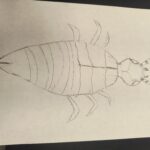 DEM-EPC
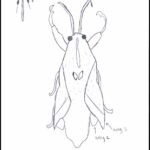 DEM-HED Hemiptera
 DEMDDB Blattodea
 DEMAMH Hymenoptera