Sample information |
|
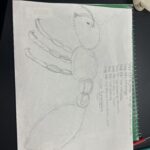
| Picture |
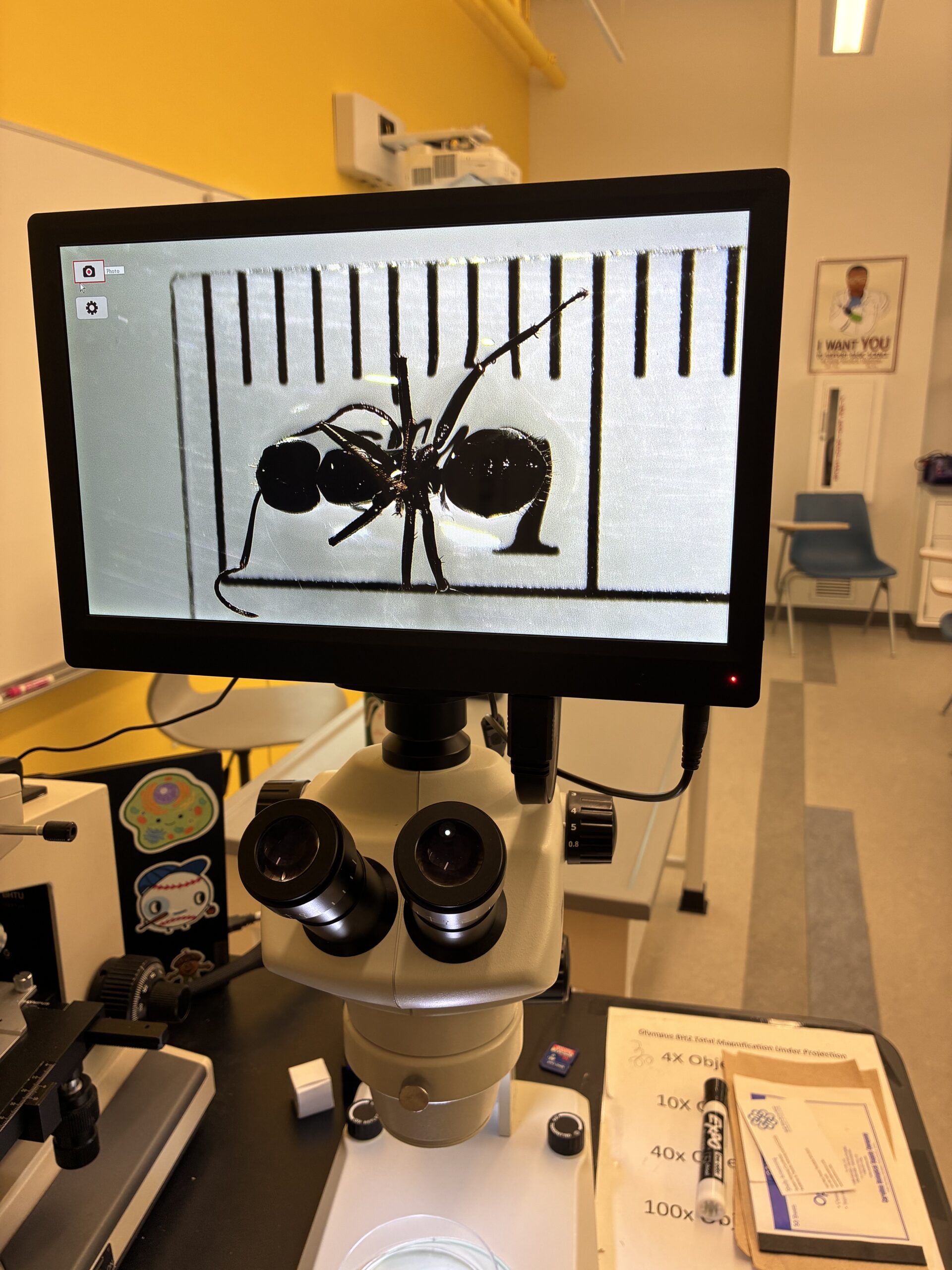
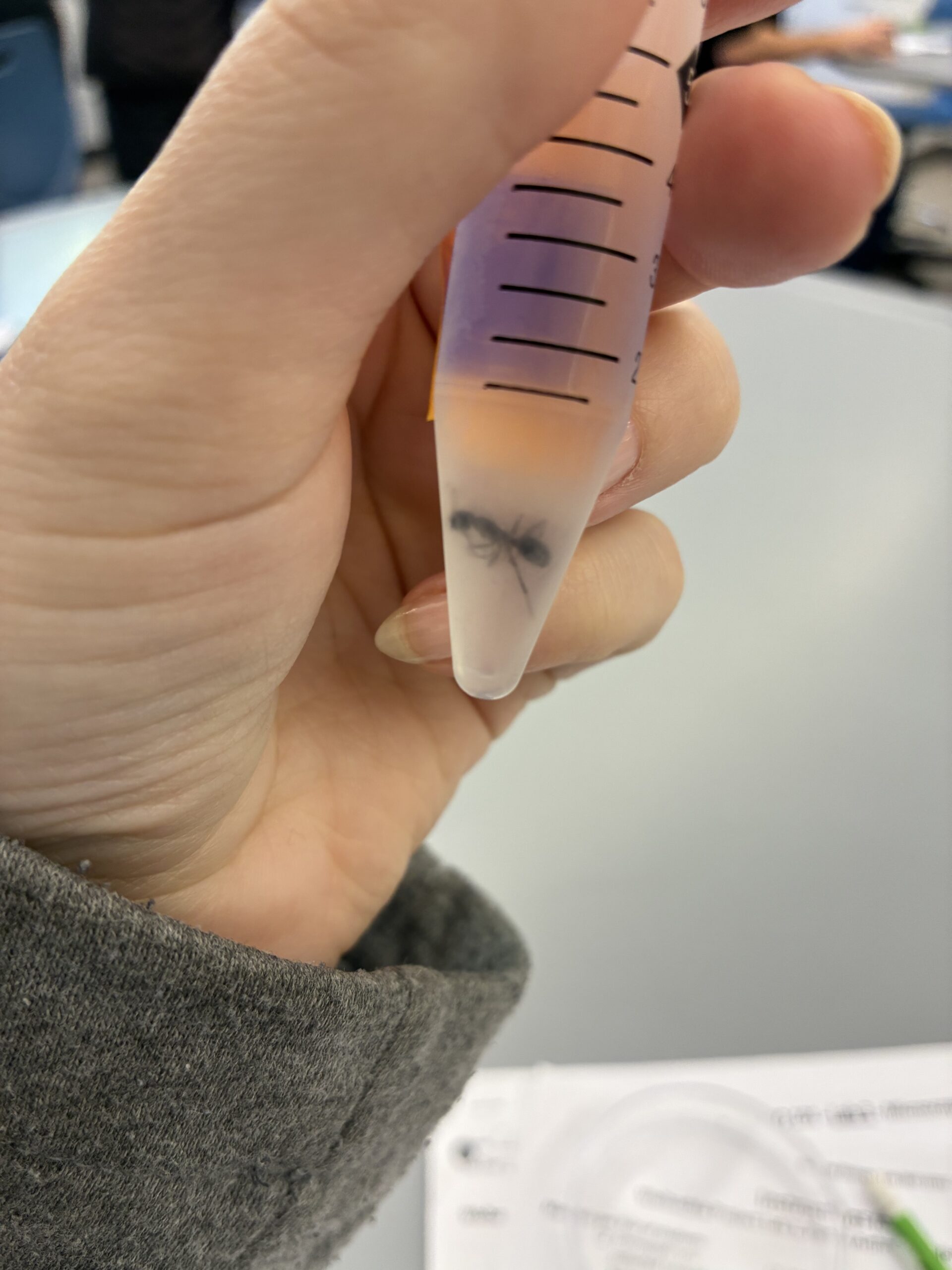
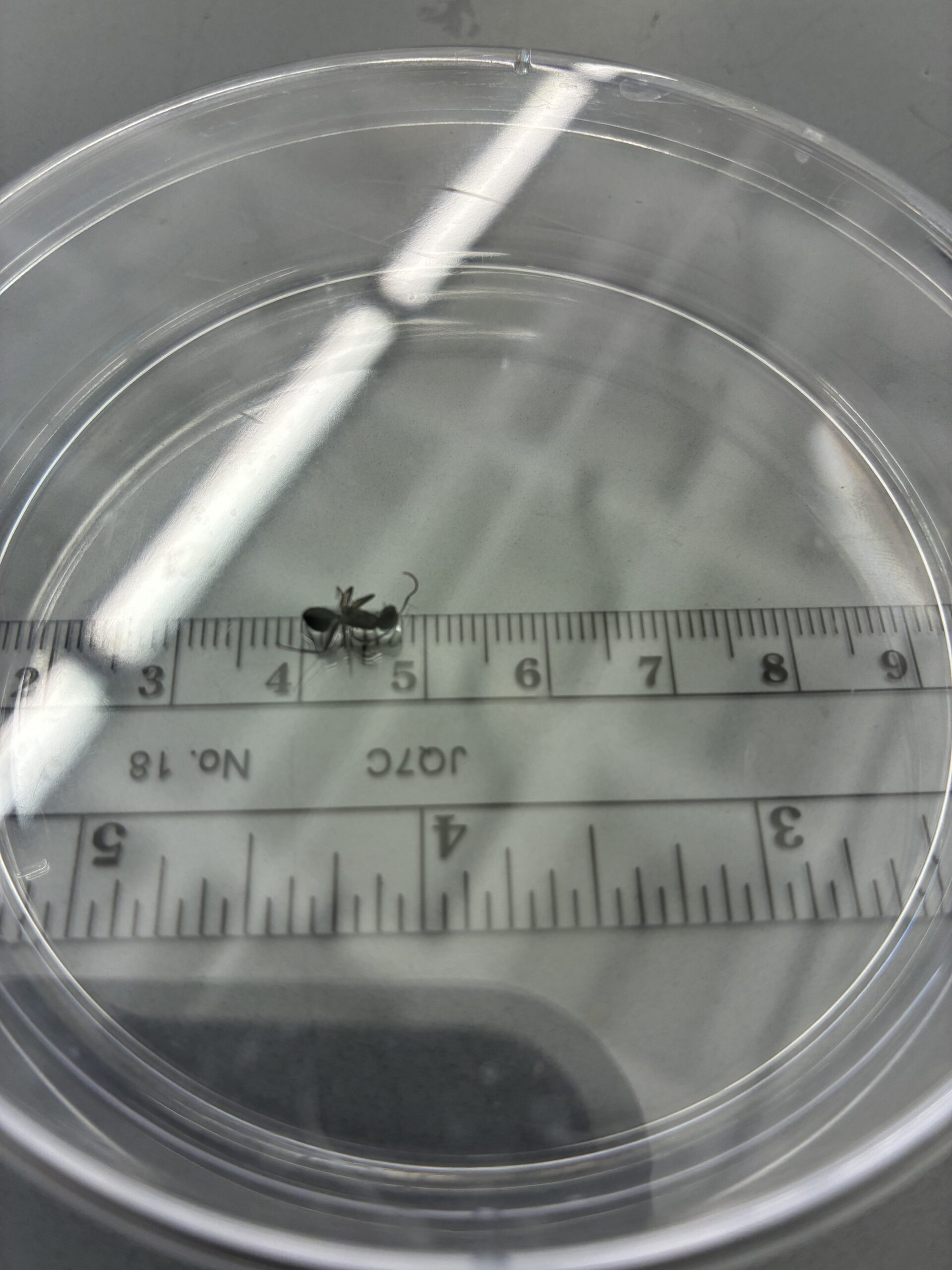
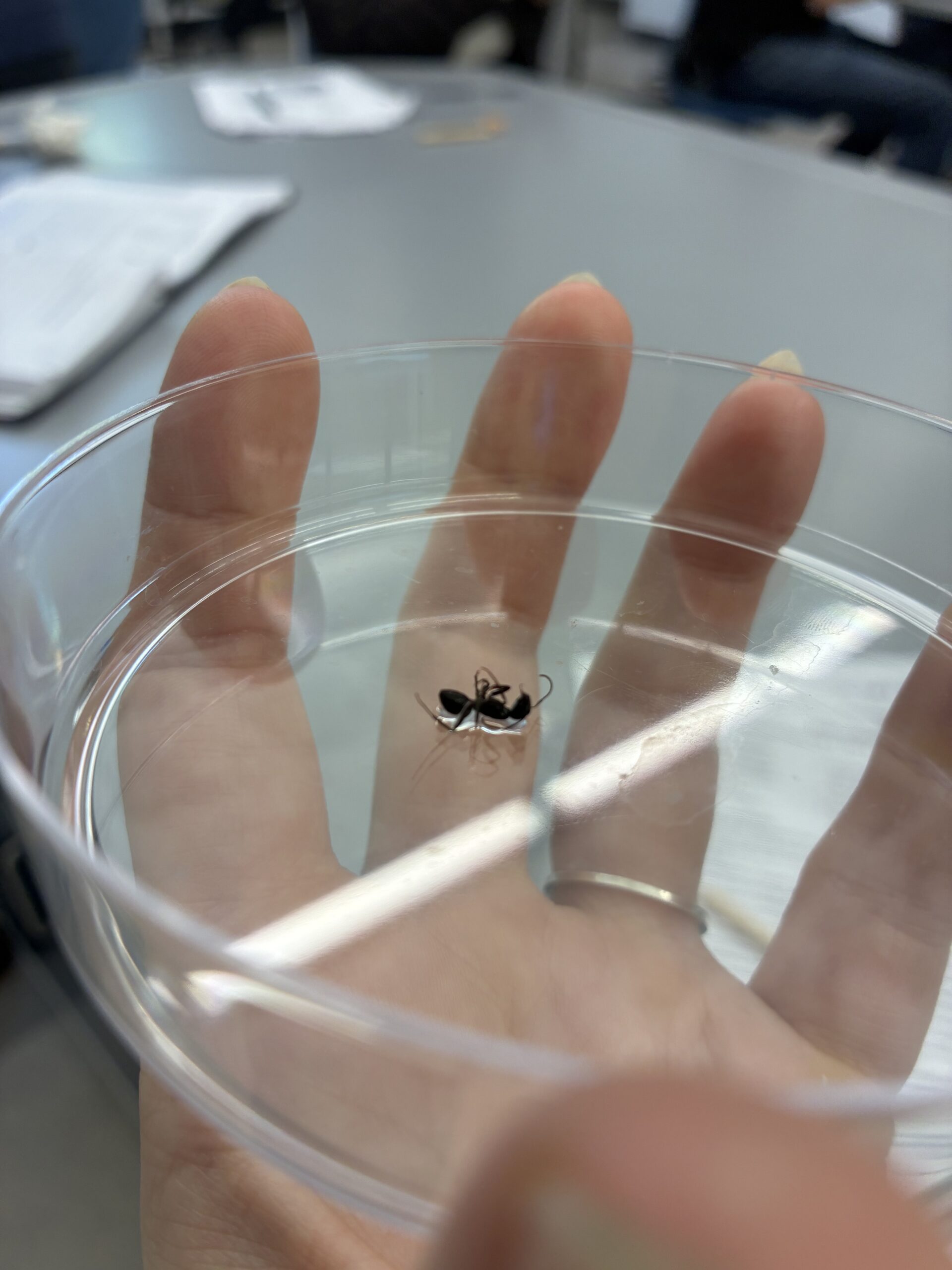
|
|---|---|
| Location | Approximate location: 42.46, -73.32 |
| Collection date | 10/01/2026 |
| Captive / Cultivated? | Wild-caught |
| Group | Berkshire Community College |
| Observations | This ant had a lot of energy and was difficult to capture. |
| Putative identification | Arthropoda Insecta Hymenoptera Formicidae Camponotus Camponotus pennsylvanicus |
Methods |
|
| Extraction kit | Monarch DNA extraction (NEB) |
| DNA extraction location | Abdomen |
| Single or Duplex PCR | Duplex Reaction |
| Gel electrophoresis system | Edvotek Gel Electrophoresis |
| Buffer | 1X TAE |
| DNA stain | SYBR Safe |
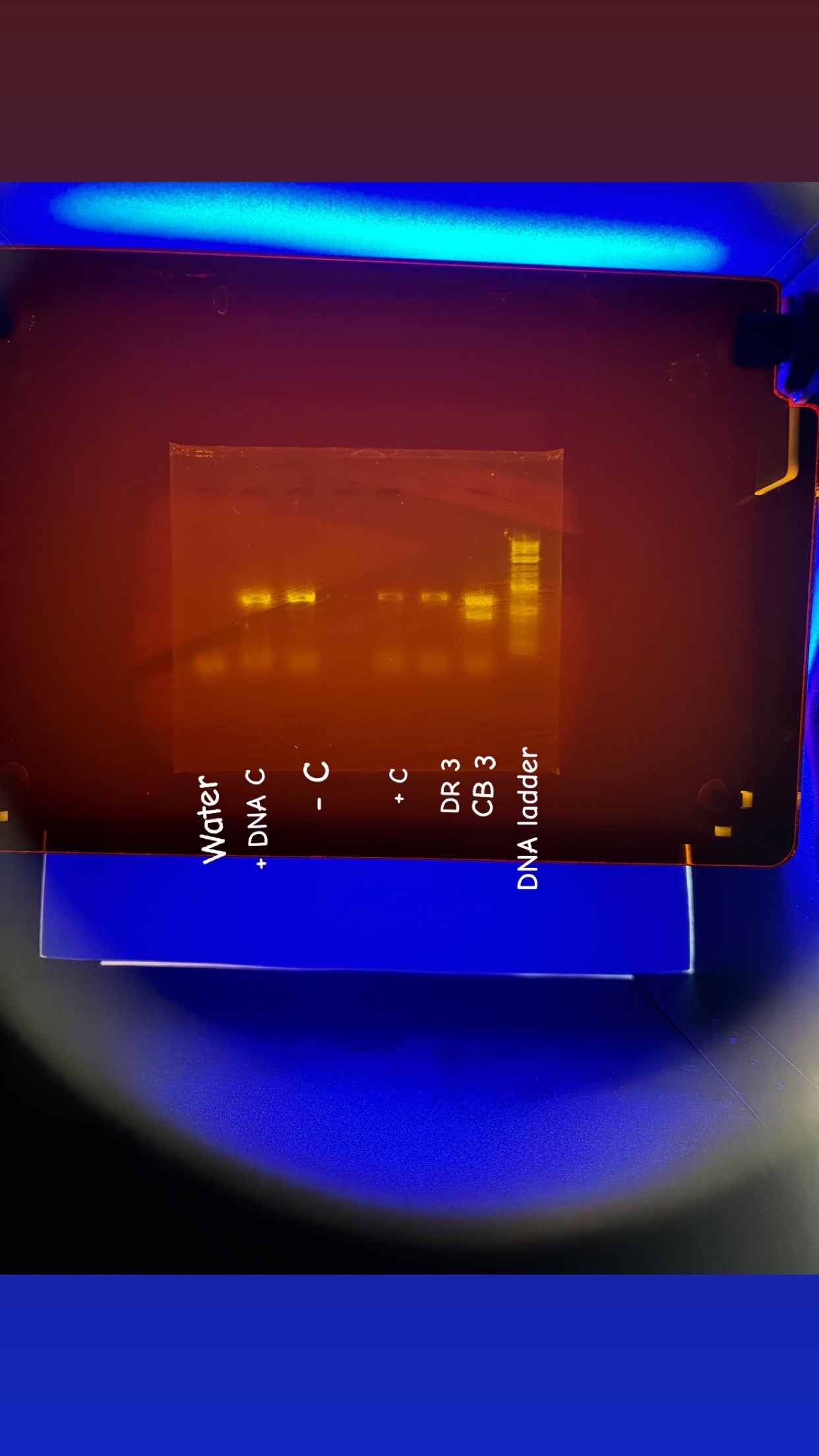
| Gel images |
|
| Protocol notes | We used a DNA extraction protocol based on the insect adaptation of New England Biolabs’ Monarch Spin gDNA Extraction kit (Product # T3010). The specimen was incubated for about 55 minutes in a hot water bath at 56 degrees C. Our first Gel image was taken on 10/28/26 and was run at 125 volts for 20 minutes. We used this DNA Ladder: New England Biolabs 1kb Plus DNA Ladder for Safe Stains (product #N0559S) |
Results |
|
| Wolbachia presence | Yes |
| Confidence level | High |
| Explanation of confidence level | I am confident because the entire test shows DNA present where it is supposed to be so I believe we ran the experiment correctly. |
| Wolbachia 16S sequence | |
| Arthropod COI sequence |
|
| Summary | The Camponotus pennsylvanicus was found to be postive for Wolbachia. |
 DEMVMP-Hymenoptera
 DEMAMJ-Hemiptera
 DEM-EPC
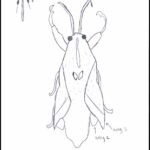 DEM-HED Hemiptera
 DEMDDB Blattodea