Sample information |
|
| Picture |
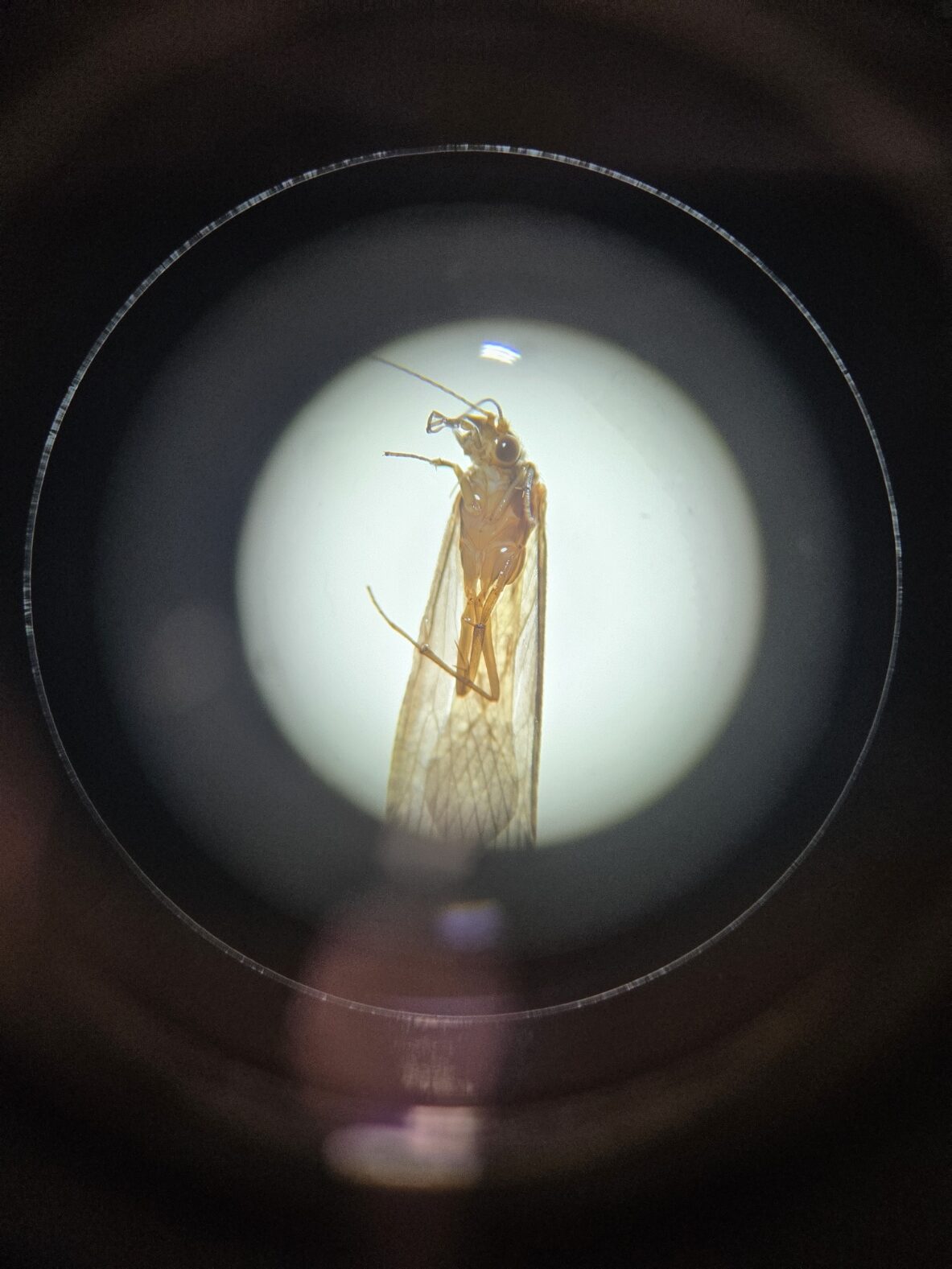
|
|---|---|
| Location | Approximate location: 42.09, -73.27 |
| Collection date | 10/05/2026 |
| Captive / Cultivated? | Wild-caught |
| Group | Berkshire Community College |
| Observations | The specimen was found flopping on a rock near the river.
|
| Putative identification | Arthropoda Insecta Trichoptera |
Methods |
|
| Extraction kit | Monarch DNA extraction (NEB) |
| DNA extraction location | Abdomen |
| Single or Duplex PCR | Duplex Reaction |
| Gel electrophoresis system | Edvotek Gel Electrophoresis |
| Buffer | 1X TAE |
| DNA stain | SYBR Safe |
| Gel images |
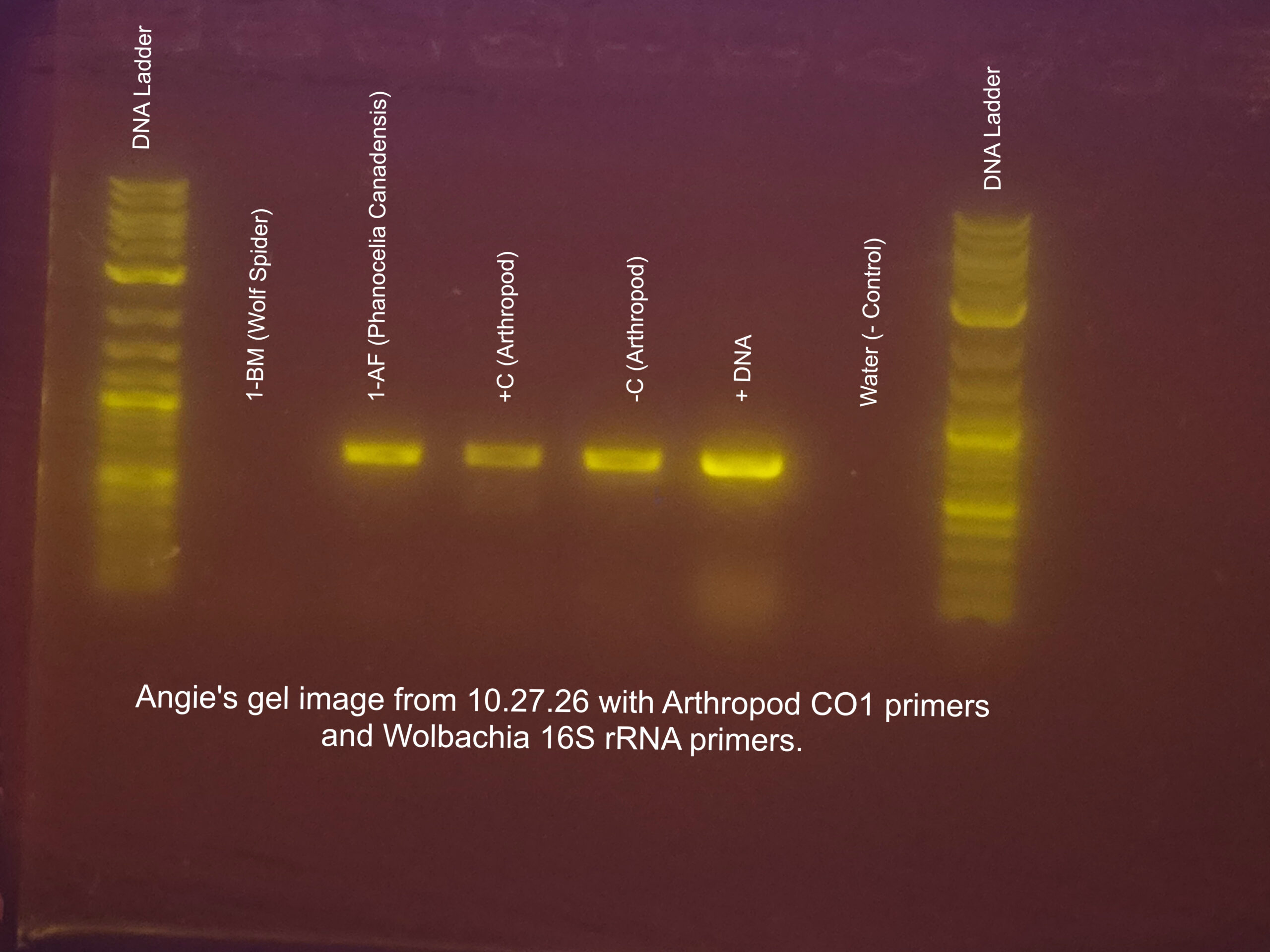
|
| Protocol notes |
|
Results |
|
| Wolbachia presence | No |
| Confidence level | Medium |
| Explanation of confidence level | I am moderately confident that the results of my experiment are correct. All the control lanes appeared as expected; however, it is very hard to tell from the gel electrophoresis whether my specimen contained Wolbachia or not. The 438 bp band for my specimen seems very faint, appearing as a halo, and it is possible that I am just unable to see the band, making my result seem like a false negative. It could also be possible that the 708 bp is just very luminescent, making it seem like there may be a block below it, but it can’t be certain. |
| Wolbachia 16S sequence | |
| Arthropod COI sequence |
|
| Summary | The Trichoptera was found to be negative for Wolbachia. |
 ABRHS 2026 – Ant – 12-3 Synemosyna Formica
 ZETNJM Hymenoptera
 CON-SCA Hemiptera
 CONDJ Hemiptera