Sample information |
|
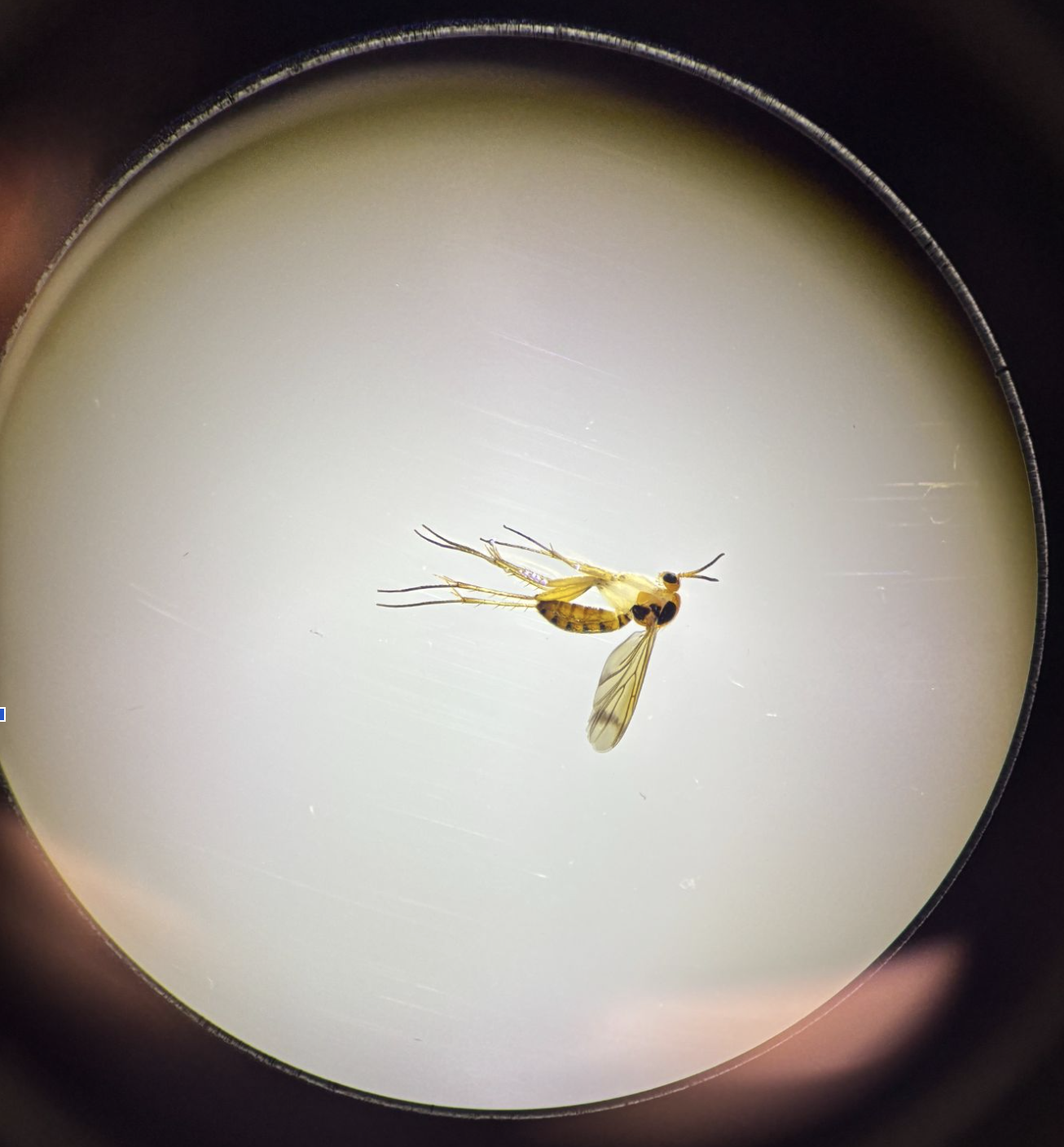
| Picture |
|
|---|---|
| Location | Approximate location: 38.96, -77.09 |
| Collection date | 09/14/2026 |
| Captive / Cultivated? | Wild-caught |
| Group | Edmund Burke School |
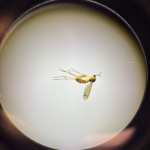
| Observations | This small beige arthropod has 6 legs, 2 narrow, membranous, many cross veins wings, separated eyes, an external mandible for chewing, 2 elbowed antennae, 3 narrow body segments, a medium size thorax, and a striped abdomen. The arthropod was found outside on a wall in summer, the temperature was 71 fahrenheit in a terrestrial habitat. |
| Putative identification | Arthropoda Insecta Diptera Mycetophilidae Clastobasis |
Methods |
|
| Extraction kit | DNeasy (Qiagen) |
| DNA extraction location | Whole arthropod |
| Single or Duplex PCR | Single Reaction |
| Gel electrophoresis system | MiniOne |
| Buffer | TBE |
| DNA stain | GelGreen |
| Gel images |
|
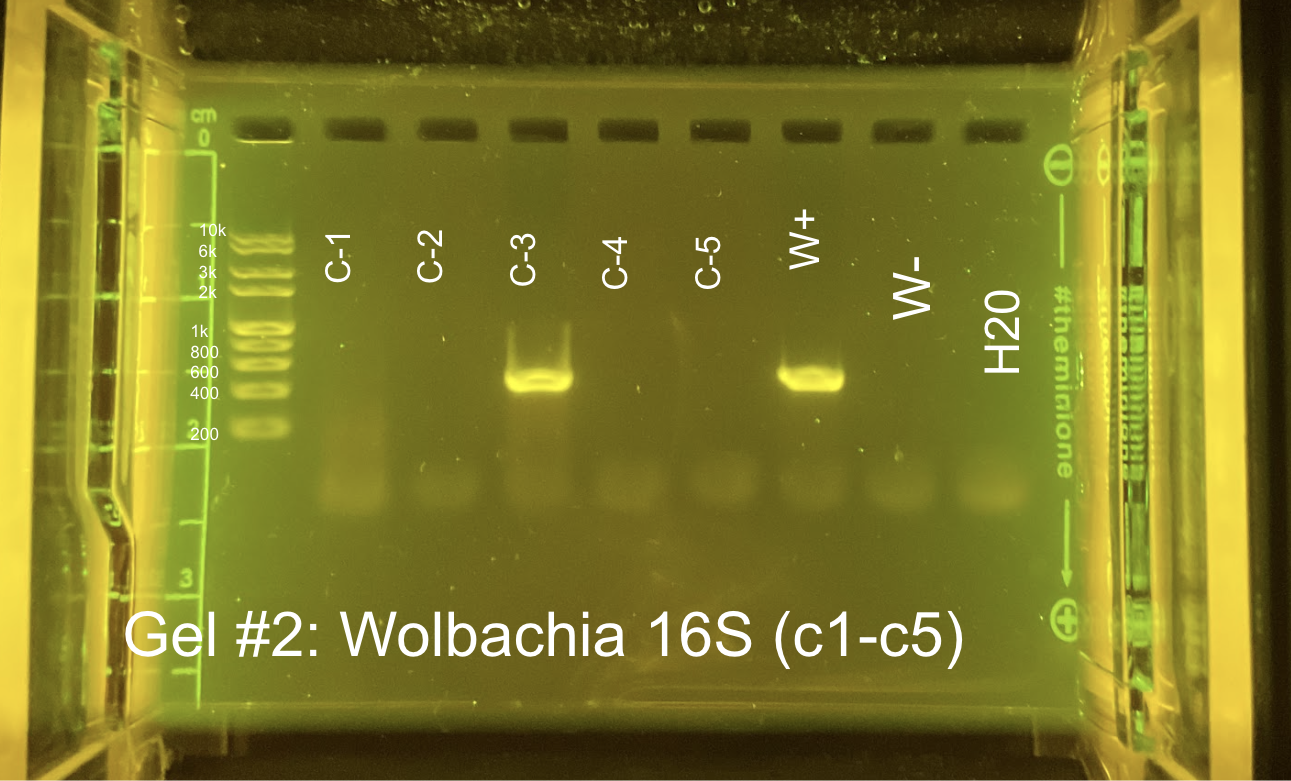
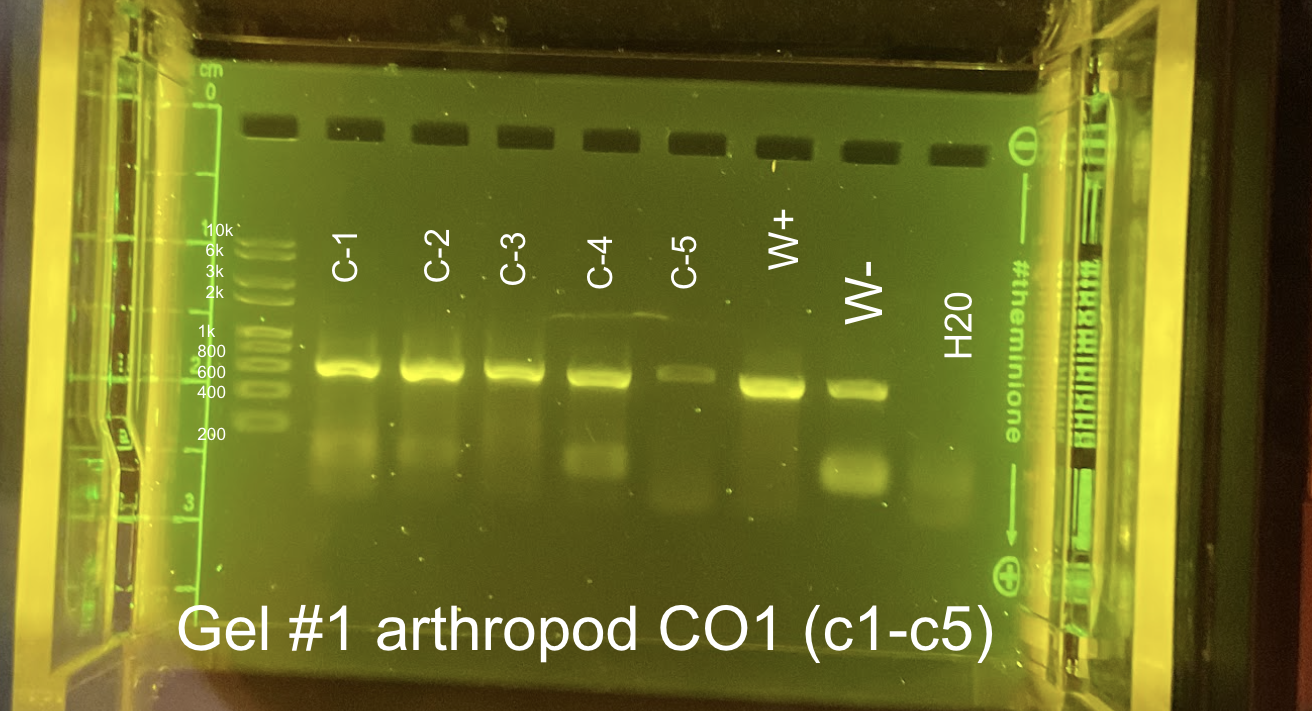
| Protocol notes | DNA Extraction: The only problem that occured was the abdomen of this arthropod detached while rinsing with water but we still used all of the arthropod. PCR: There were no errors, there may have been a bubble when adding the R primer to make the cocktail for the wolbachia primers. Gel electrophoresis, Arthropod CO1: In our gel from left to right we had: DNA ladder, DNA from arthropod 1, 2, 3, 4, 5, wolbachia + control, wolbachia – control, and water. Everything went well for arthropod 2 which is this one. The controls worked because when both the wolbachia + control band and the wolbachia – control band appeared, it meant the CO1 band successfully amplified DNA. When the water control band was absent that meant there was no contamination present. Gel electrophoresis, Wolbachia: In our gel from left to right we had: DNA ladder, DNA from arthropod 1, 2, 3, 4, 5, wolbachia + control, wolbachia – control, and water. Everything went well for arthropod 2 which is this one. The controls worked because the wolbachia + control band appeared meaning that the control had wolbachia we could compare to our samples. The absence of wolbachia – control and the water control meant there was no contamination which is good. |
Results |
|
| Wolbachia presence | No |
| Confidence level | High |
| Explanation of confidence level | In the Arthropod CO1 gel, there was a presence of both the wolbachia + and – control bands meaning the PCR worked because the band successfully amplified DNA. There was an absence of the water control band meaning there was no contamination. In the Wolbachia 16S gel, there was a presence of the wolbachia + control band meaning the PCR worked because that control had wolbachia. There was an absence of the – Wolbachia control band and the water control band meaning there was no contamination. |
| Wolbachia 16S sequence | |
| Arthropod COI sequence | Download FASTA
Download AB1
|
| Summary | The Clastobasis was found to be negative for Wolbachia. |
 C4 – Emmelina monodactyla
 C2 – Clastobasis
 Curinus Coeruleus
 Aphid
 (no title)