Sample information |
|
| Picture |
|
|---|---|
| Location | Approximate location: 38.99, -77.02 |
| Collection date | 09/13/2026 |
| Captive / Cultivated? | Wild-caught |
| Group | Edmund Burke School |
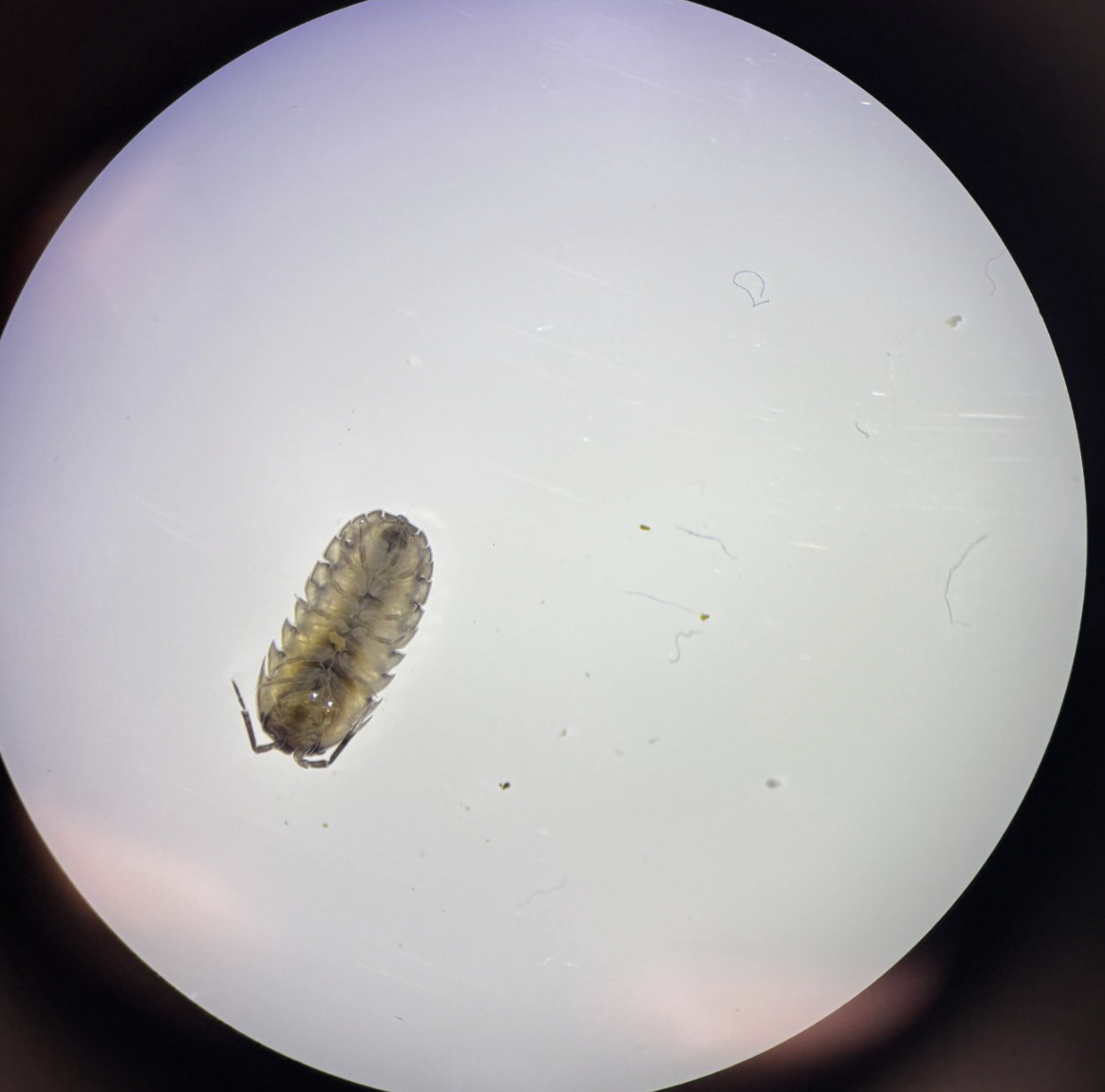
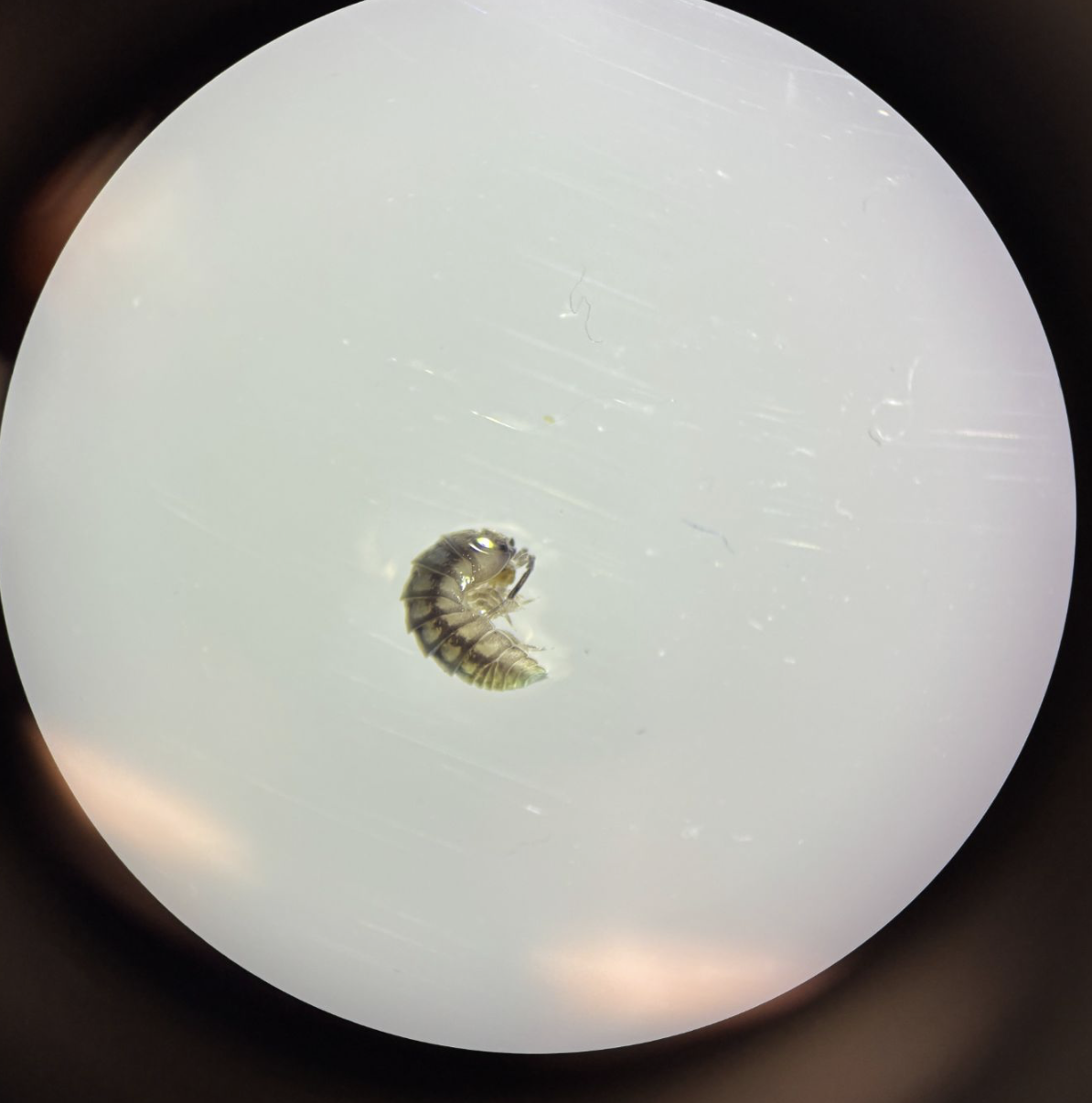
| Observations | front yard, under wet grass, by curb. Summer. Terrestrial, urban. Rolled up when tried to pick it up. 84 degrees Fahrenheit. No wings, no mouth, non modified forelegs and hindlegs, elbowed antennae, non apparent body region, 12 legs, eyes meet in middle, brown, tan, grey. |
| Putative identification | Arthropoda Malacostraca Isopoda Armadillidae Armadillidium |
Methods |
|
| Extraction kit | DNeasy (Qiagen) |
| DNA extraction location | Whole arthropod |
| Single or Duplex PCR | Single Reaction |
| Gel electrophoresis system | MiniOne |
| Buffer | TBE |
| DNA stain | GelGreen |
| Gel images |
|
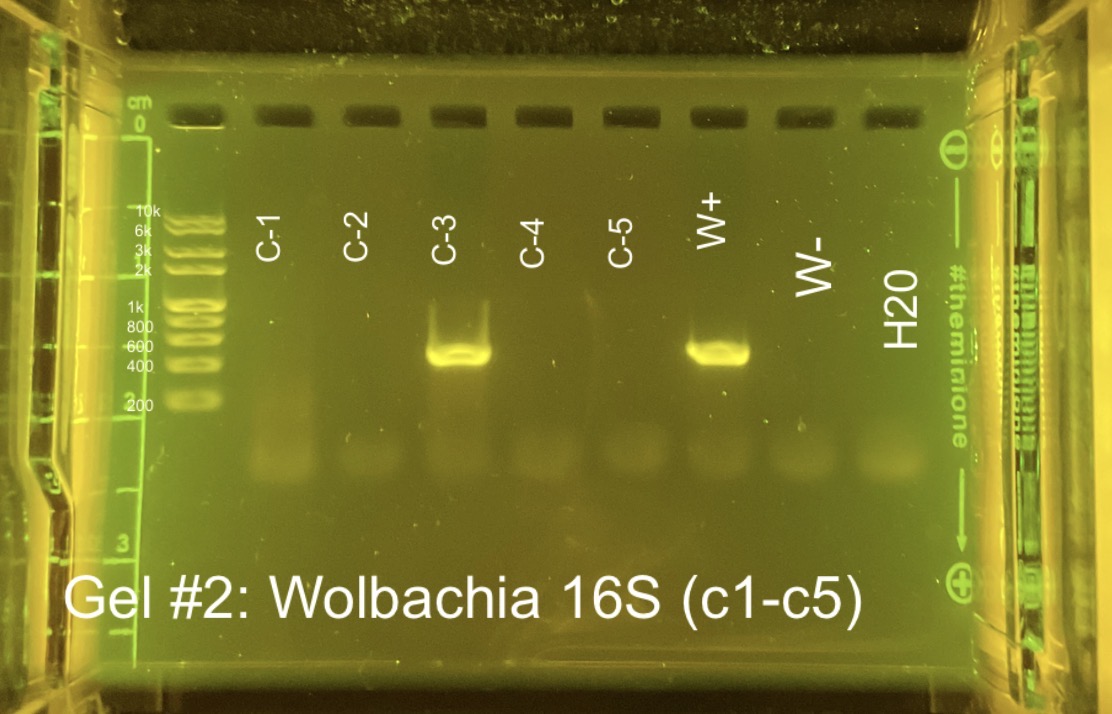
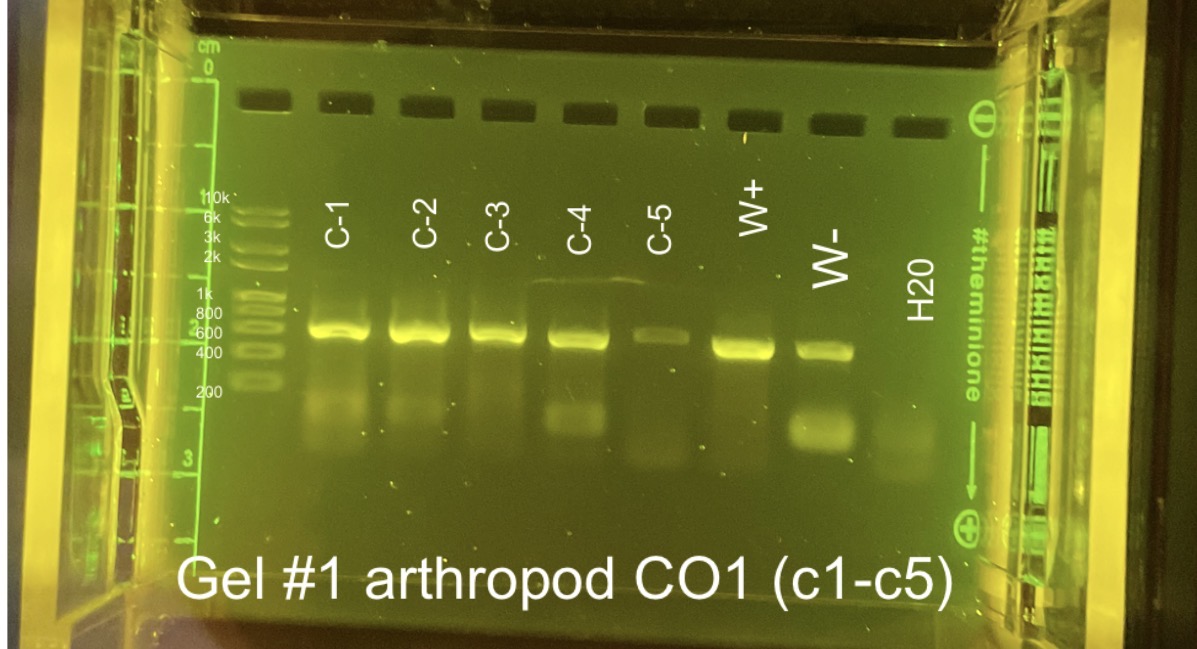
| Protocol notes | DNA Extraction: Everything went well. PCR: There may have been a bubble when adding the R primer to make the cocktail Gel Electrophoresis, Arthropod C3: Lane one of gel has C1, lane two C2, lane three C3, lane four C4, lane five C5, lane six has the positive control (W+) which the presence of a band confirms that DNA was successfully amplified in the sample, lane seven has the negative control (W-) which the presence of a band also confirms that DNA was successfully amplified in the sample, lane eight has the water water controls, which the absence of the band confirms that there was no contamination. The controls worked. There was no real band for C5, meaning DNA extraction may not have worked for that sample. Gel Electrophoresis, Wolbachia: Lane one of gel has C1, lane two C2, lane three C3, lane four C4, lane five C5, lane six has the positive control (W+), which the band confirms that DNA was sucessfully amplified in the sample, lane seven has the negative control (W-) which the absence of a band confirms that there was no contamination, lane eight was the water control which the absence of the band confirms that there was no contamination.
|
Results |
|
| Wolbachia presence | Yes |
| Confidence level | High |
| Explanation of confidence level | We are highly confident in the results of C3 because we successfully amplified the DNA in the sample, meaning the Arthropod CO1 Band was present. The Arthropod CO1 positive control (W+) is to confirm that DNA was successfully amplified from the sample, and it should have a band present, which we did for the control — we also had a CO1 band for sample C3. The Arthropod CO1 negative control (W-) also serves as confirmation that DNA was successfully amplified from the sample, and it should have a band present, which we did for the control. The Arthropod water control confirms that we did not contaminate the sample, and it should not have a band present, which we did not for the control. For the PCR with Wolbachia-specific primers, the Wolbachia positive control (W+) confirms that we successfully amplified Wolbachia DNA, and it should have a band present, which we did for the control — we also had a Wolbachia 16S band for sample C3. The Wolbachia negative control (W-) confirms that there was no contamination, and there should be no band present which was the case for the control. The Wolbachia Water control also confirms that there was no contamination, which was the case because there was no band for the control. Because all of our controls worked, this means that we can be highly confident in our analysis of the infection rate. C-3 had two identical matches for order and species: Armadillidium nasatum and Armadillidium vulgare. |
| Wolbachia 16S sequence | |
| Arthropod COI sequence | Download FASTA
Download AB1
|
| Summary | The Armadillidium was found to be postive for Wolbachia. |
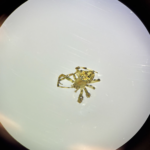 C-1 – Neoscona pratensis
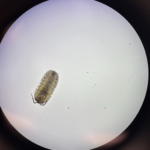 C-3 – Armadillidium nasatum, Armadillidium vulgare
 JWO 35 – Western Conifer Seedbug
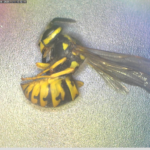 JWO 34 – Yellowjacket
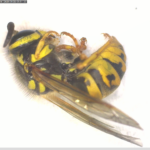 JWO 33 – Eastern Yellow Jacket