Sample information |
|
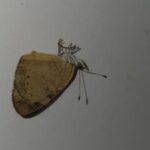
| Picture |
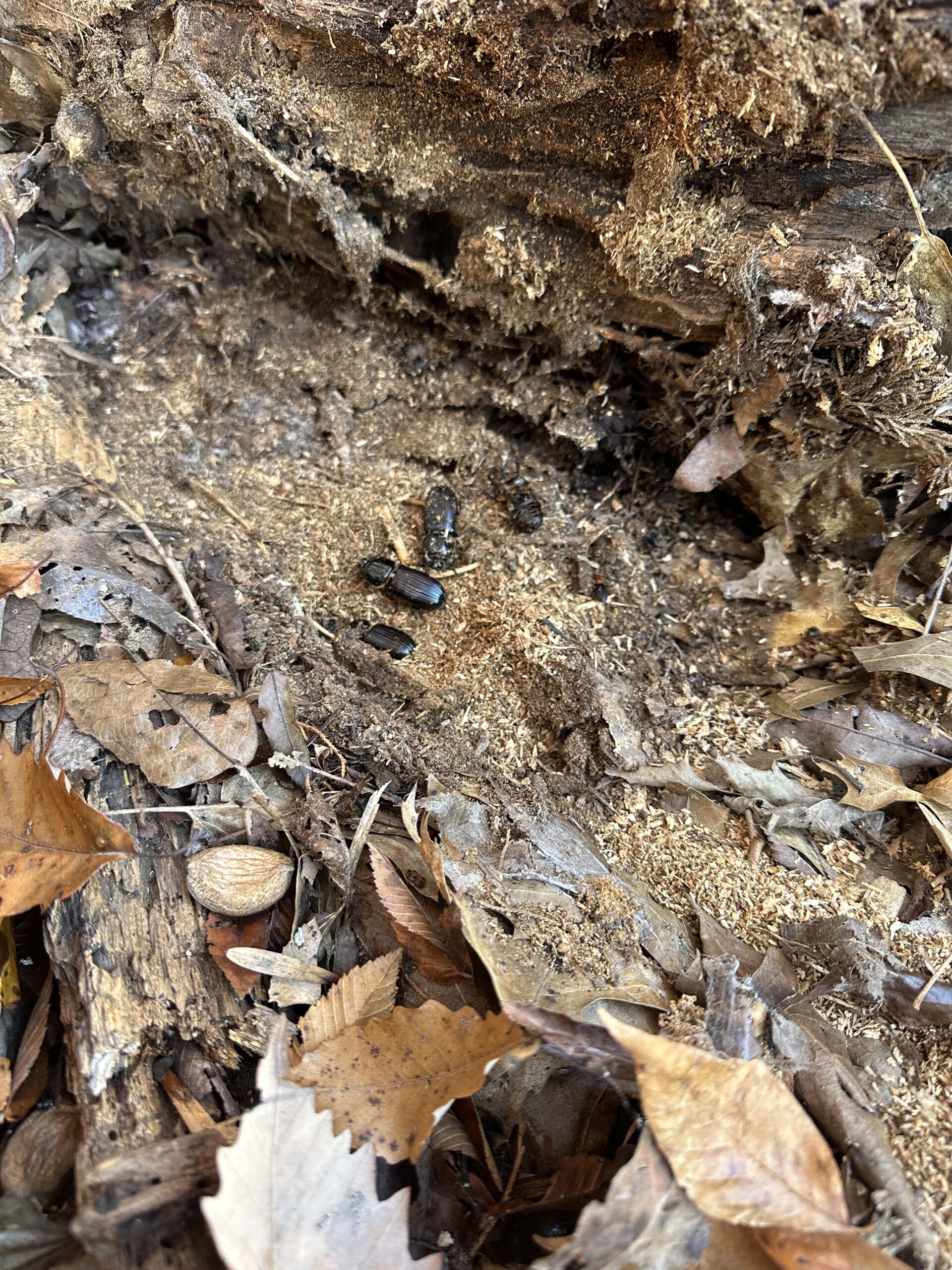
|
|---|---|
| Location | Approximate location: 36.09, -86.56 |
| Collection date | 11/01/2023 |
| Captive / Cultivated? | Wild-caught |
| Group | John Overton High School |
| Observations |
|
| Putative identification | Arthropoda Insecta Coleoptera |
Methods |
|
| Extraction kit | DNeasy (Qiagen) |
| DNA extraction location | Abdomen |
| Single or Duplex PCR | Duplex Reaction |
| Gel electrophoresis system | Standard electrophoresis system |
| Buffer | TAE |
| DNA stain | SYBR Safe |
| Gel images |
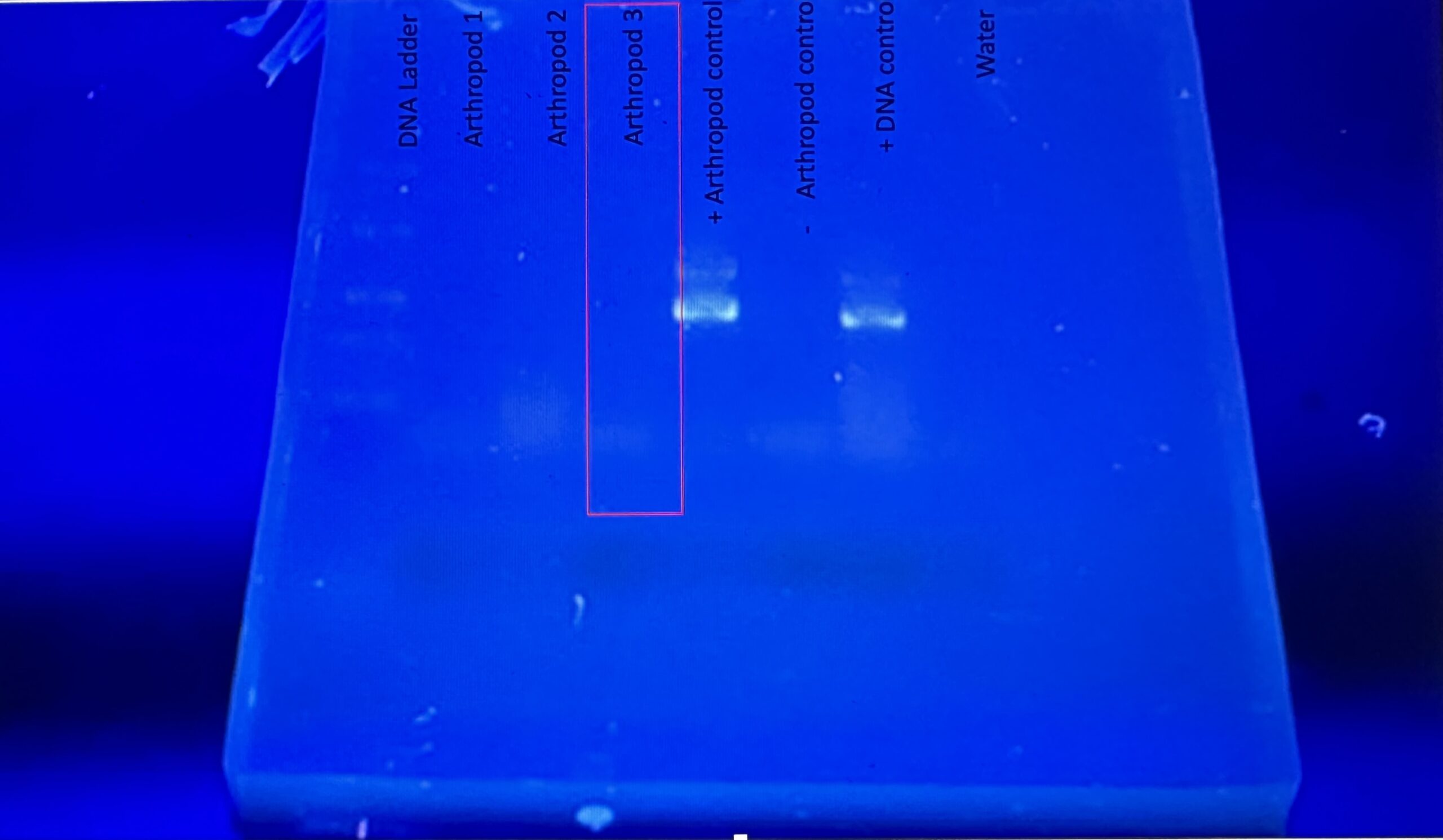
|
| Protocol notes | DNA Extraction: I dissected the abdomen out, and did not include the exoskeleton. Gel Electrophoresis lanes:
Analysis: My controls worked, but my sample did not have a band at all. I believe the problem occurred in the DNA extraction lab.
|
Results |
|
| Wolbachia presence | Unknown |
| Confidence level | High |
| Explanation of confidence level | I am confident that the presence for Wolbachia in my arthropod is unknown because the DNA control is missing in the first 3 cells meaning no DNA was exposed. What this proves is that during the DNA extraction lab the sample wasn’t grinded all the way to expose high DNA. |
| Wolbachia 16S sequence | |
| Arthropod COI sequence |
|
| Summary | |
 Millipede
 Brown Widow
 (no title)
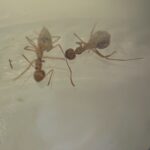 Texas Carpenter Ant
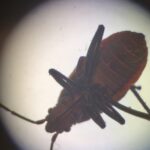 Boxelder Bug (Hemiptera)