Sample information |
|
| Picture |
|
|---|---|
| Location | No map location data available. |
| Collection date | 10/11/2020 |
| Captive / Cultivated? | Wild-caught |
| Group | William Fremd High School |
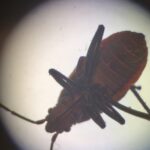
| Observations | Caught in a field with long tall grass. The abdomen of the creature had a long blue fuzz growing on it. Estimated length to be half a centimeter. The pale blue fuzz disappeared when specimen was placed in the collection tube with alcohol. The fuzz has not been identified. |
| Putative identification | Arthropoda Insecta Diptera |
Methods |
|
| Extraction kit | Edwards Buffer |
| DNA extraction location | Abdomen |
| Single or Duplex PCR | |
| Gel electrophoresis system | MiniOne |
| Buffer | TBE |
| DNA stain | GelGreen |
| Gel images |
|
| Protocol notes | This was conducted in a lab setting. |
Results |
|
| Wolbachia presence | No |
| Confidence level | High |
| Explanation of confidence level | The DNA showed a clear test and the controls worked well. |
| Wolbachia 16S sequence | |
| Arthropod COI sequence |
|
| Summary | The Diptera was found to be negative for Wolbachia. |
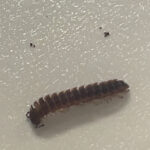 Millipede
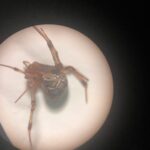 Brown Widow
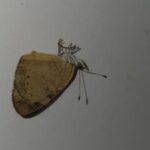 (no title)
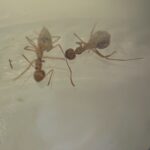 Texas Carpenter Ant
 Boxelder Bug (Hemiptera)