Sample information |
|
| Picture |
|
|---|---|
| Location | Approximate location: 40.62, -74.57 |
| Collection date | 05/30/2025 |
| Captive / Cultivated? | Wild-caught |
| Group | Pingry School |
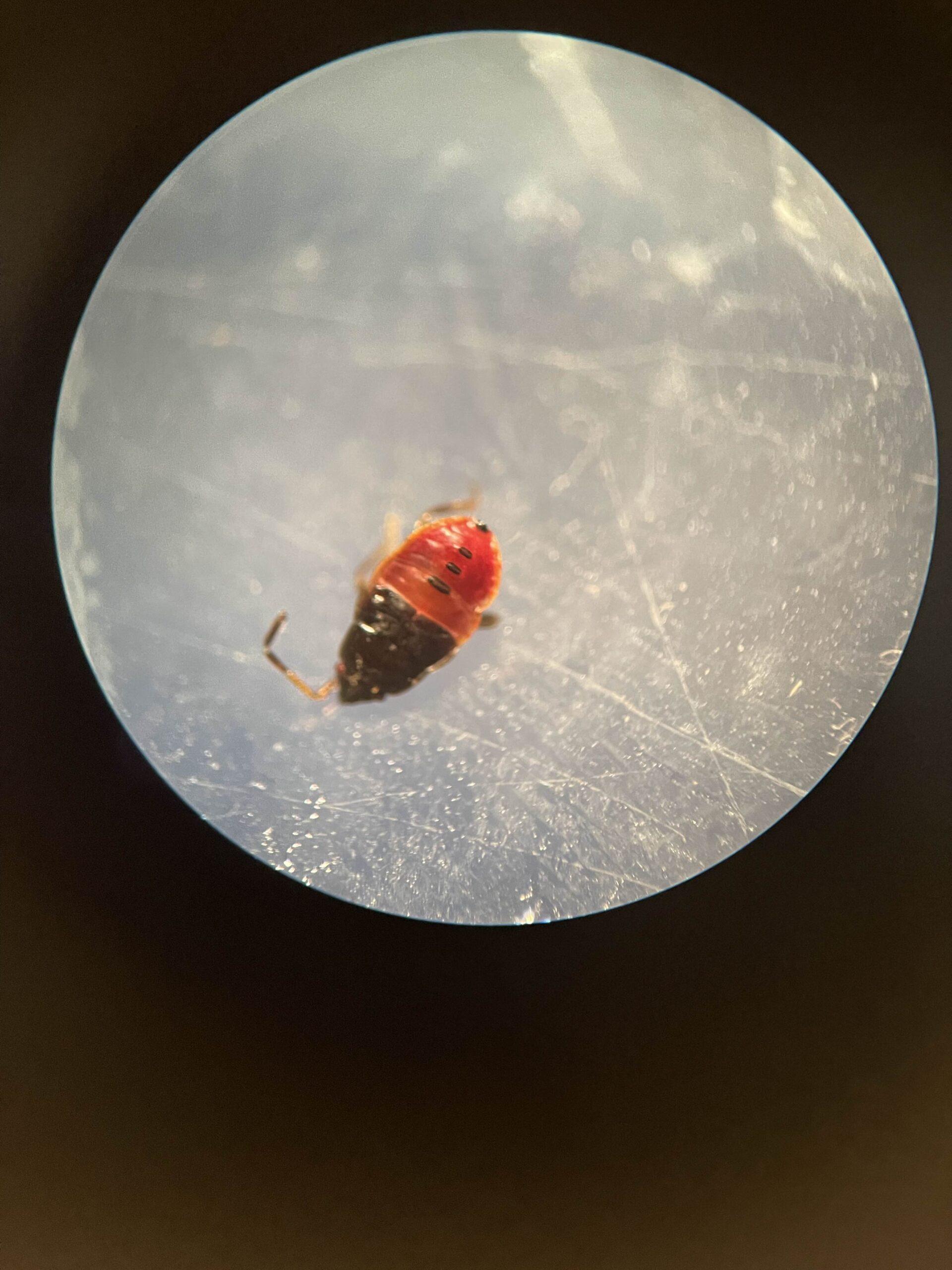
| Observations | The bug is terrestrial and was found on the ground in a wooded area. It is tiny, around 3-5mm, and appears to be the larval stage of Drymus crassus. The upper half of the specimen is black, with the lower half of the body being red with small black spots running down the spine. |
| Putative identification | Arthropoda Insecta Hemiptera Rhyparochromidae Drymus Drymus crassus |
Methods |
|
| Extraction kit | DNeasy (Qiagen) blood and tissue kit |
| DNA extraction location | Whole arthropod |
| Single or Duplex PCR | Single Reaction |
| Gel electrophoresis system | Standard electrophoresis system |
| Buffer | 1X TAE |
| DNA stain | SYBR Safe |
| Gel images |
|
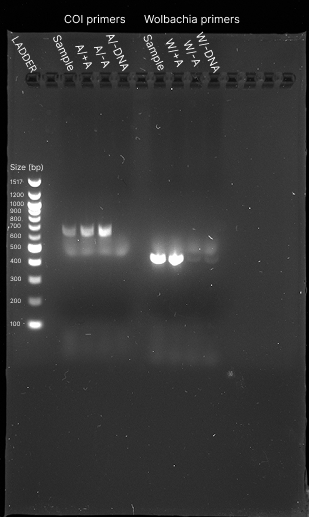
| Protocol notes | Extract the DNA using the Qiagen DNeasy extraction kit, and then amplify both Wolbachia and arthropod COI genes using PCR. After completing PCR, the 2% gel was run using SYBR Safe using a 100bp ladder. In lane 8 of the gel, the sample had a strong band that lined up with the positive Wolbachia control in lane 9, which strongly suggests Wolbachia presence. The PCR sample was then purified using the QIAquick PCR Purification Kit and sent out for sequencing. |
Results |
|
| Wolbachia presence | Yes |
| Confidence level | High |
| Explanation of confidence level | There is a visible band for the PCR sample using Wolbachia primers in the gel in lane 8, which lines up with the positive Wolbachia control in lane 9. The positive Wolbachia control was an arthropod confirmed to have been infected with Wolbachia, which underwent the same DNA extraction and PCR process as the sample. After sending the sample out for sequencing, the sequence for the Wolbachia PCR sample was a 99.72% match, with the Sanger sequencing data having high quality (~60). The Wolbachia sequence had one nucleotide of relatively low quality (16) and was replaced with an N. This nucleotide was a T, and if it were left included would produce 100% matches with Wolbachia. |
| Wolbachia 16S sequence | Download FASTA
Download AB1
GCTCGTGTCGTGAGANGTTGGGTTAAGTCCCGCAACGAGCGCAACCCTCATCCTTAGTTGCTATCAGGTAATGCTGAGTA CTTTAAGGAAACTGCCAGTGATAAGCTGGAGGAAGGTGGGGATGATGTCAAGTCATCATGGCCTTTATGGAGTGGGCTAC ACACGTGCTACAATGGTGTCTACAATGGGCTGCAAGGTGCGCAAGCCTAAGCTAATCCCTAAAAGACATCTCAGTTCGGA TTGTACTCTGCAACTCGAGTACATGAAGTTGGAATCGCTAGTAATCGTGGATCAGCATGCCACGGTGAATACGTTCTCGG GTCTTGTACACACTGCCCGTCACGCCATGGGAATTGG
BLAST at The Wolbachia Project BLAST at NCBI
|
| Arthropod COI sequence | Download FASTA
Download AB1
TCATTAAGATGAATTATCCGAATTGAATTAGGACAACCTGGACCATTCATTGAAGACGATCAAATTTATAATACCATTGT AACAGCACACGCATTTATTATAATTTTCTTTATAGTTATACCAATTATAATTGGAGGATTTGGTAACTGATTAGTACCAT TAATAATTGGGGCCCCAGATATAGCATTCCCACGAATAAATAATATAAGATTCTGACTACTCCCACCATCAATCACACTA TTAATCATAAGAAGAATAATCGAAATAGGAGTAGGAACCGGATGAACAGTATATCCTCCTCTATCAAATAACATATTTCA TAGAGGAGCAGCAGTAGATATAGCAATCTTTTCACTACATTTAGCAGGAATATCATCAATTATAGGAGCCATTAATTTCA TCTCAACTATCATTAACATACGACCTACAGGAATAGTACCAGAACAAATTCCTCTATTCGTATGATCAGTAGGAATCACA GCAGTCCTATTATTATTATCATTACCAGTATTGGCCGGAGCAATCACTATACTATTAACAGACCGAAACCTAAATACATC CTTCTTTGACCCTACAGGAGGAGGAGACCCAATTTTATACCAACACTTATTTTGATTTTTTG
BLAST at The Wolbachia Project BLAST at NCBI
|
| Summary | The Drymus crassus was found to be postive for Wolbachia. |
 Millipede
 Brown Widow
 (no title)
 Texas Carpenter Ant
 Boxelder Bug (Hemiptera)