Sample information |
|
| Picture |
|
|---|---|
| Location | Approximate location: 40.56, -75.40 |
| Collection date | 09/11/2025 |
| Captive / Cultivated? | Wild-caught |
| Group | Penn State Lehigh Valley |
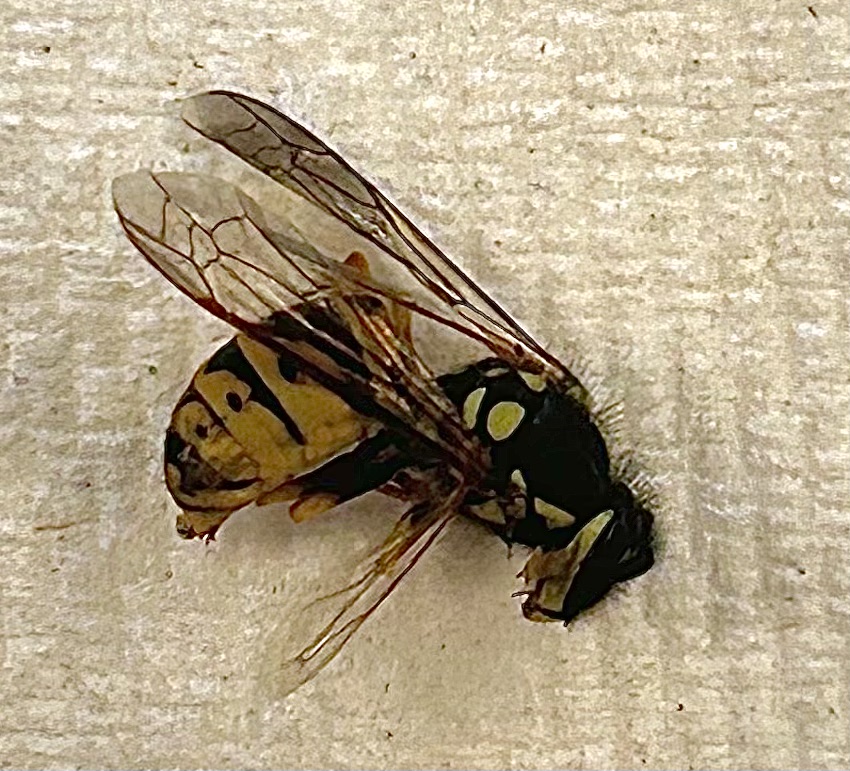
| Observations | The yellow jacket was curious/aggressive in its natural environment. The yellow jacket shows black and yellow bands along the abdomen with thick, even stripes, and black dots. It has a black antennae and clear wings with black/brown veins. With the overall body shape being short and lean along with the continuous patterns I have determined this to be an eastern yellow jacket rather than a paper wasp or hornet. |
| Putative identification | Arthropoda Insecta Hymenoptera Vespidae Vespula Vespula maculifrons |
Methods |
|
| Extraction kit | pcr |
| DNA extraction location | Abdomen |
| Single or Duplex PCR | Single Reaction |
| Gel electrophoresis system | Edvotek Gel Electrophoresis |
| Buffer | 1X TAE |
| DNA stain | SYBR Green |
| Gel images |
|
| Protocol notes | |
Results |
|
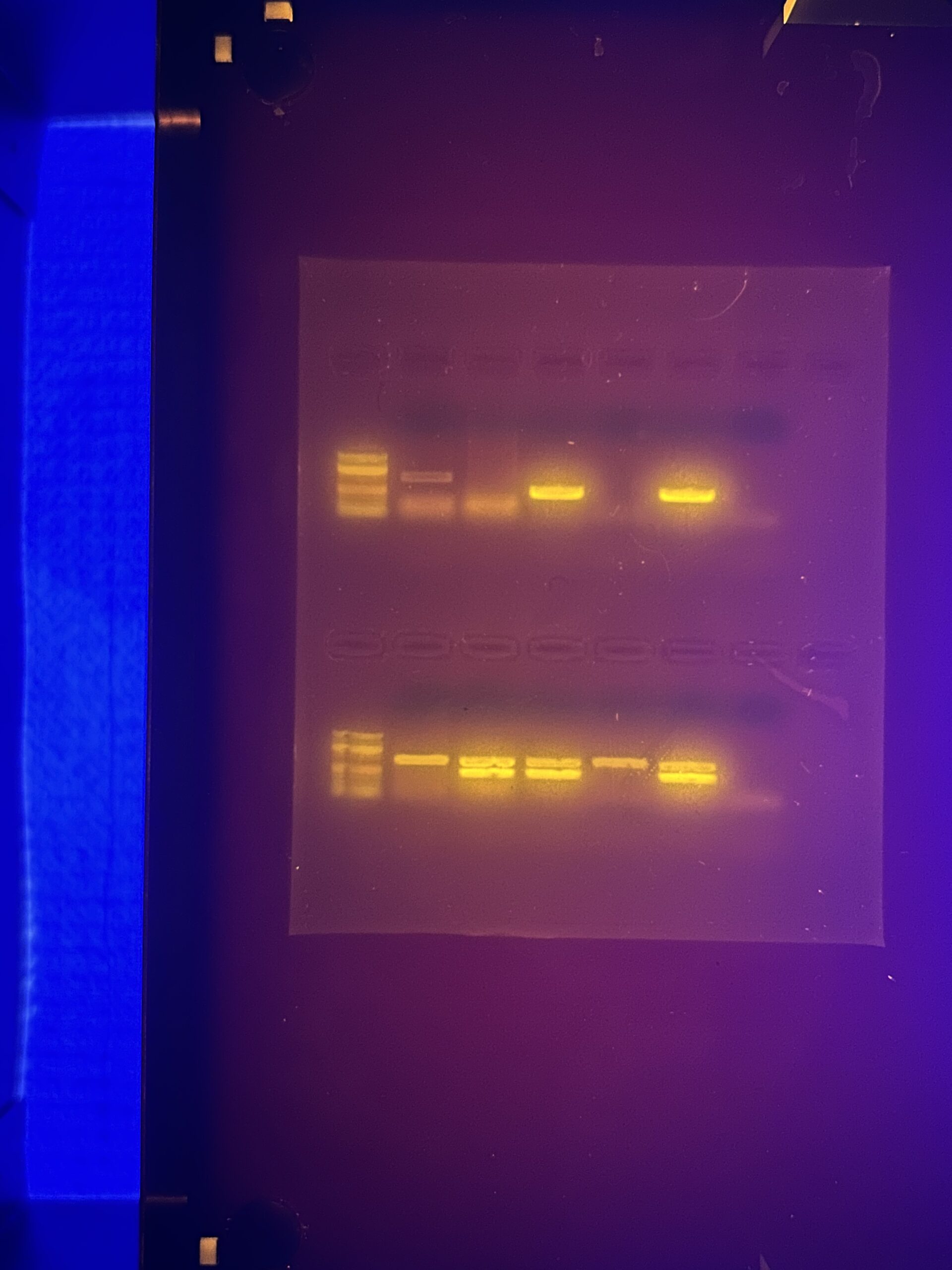
| Wolbachia presence | No |
| Confidence level | Medium |
| Explanation of confidence level | I am at high confidence for the yellow jacket being negative for Wolbachia due to the single faint line appearing in well 2 where this specific arthropod’s DNA was set. |
| Wolbachia 16S sequence | |
| Arthropod COI sequence |
|
| Summary | The Vespula maculifrons was found to be negative for Wolbachia. |
 Millipede
 Brown Widow
 (no title)
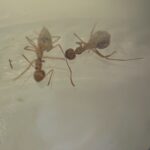 Texas Carpenter Ant
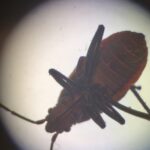 Boxelder Bug (Hemiptera)