Sample information |
|
| Picture |
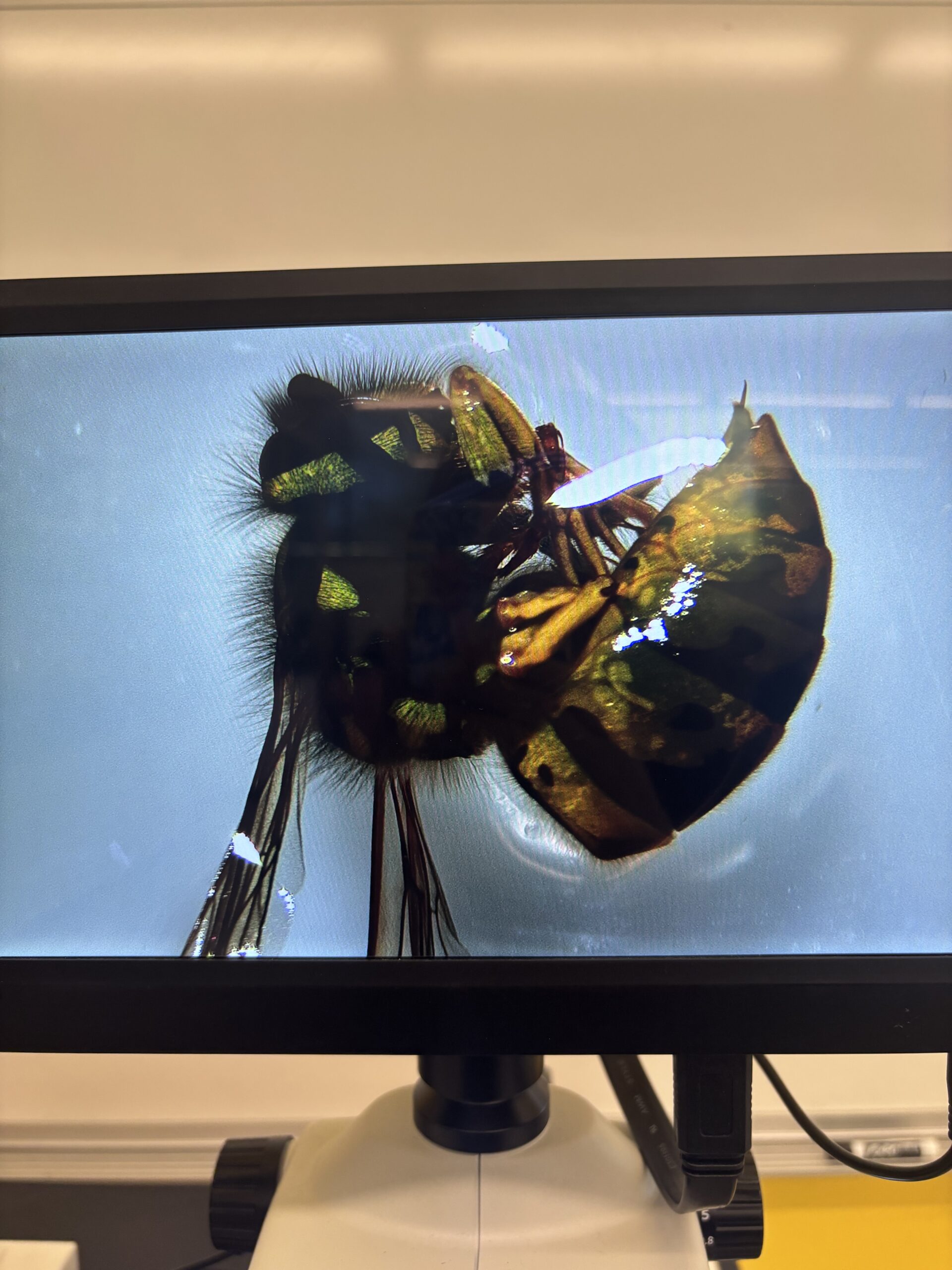
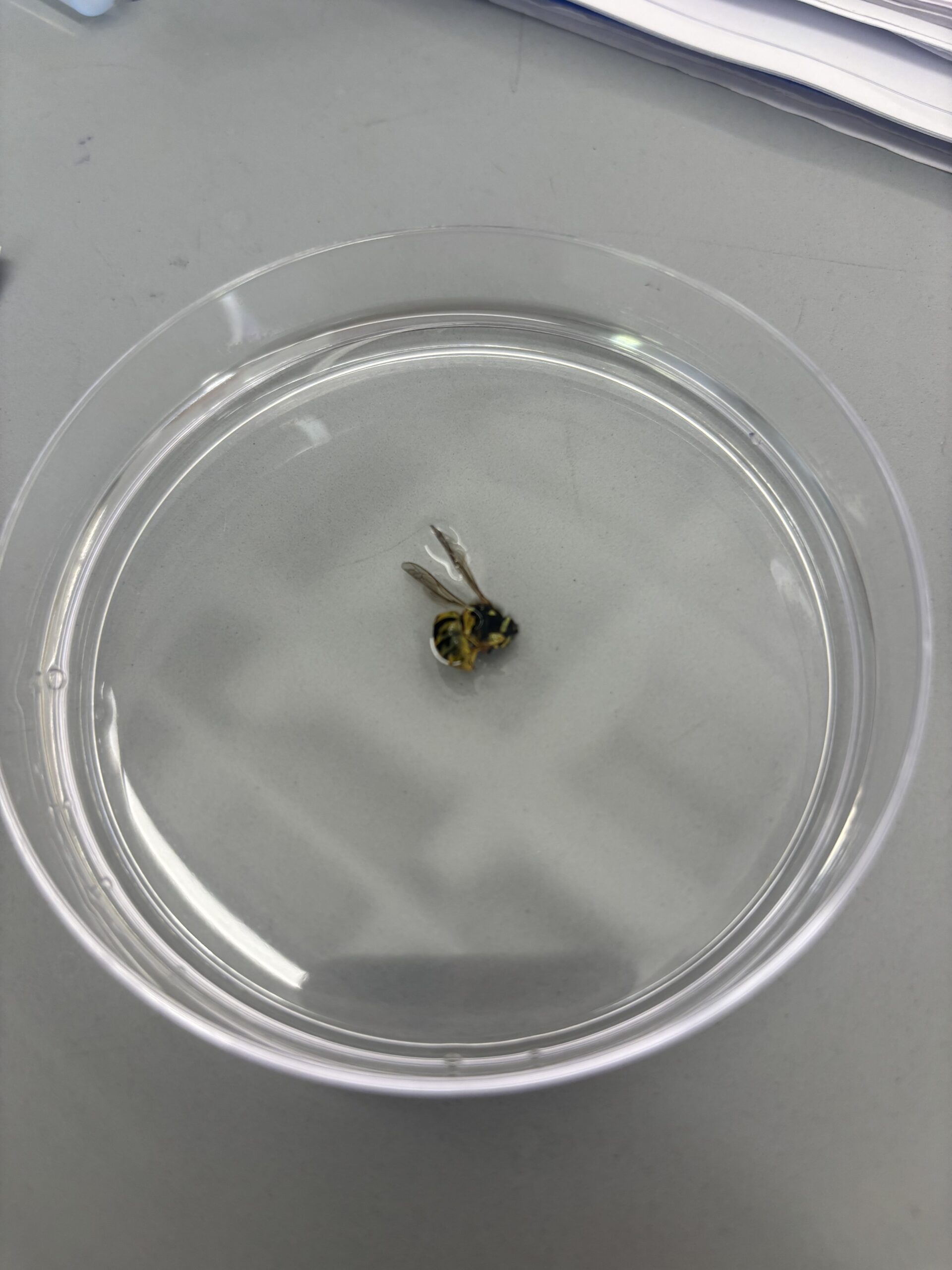
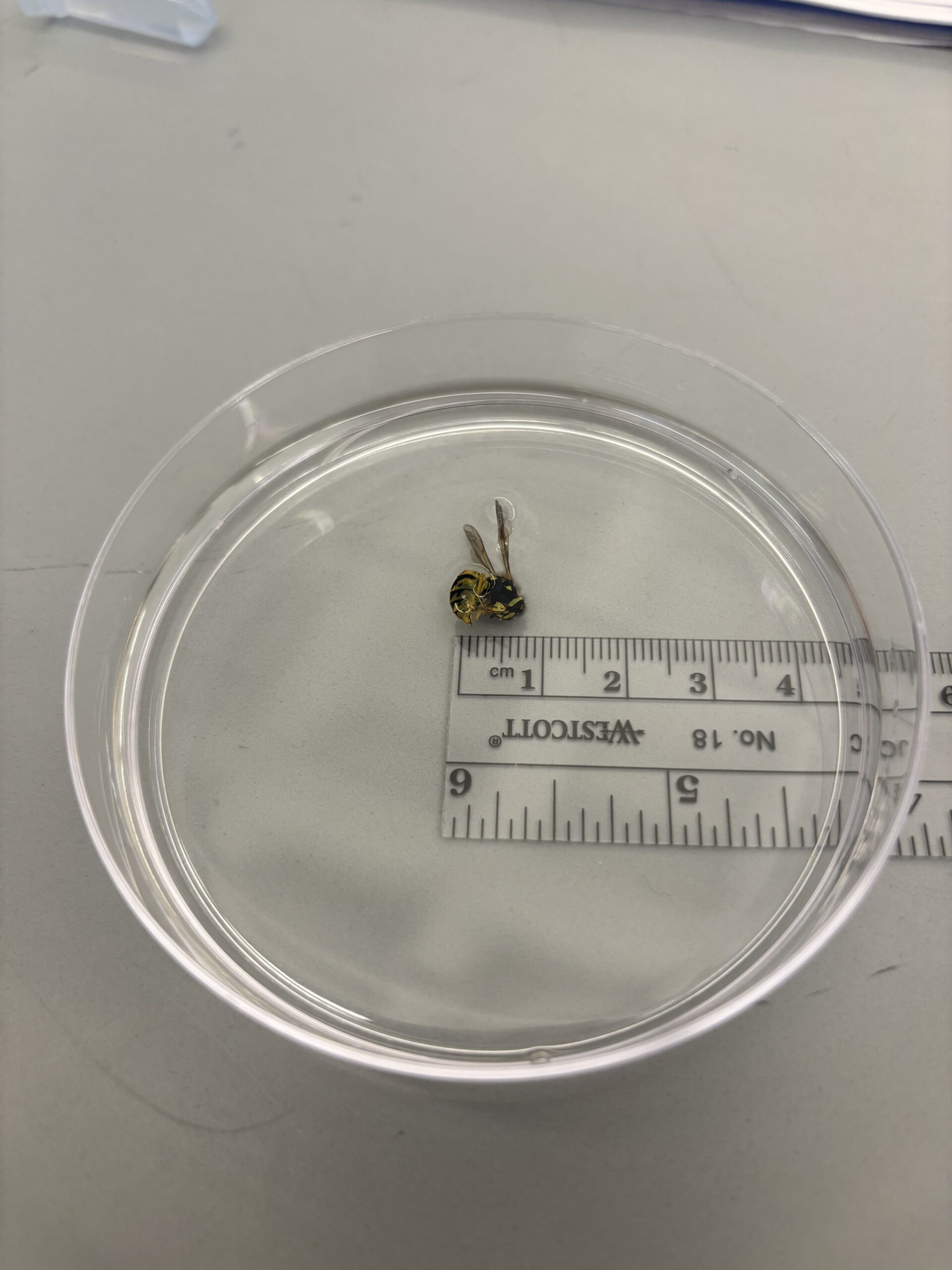
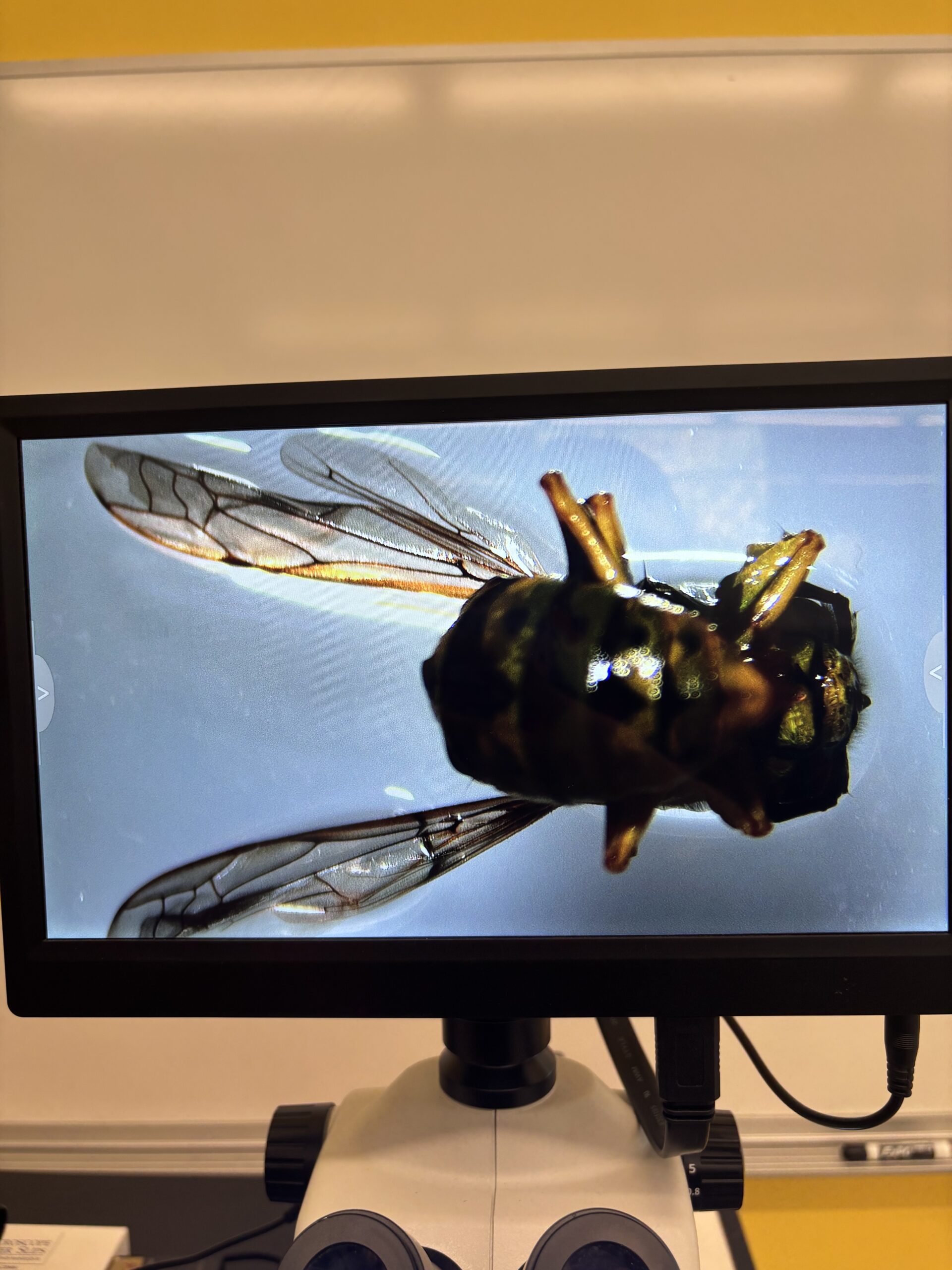
|
|---|---|
| Location | Approximate location: 42.37, -73.37 |
| Collection date | 09/28/2025 |
| Captive / Cultivated? | Wild-caught |
| Group | Berkshire Community College |
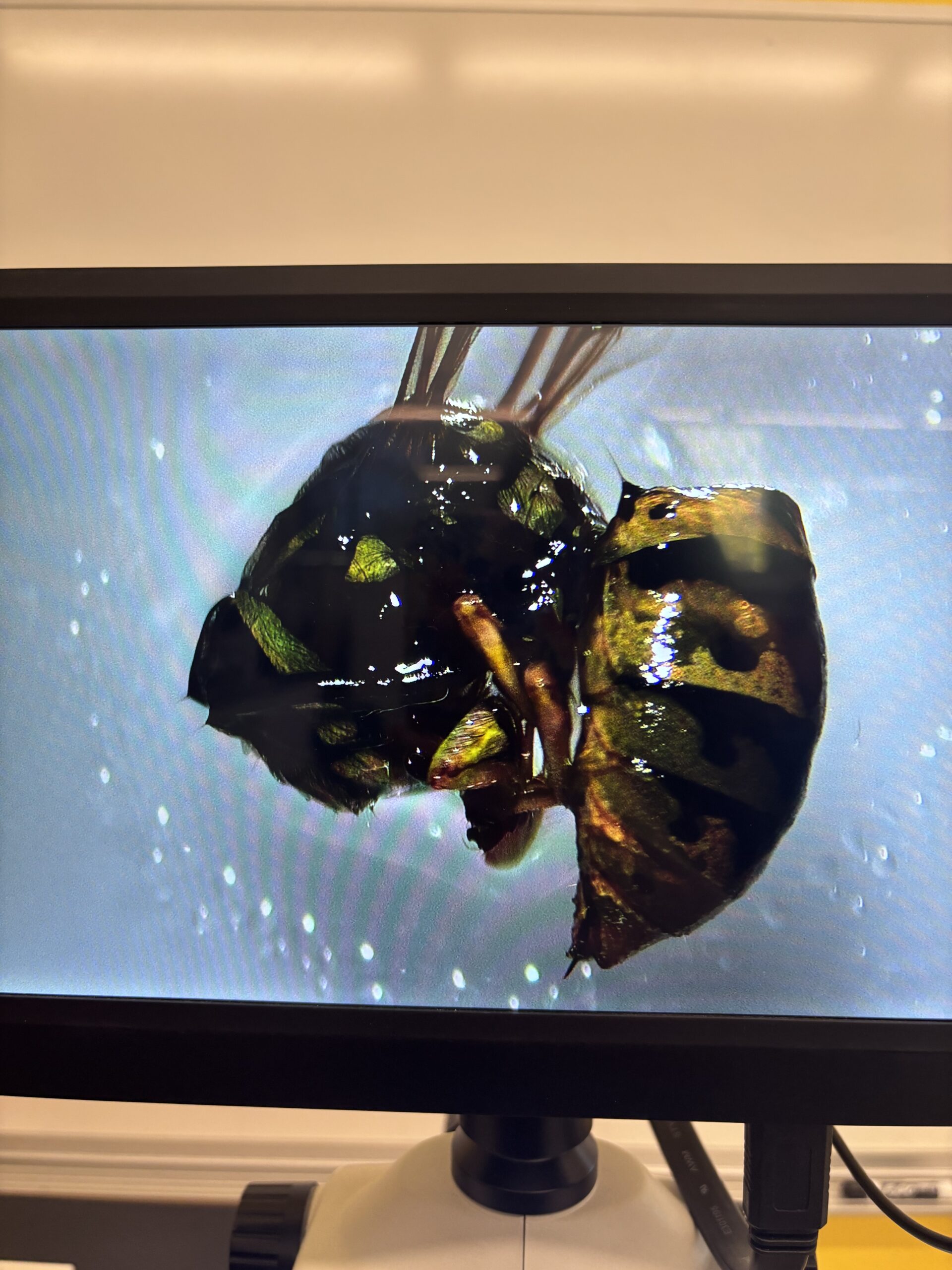
| Observations | Was found flying near the hive that is within the walls of a house but was collected while it was outdoors. Was not entering hive but flying and landing above the hive on the wall |
| Putative identification | Arthropoda Insecta Hymenoptera Vespidae Vespula Vespula germanica |
Methods |
|
| Extraction kit | Monarch DNA extraction (NEB) |
| DNA extraction location | Abdomen |
| Single or Duplex PCR | Duplex Reaction |
| Gel electrophoresis system | Edvotek Gel Electrophoresis |
| Buffer | 1X TAE |
| DNA stain | SYBR Safe |
| Gel images |
|
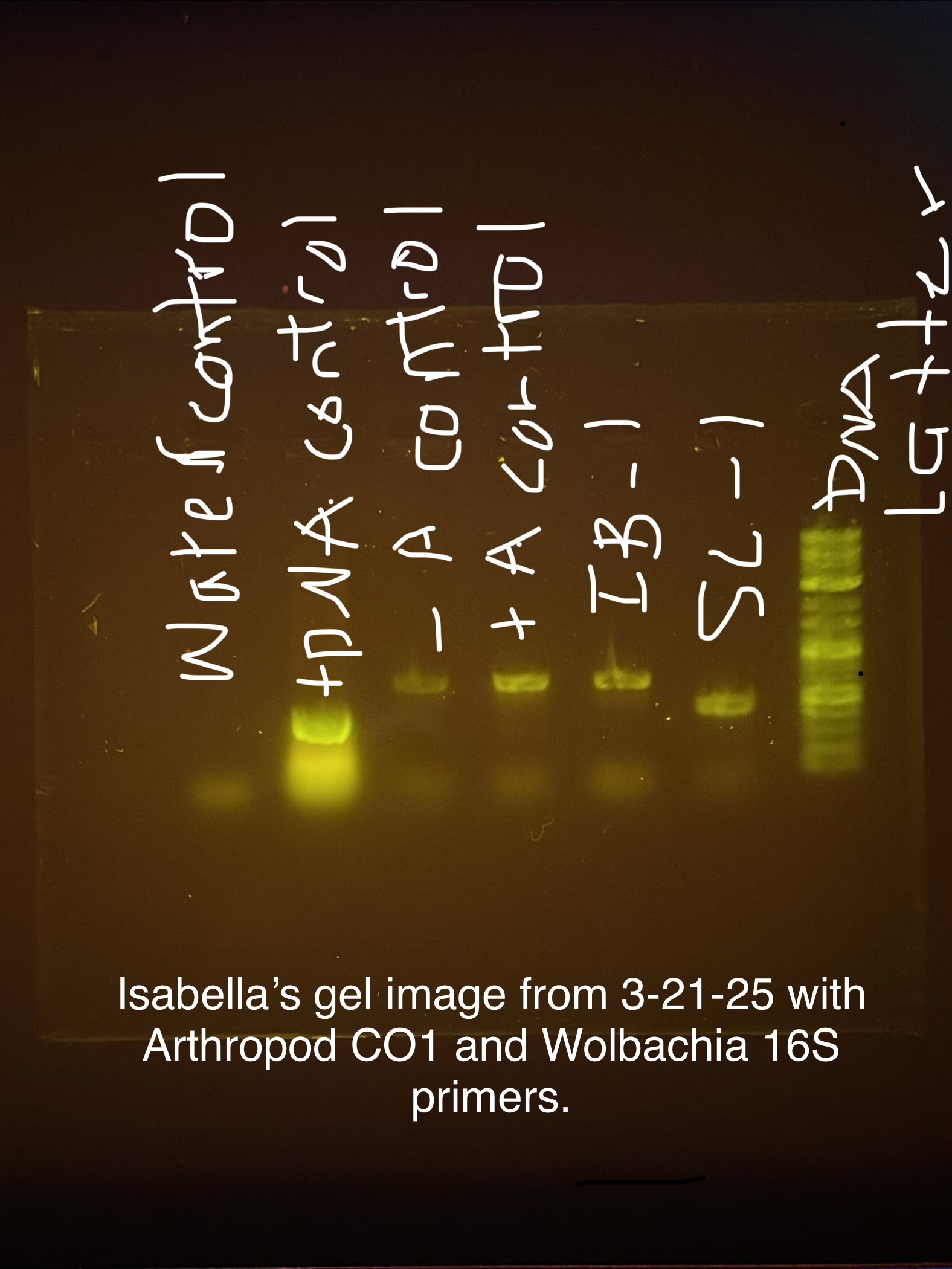
| Protocol notes | We used DNA extraction protocol based on the insect adaptation of New England Biolabs’ Monarch Spin gDNA Extraction Kit (Product #T3010). The specimen was incubated for 33 minutes in a hot water bath at 56 degrees C. Details that differed from the written protocol are I forgot to dump the buffer solution at the bottom of the tube before I put the second wash buffer but I dumped it all out after pouring the second wash buffer in and before centrifuging. Our first PCR reaction was set up on October 14 2025 and:
Our first gel image was taken on 10/21/25 and:
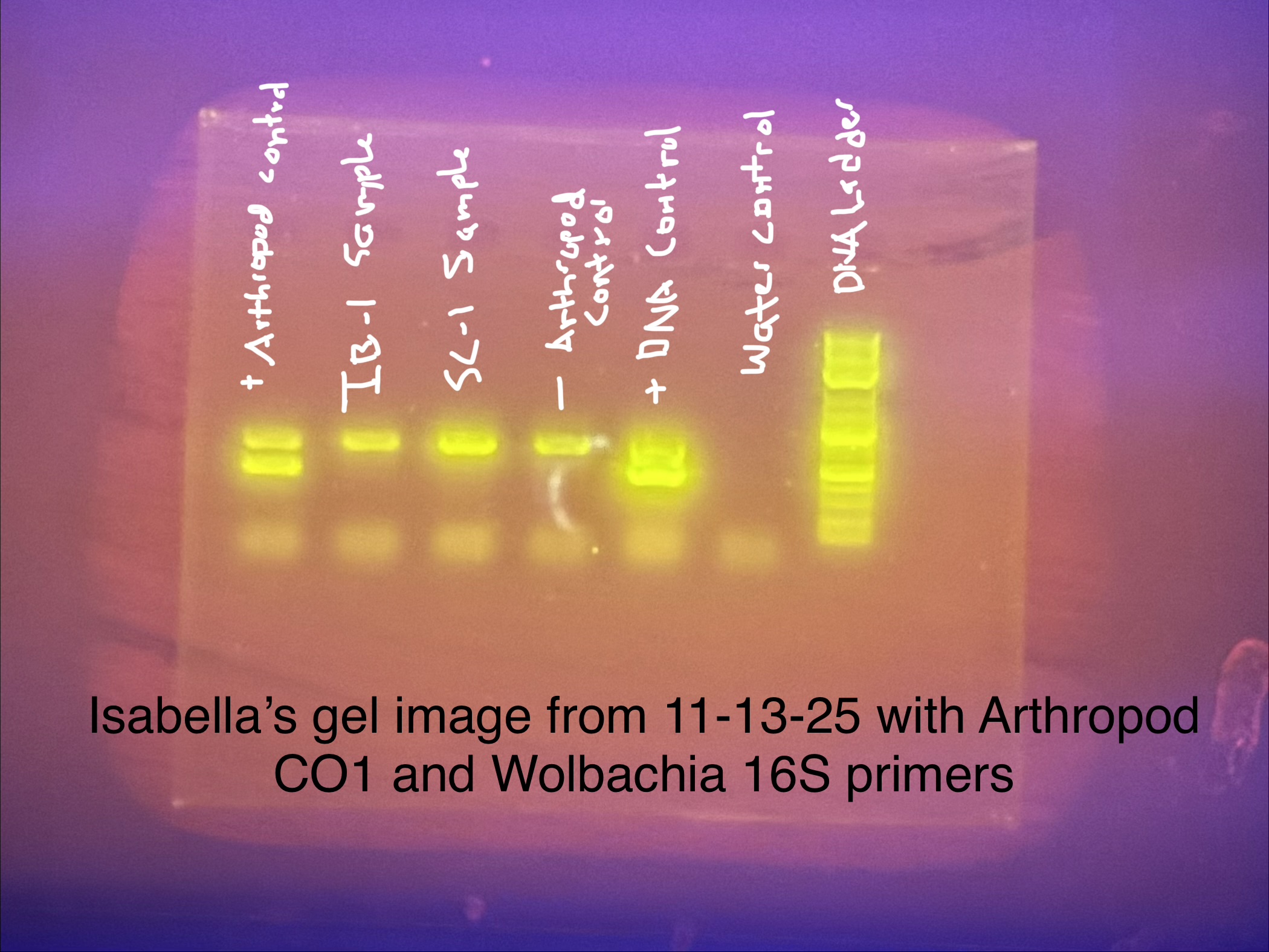
Our second PCR reaction was set up on October 28th, used the same Taq polyamerase as the first PCR reaction, and:
Our second gel image was taken on 11/13/25 and:
|
Results |
|
| Wolbachia presence | No |
| Confidence level | Medium |
| Explanation of confidence level | In the first PCR the positive arthropod control didn’t show both bands and sample 1 didn’t show any arthropod DNA but showed Wolbachia which means there was a mistake made with the sample. Also the positive DNA control didn’t show any clear bands and showed up as a smear. In the second PCR the controls all work as they should’ve and there was no signs on contamination so my confidence level is moderate. The sample was negative for Wolbachia especially with this duplex proving again it is negative. |
| Wolbachia 16S sequence | |
| Arthropod COI sequence | Download AB1
TGAGCAGGAACTTTAGGAGCTTCAATAAGAATAATTATTCGTTTAGAATTAAGATCCCCTGGAGCTTTAATTAATAATGATCAAATTTATAATACTATTATTACAGCTCATGCTTTCATTATAATTTTCTTTATAGTTATACCTTTTTTAGTTGGAGGATTTGGAAATTGATTAATCCCTTTAATATTAGGTGTTCCTGATATAGCATTTCCTCGAATAAATAATATAAGATTTTGATTATTACCTCCATCCTTATTTTTATTAATCTTAAGAAATTTTATTGGAACCGGAGTAGGGACAGGATGAACTCTGTACCCTCCTTTATCATCAATTGTAGGACATGACTCTCCCTCTGTAGACTTAGGAATTTTTTCTATCCATATTGCTGGAATTTCATCAATTATAGGTTCAATTAATTTTATTGTTACTATTTTAAATATACACACAAAAACACATTCACTAAATTTTCTTCCTTTATTTTCATGATCAATTTTAATTACAGCAATTCTTCTCTTGTTATCTCTACCAGTTCTTGCAGGAGCAATTACTATACTTCTTACAGACCGTAATTTAAATACATCTTTCTTTGATCCTGCAGGCGGAGGTGACCCAATTTTATACCAACATTTA
BLAST at The Wolbachia Project BLAST at NCBI
|
| Summary | The Vespula germanica was found to be negative for Wolbachia. |

 Millipede
 Brown Widow
 (no title)
 Texas Carpenter Ant
 Boxelder Bug (Hemiptera)