Sample information |
|
| Picture |
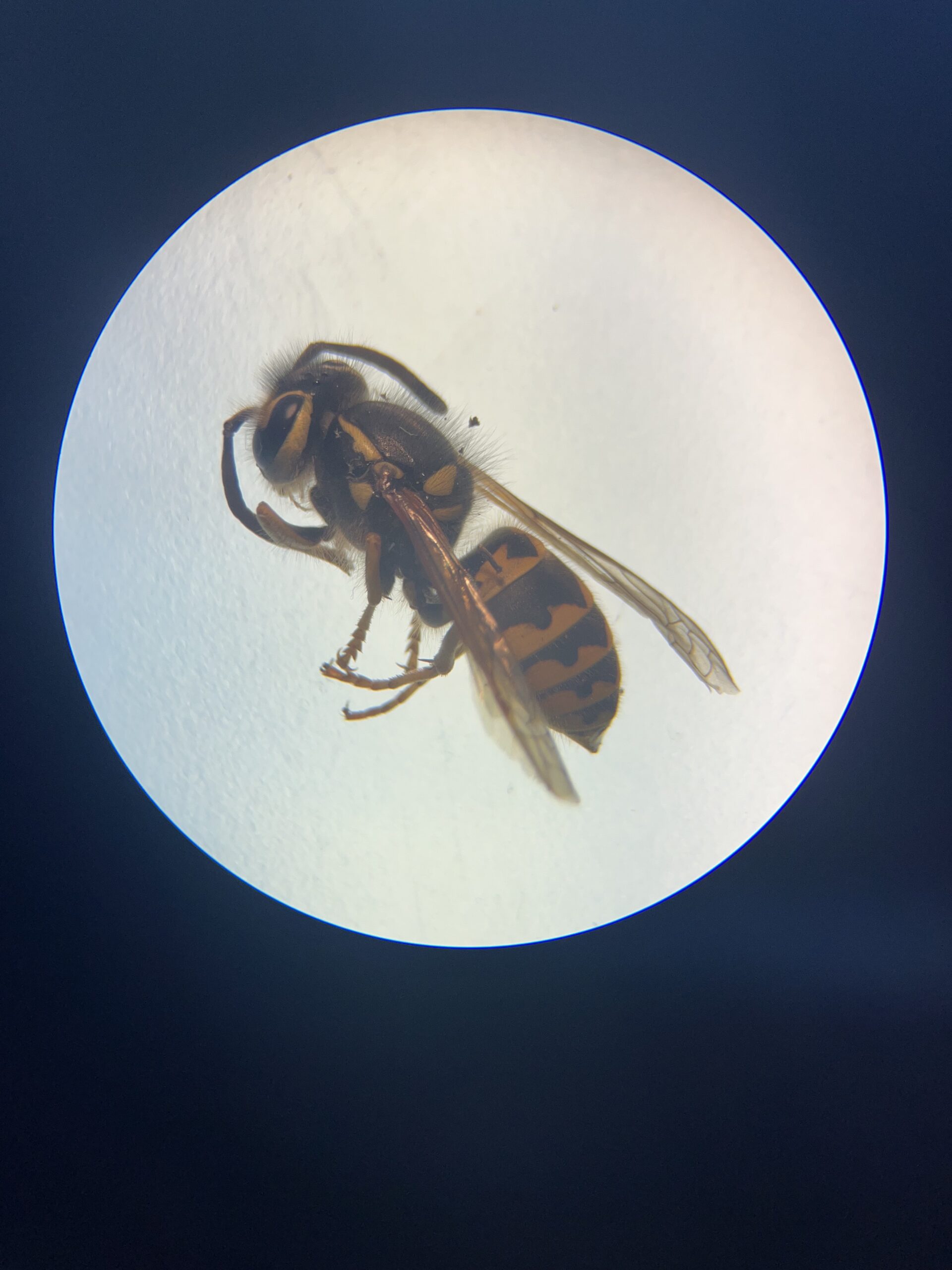
|
|---|---|
| Location | Approximate location: 45.51, -122.69 |
| Collection date | |
| Captive / Cultivated? | |
| Group | Portland State University |
| Observations | |
| Putative identification | Arthropoda Insecta Hymenoptera Vespidae Vespula Vespula pensylvanica |
Methods |
|
| Extraction kit | DNeasy (Qiagen) blood and tissue kit |
| DNA extraction location | Partial abdomen |
| Single or Duplex PCR | Single Reaction |
| Gel electrophoresis system | Standard electrophoresis system |
| Buffer | 1X TAE |
| DNA stain | GelRed |
| Gel images |
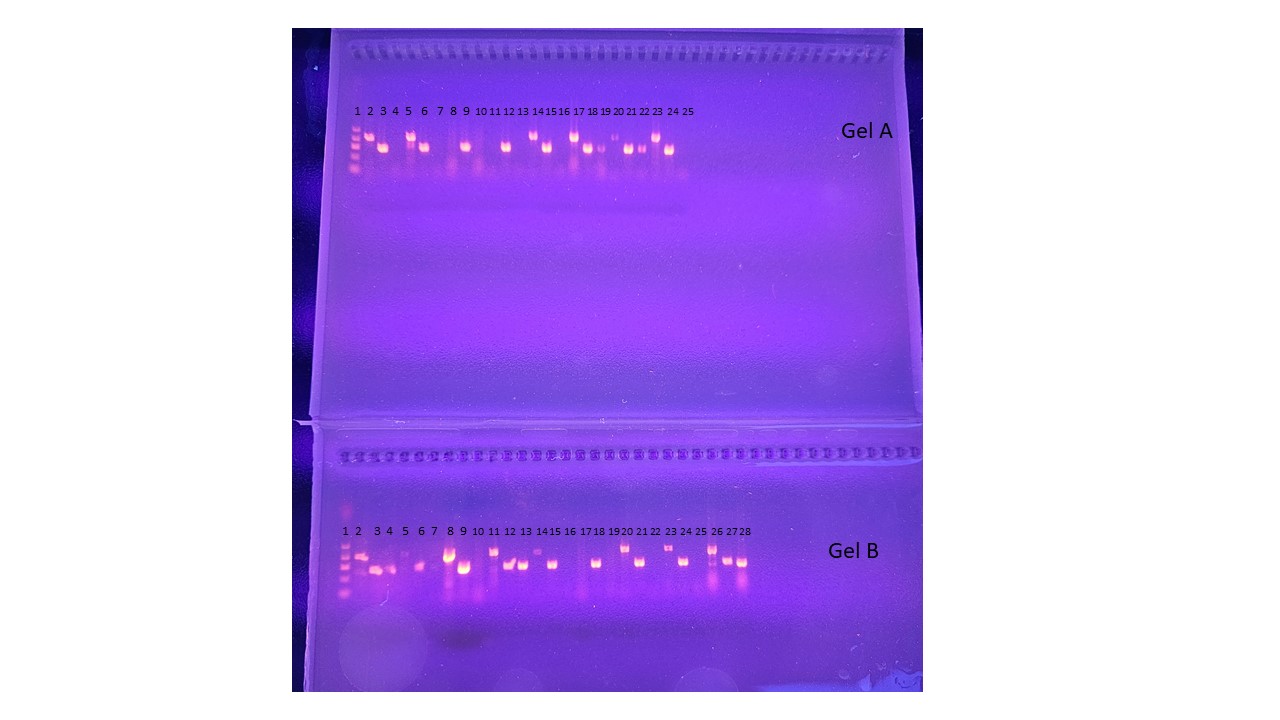
|
| Protocol notes | |
Results |
|
| Wolbachia presence | Yes |
| Confidence level | Medium |
| Explanation of confidence level | Gel A, wells 17-19. Well 17 is positive for insect DNA, well 18 is positive for Wolbachia positive control, and well 19 is positive for Wolbachia in the wasp. The positive Wolbachia band is fainter than the other two bands, which is why I chose medium confidence. |
| Wolbachia 16S sequence | |
| Arthropod COI sequence |
|
| Summary | The Vespula pensylvanica was found to be postive for Wolbachia. |
 Millipede
 Brown Widow
 (no title)
 Texas Carpenter Ant
 Boxelder Bug (Hemiptera)