Sample information |
|
| Picture |
|
|---|---|
| Location | Approximate location: 38.90, -77.12 |
| Collection date | 04/21/2026 |
| Captive / Cultivated? | Wild-caught |
| Group | Thomas Jefferson High School for Science and Technology |
| Observations | The arthropod was caught outside, in grass, at night, during mild, clear spring weather. Unfortunately, there are no available photos of the Araneae. The insect can be described as follows: a small, black spider, with legs not exceptionally long compared to its body. |
| Putative identification | Arthropoda Arachnida Araneae |
Methods |
|
| Extraction kit | DNeasy (Qiagen) blood and tissue kit |
| DNA extraction location | Whole arthropod |
| Single or Duplex PCR | Single Reaction |
| Gel electrophoresis system | MiniPCR |
| Buffer | TBE |
| DNA stain | SYBR Safe |
| Gel images |
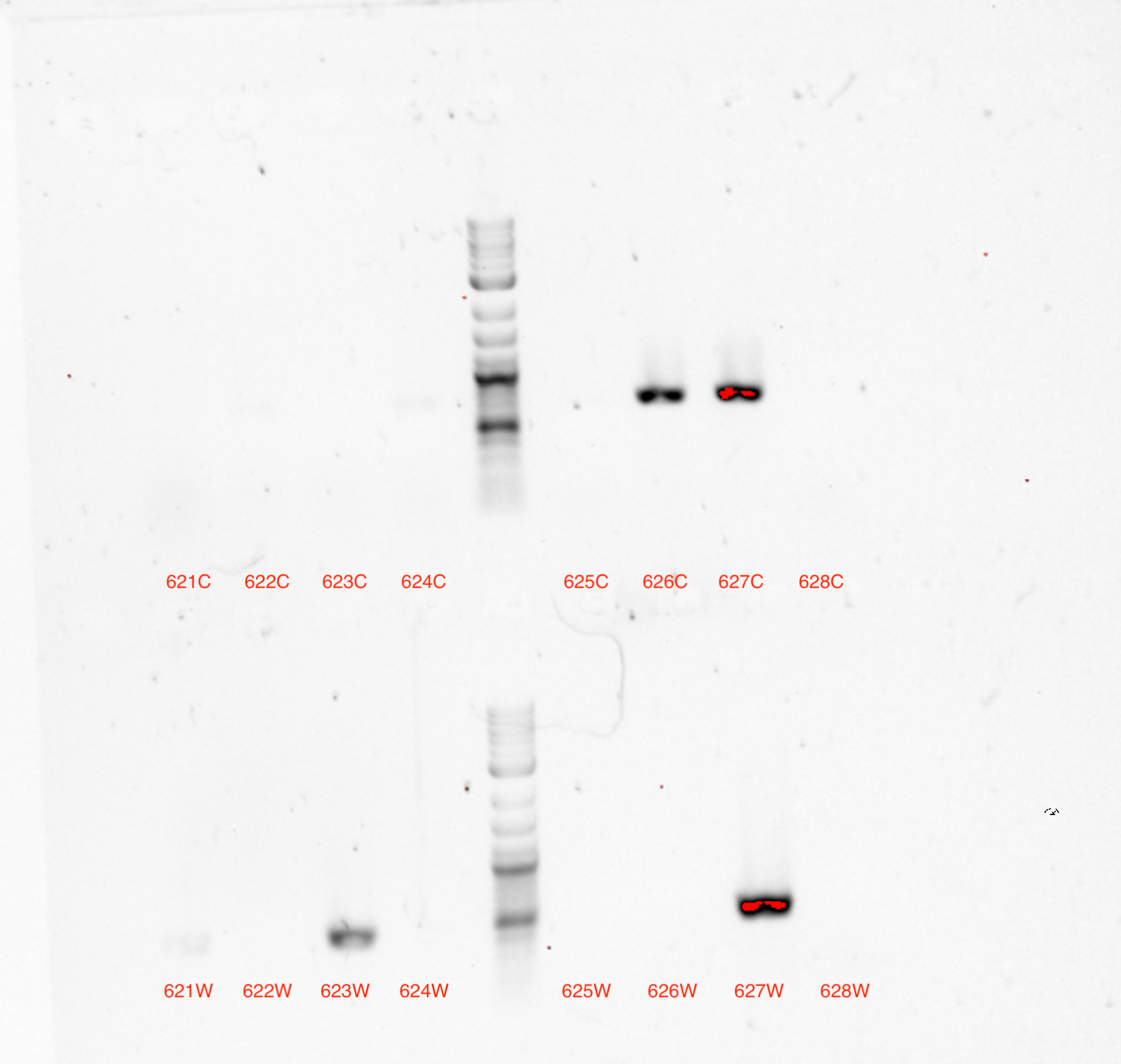
|
| Protocol notes | To collect the sample, I used a pestle to crush the entirety of the arthropod (size was less than 2mm). |
Results |
|
| Wolbachia presence | Yes |
| Confidence level | Medium |
| Explanation of confidence level | The gel electrophoresis for Wolbachia PCR showed a relatively clear band for this arthropod, especially compared to the blank results for other arthropods. Additionally, our positive control Drosophila and negative control Drosophila worked without error, signifying that the Wolbachia test worked. However, our arthropod DNA gel electrophoresis yielded compromised results, as the negative control produced a visible band (this outcome should not occur and invalidates the remaining data). Additionally, none of the other samples displayed a clear band for arthropod DNA. While the Wolbachia positive and negative controls performed as expected, the unreliability of the arthropod DNA results leaves us with limited confidence in our overall findings. Note: Although the sample was sequenced, the result was unsuccessful due to “no priming” issues, with a QS of 10 and a CRL of 1. |
| Wolbachia 16S sequence | |
| Arthropod COI sequence |
|
| Summary | The Araneae was found to be postive for Wolbachia. |
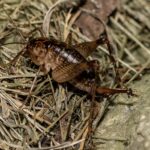 (no title)
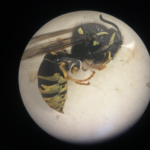 Yellowjacket Wasp
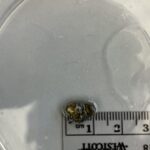 Pillbug
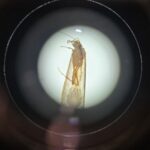 Umpachene Falls Caddisfly
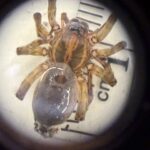 Wolf Spider