Sample information |
|
| Picture |
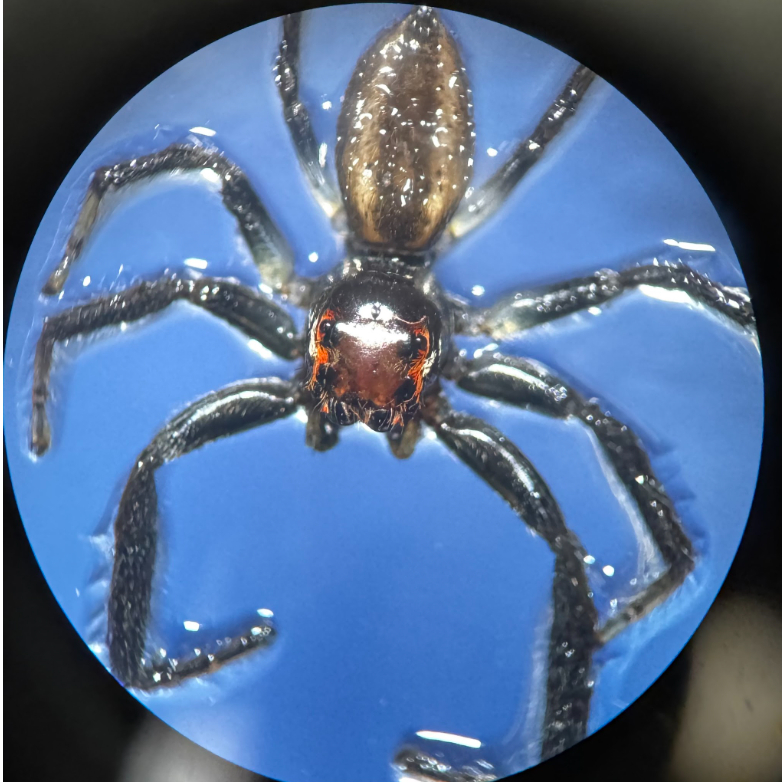
|
|---|---|
| Location | Approximate location: 40.62, -74.57 |
| Collection date | 06/02/2026 |
| Captive / Cultivated? | Wild-caught |
| Group | Pingry School |
| Observations | This specimen was caught in a carbon dioxide-producing trap — made with yeast, sugar, water, and dish soap — in a suburban forest area. The trap was placed on the ground at the end of a dirt trail, surrounded by forest on 3 sides. This trap was also somewhat close in proximity to a lake. |
| Putative identification | Arthropoda Arachnida Araneae Salticidae Colonus Colonus sylvanus |
Methods |
|
| Extraction kit | DNeasy (Qiagen) blood and tissue kit |
| DNA extraction location | Abdomen |
| Single or Duplex PCR | Single Reaction |
| Gel electrophoresis system | agarose gel electrophoresis |
| Buffer | 1X TAE |
| DNA stain | SYBR Safe |
| Gel images |
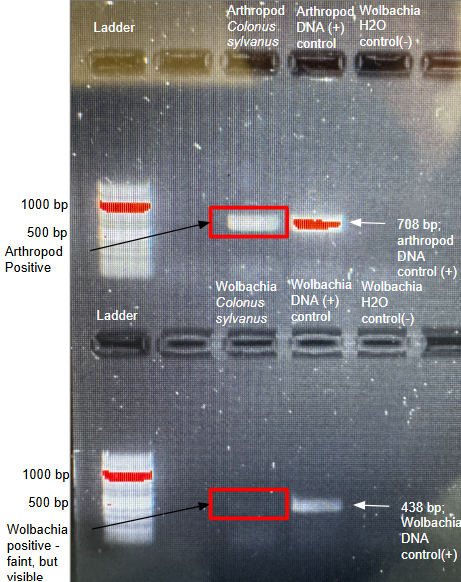
|
| Protocol notes | The experiment began with the extraction of DNA from the Colonus sylvanus. To confirm DNA presence, a nanodrop was used, and the nanodrop found a concentration of 126.8 ng/ul. PCR was performed to amplify the Arthropod and possible Wolbachia DNAs. Following PCR, gel electrophoresis (1% gel) was run at 100V(including 100bp ladder) to determine the success of the previous protocols and to show presence of the DNA. In the end, the experiment found that the Colonus sylvanus did have Wolbachia. |
Results |
|
| Wolbachia presence | Yes |
| Confidence level | High |
| Explanation of confidence level | In the bottom half of the gel in lane 3, the gel showed a faint, yet visible band of Wolbachia DNA in the specimen. Furthermore, the arthropod-positive and Wolbachia-positive DNA control fragments appeared on the gel (Top & Bottom of gel, respectively, Lane 4), as well as the Colonus sylvanus arthropod DNA fragments (Top of gel, Lane 3), indicating that the protocols were correctly followed. As well as this, the sequenced Wolbachia DNA of the specimen matched exactly with multiple submissions when compared to the NCBI BLAST database. |
| Wolbachia 16S sequence | Download FASTA
CCCGCATCCTTAGGTACCATCAGGTAATGCTGGGGACTTTAAGGAAACTGGCAGTGATAAACTGGAGGAAGGTGGGGATGATGTCAAGTCATCATGGCCCTTATGGAGTGGGCTACACACGTGCTACAATGGTGGCTACAATGAGCTGCAAAGTCGCGAGGCTAAGCTAATCCCTTAAAAGCCATCTCAGTTCGGATTGTACTCTGCAACTCGAGTGCATGAAGTTGGAATCGCTAGTAATCGTGGATCAGCACGCCACGGTGAATACGTTCTCGGGTCTTGTACACACTGCCCGTCACGCCATGGGAATTGGTTTCACTCGAAGCTA
BLAST at The Wolbachia Project BLAST at NCBI
|
| Arthropod COI sequence | Download FASTA
AGCATGAGCTGCTATAGTAGGAACAGCGATAAGAGTATCAATTCGAATAGAATTAGGACAGTTAGGAAGATTTTTAGGAAATGATCATATATATAATGTTATTGTTACTGCTCATGCATTTGTTATAATTTTTTTTATAGTTATACCTATTTTAATTGGGGGATTTGGGAATTGATTGGTACCATTAATATTAGGAGCTCCTGATATAGCGTTTCCTCGAATAAATAATTTGAGATTTTGATTATTACCACCTTCTTTATTATTATTATTTATTTCTTCGTTATCTGAAATAGGAGTTGGGGCAGGGTGGACTGTTTATCCTCCATTAGCTTCTGTAGTGGGACATAATGGAAGTTCTGTTGATTTTGCTATTTTTTCTTTACATTTAGCTGGTGCTTCTTCTATTATAGGAGCTATTAATTTTATTTCTACTGTAATTAACATGCGTTCTGTAGGAATAAGAATGGAAAAGGTTCCTTTATTTGTCTGATCTGTAGTAATTACTGCTGTTTTATTATTATTATCTCTTCCTGTTTTAGCGGGAGCTATTACTATATTGTTGACTGATCGAAATTTTAATACTTCGTTTTTTGATCCTGCTGGTGGAGGGGATCCTATTTTATTTCAACATTTATTTTGATTTTT
BLAST at The Wolbachia Project BLAST at NCBI
|
| Summary | The Colonus sylvanus was found to be postive for Wolbachia. |
 Millipede
 Brown Widow
 (no title)
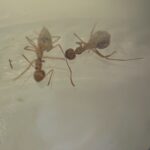 Texas Carpenter Ant
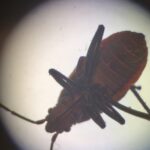 Boxelder Bug (Hemiptera)