Sample information |
|
| Picture |
|
|---|---|
| Location | Approximate location: 38.82, -77.17 |
| Collection date | 04/20/2026 |
| Captive / Cultivated? | Wild-caught |
| Group | Thomas Jefferson High School for Science and Technology |
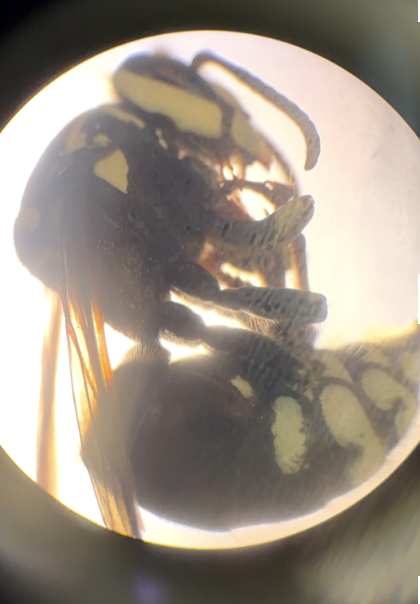
| Observations | The specimen was a yellowjacket wasp with a mostly black body, bright yellow markings on the abdomen, and yellow patches on the thorax. Its wings were narrow and translucent with a brownish tint. The legs appeared dark with lighter yellow areas near the joints. The specimen was wild-caught outdoors and was intact enough for the body markings to be clearly observed under magnification. |
| Putative identification | Arthropoda Insecta Hymenoptera |
Methods |
|
| Extraction kit | DNeasy (Qiagen) blood and tissue kit |
| DNA extraction location | Abdomen |
| Single or Duplex PCR | Single Reaction |
| Gel electrophoresis system | MiniPCR |
| Buffer | TBE |
| DNA stain | SYBR Safe |
| Gel images |
|
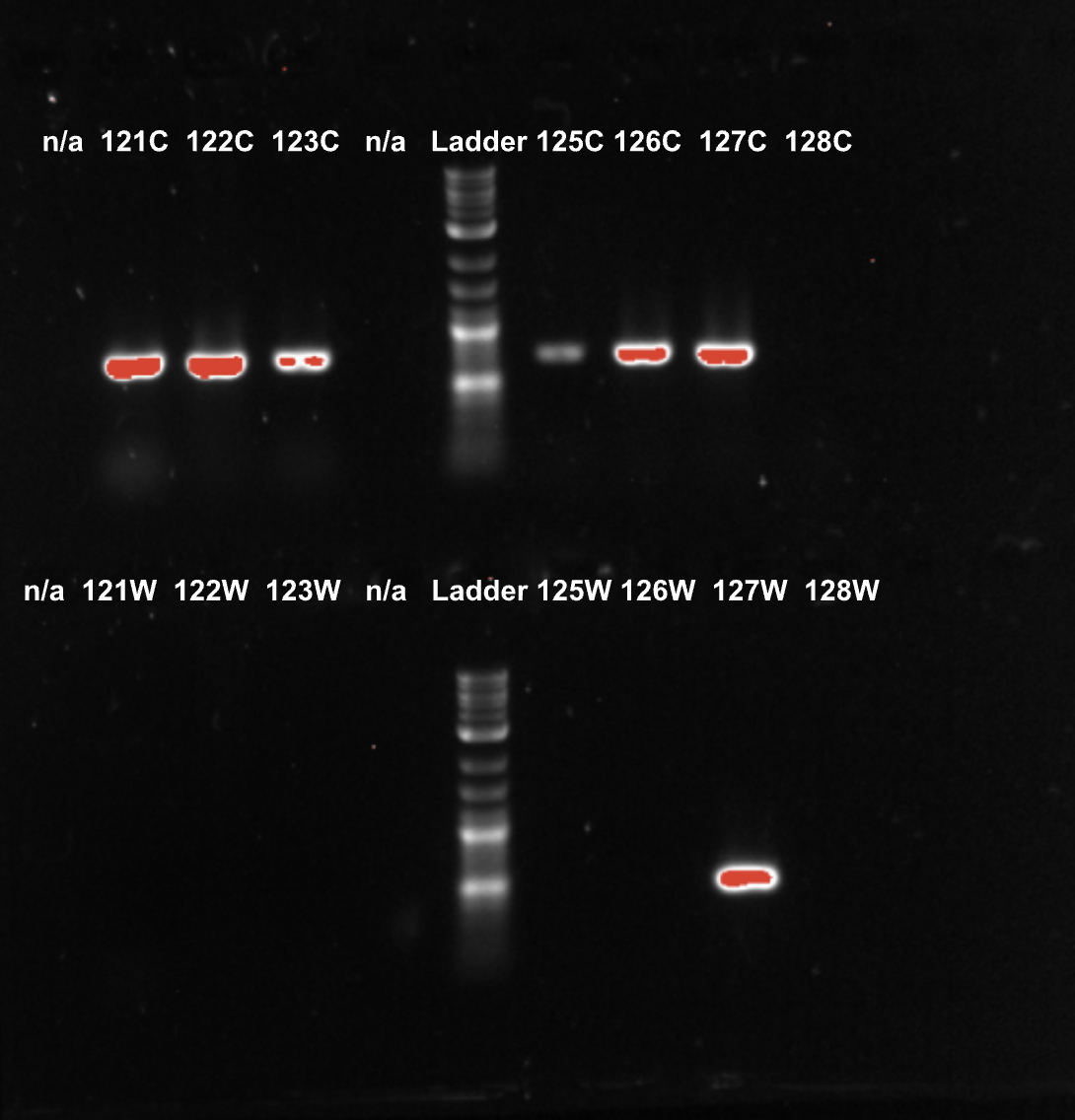
| Protocol notes | Two separate PCR reactions were analyzed, an arthropod COI PCR and a Wolbachia 16S PCR. The submitted wasp sample produced a visible band on the arthropod COI gel, indicating that arthropod DNA was successfully extracted and amplified. The wasp sample did not produce a visible band on the Wolbachia 16S gel. The Wolbachia-positive DNA control produced a visible band, while the negative control and water control did not produce visible bands. The positive-control Drosophila lane did not show a clear visible band on the Wolbachia gel. |
Results |
|
| Wolbachia presence | No |
| Confidence level | Medium |
| Explanation of confidence level | I selected medium confidence because the wasp sample produced a visible COI band, showing that DNA extraction and PCR amplification were successful. The wasp did not produce a visible Wolbachia 16S band. The Wolbachia-positive DNA control produced a band, and the negative and water controls did not produce bands, which supports a Wolbachia-negative result. However, the positive-control Drosophila lane did not show a clear band on the Wolbachia gel, so the result should be interpreted with some caution. |
| Wolbachia 16S sequence | |
| Arthropod COI sequence | Download FASTA
Download AB1
TCTGAGCCGGAATAATTGGATCTTCCATAAGAATAATTATTCGATTAGAATTAGGATCGCCCGATGCTTTAATTAATAATGATCAAATTTATAATTCAATAGTAACTAGTCATGCCTTTATTATAATTTTTTTTATAGTAATACCTTTTATAATTGGAGGATTCGGAAACTTTTTAGTCCCATTAATATTAGGATCACCTGATATAGCATACCCTCGAATAAATAATATAAGATTTTGATTATTACCACCCTCTTTATCCTTACTTTTATTGAGTAATTTTATTAATGATGGGGTTGGGACAGGTTGAACTGTTTATCCCCCTTTAGCATCTAATATTTTTCATAGTGGTCCATCAGTTGATTTAGCAATTTTCTCCCTACATATTGCAGGAATATCCTCAATTTTAGGAGCCATTAATTTTATCTCTACAATTTTAAATATACACCATAAAAATTTCTCAATTGACAAAATCCCACTTCTTGTTTGGTCAATTTTAATTACTGCAATTCTATTATTATTATCTCTTCCTGTATTGGCCGGGGCAATTACTATATTACTAACAGACCGAAATTTAAATACTTCTTTTTTTGATCCTTCTGGAGGCGGGGATCCTATTCTTTATCAACATTTATTTTGATTTTTTGG
BLAST at The Wolbachia Project BLAST at NCBI
|
| Summary | The Hymenoptera was found to be negative for Wolbachia. |
 Millipede
 Brown Widow
 (no title)
 Texas Carpenter Ant
 Boxelder Bug (Hemiptera)