Sample information |
|
| Picture |
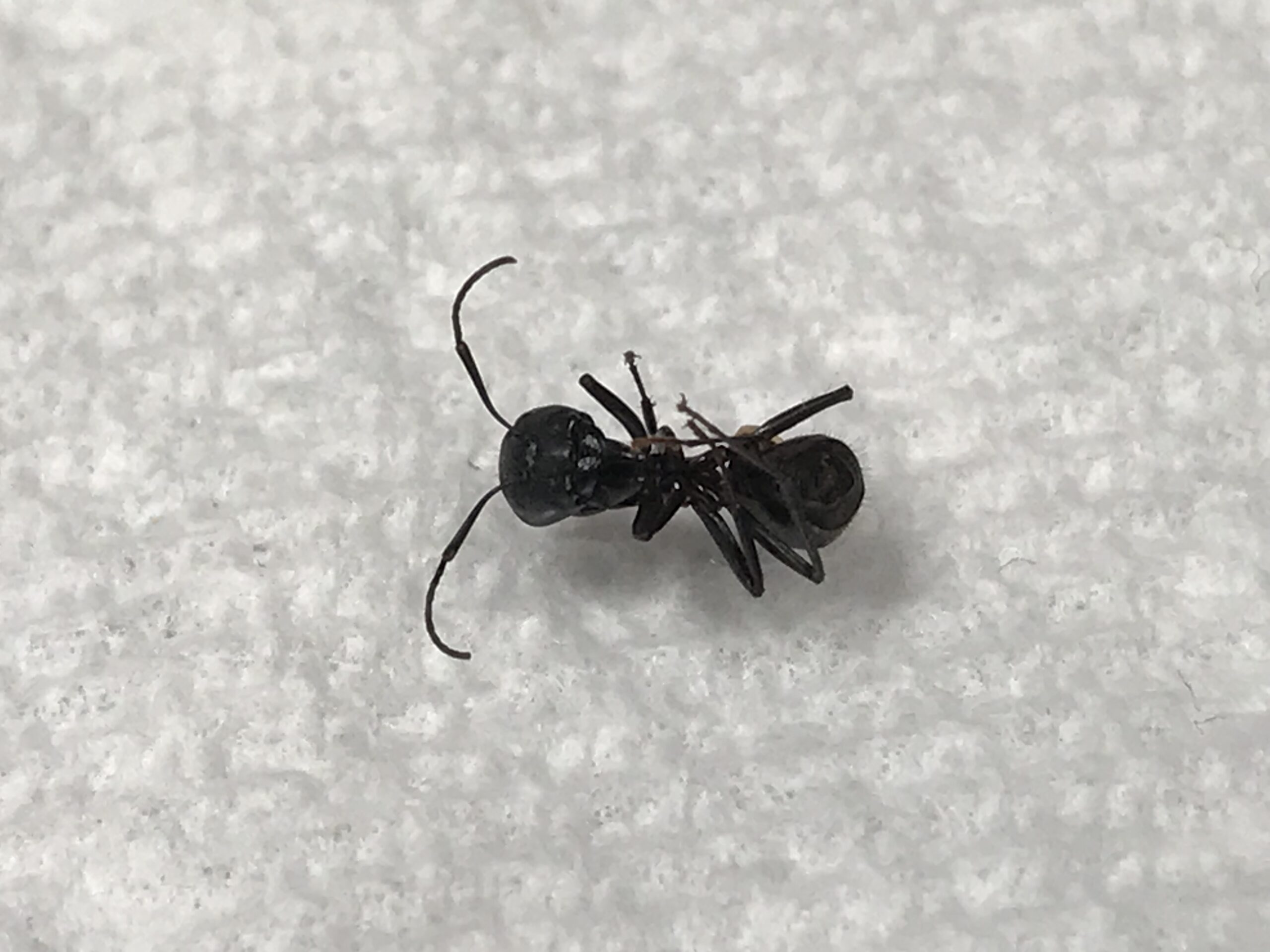
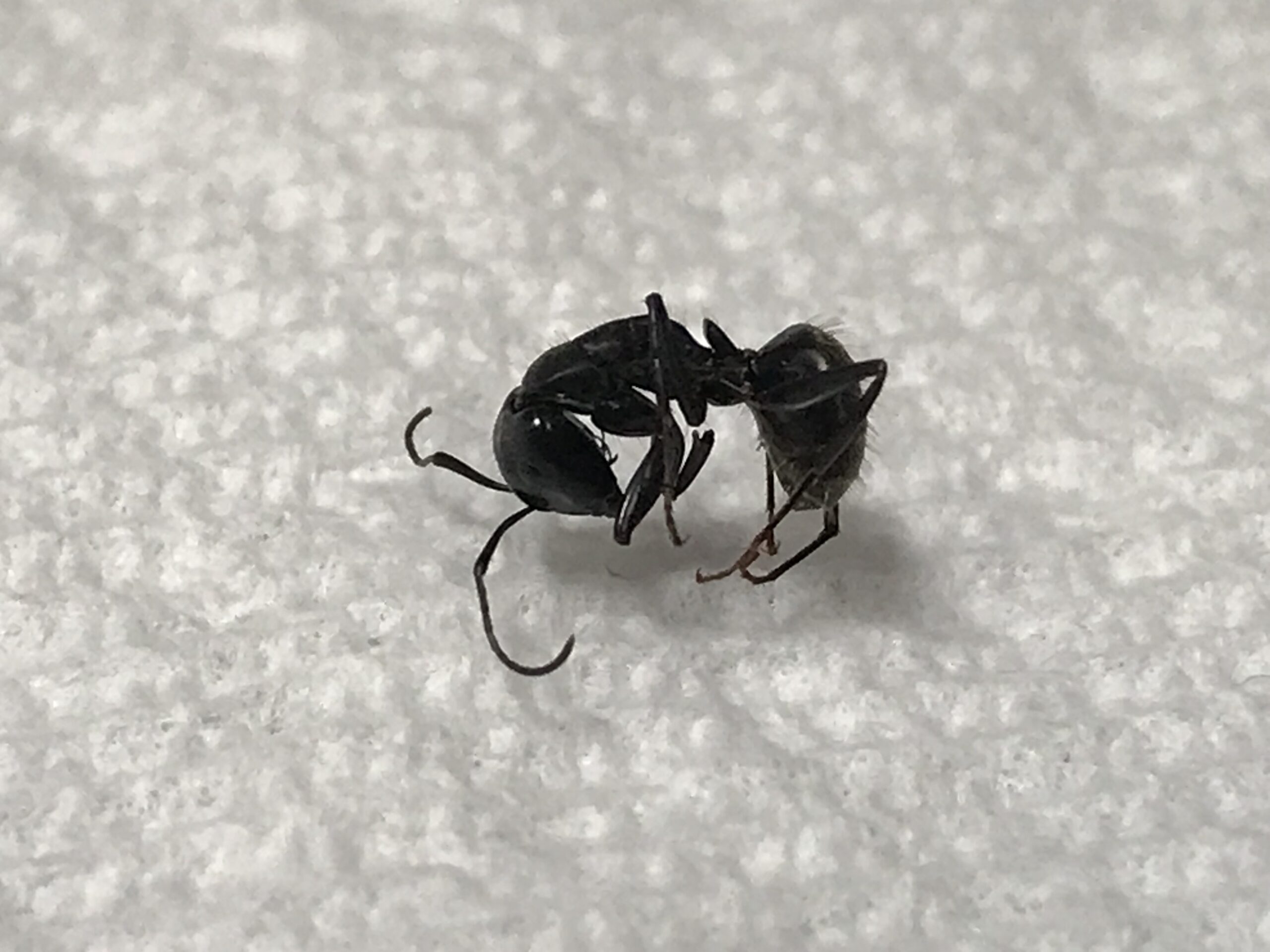
|
|---|---|
| Location | Approximate location: 42.12, -76.27 |
| Collection date | 09/10/2021 |
| Captive / Cultivated? | Wild-caught |
| Group | Owego Free Academy |
| Observations | |
| Putative identification | Arthropoda Insecta Hymenoptera |
Methods |
|
| Extraction kit | DNeasy (Qiagen) |
| DNA extraction location | Whole arthropod |
| Single or Duplex PCR | Single Reaction |
| Gel electrophoresis system | MiniOne |
| Buffer | TBE |
| DNA stain | GelGreen |
| Gel images |
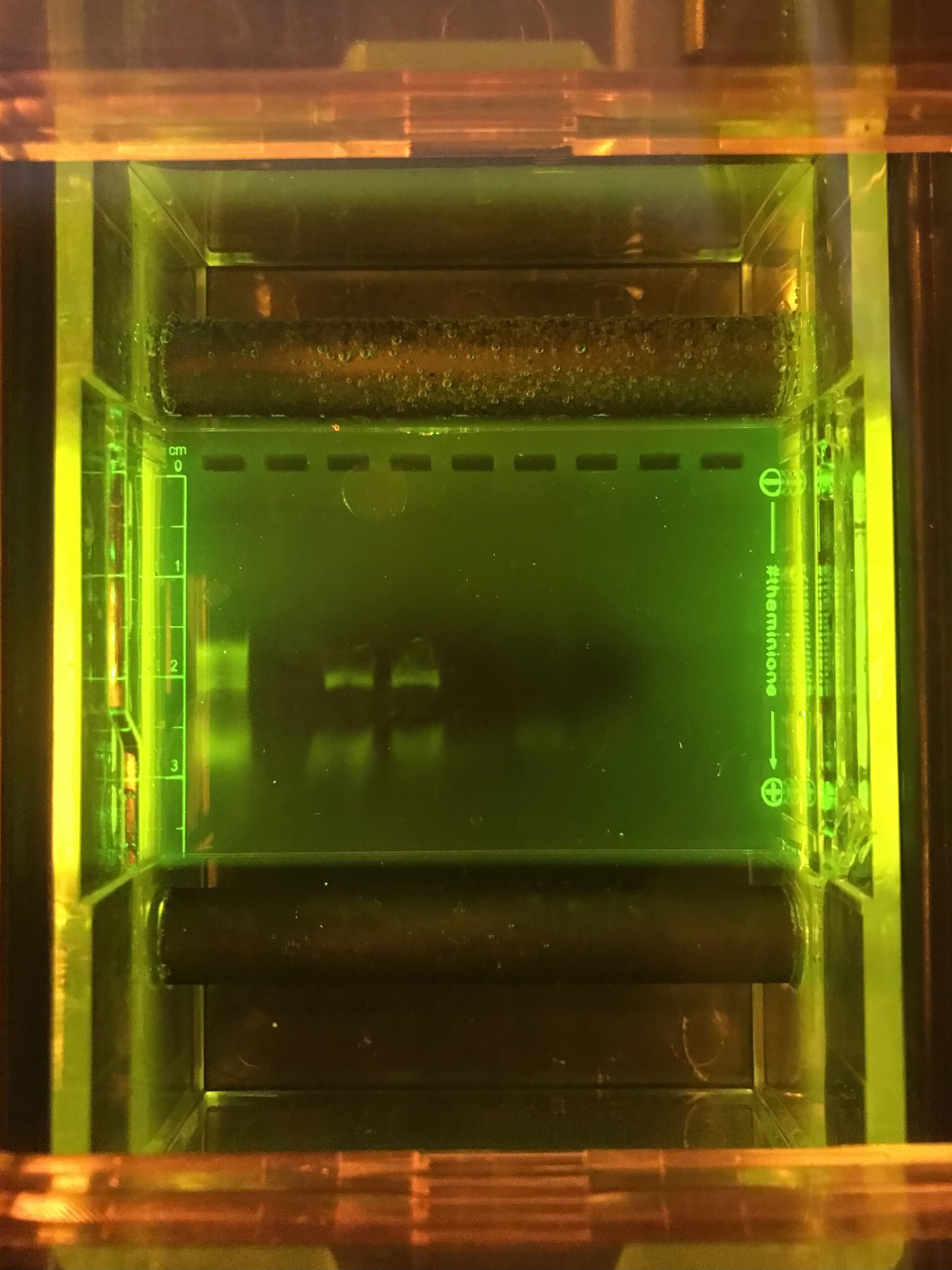
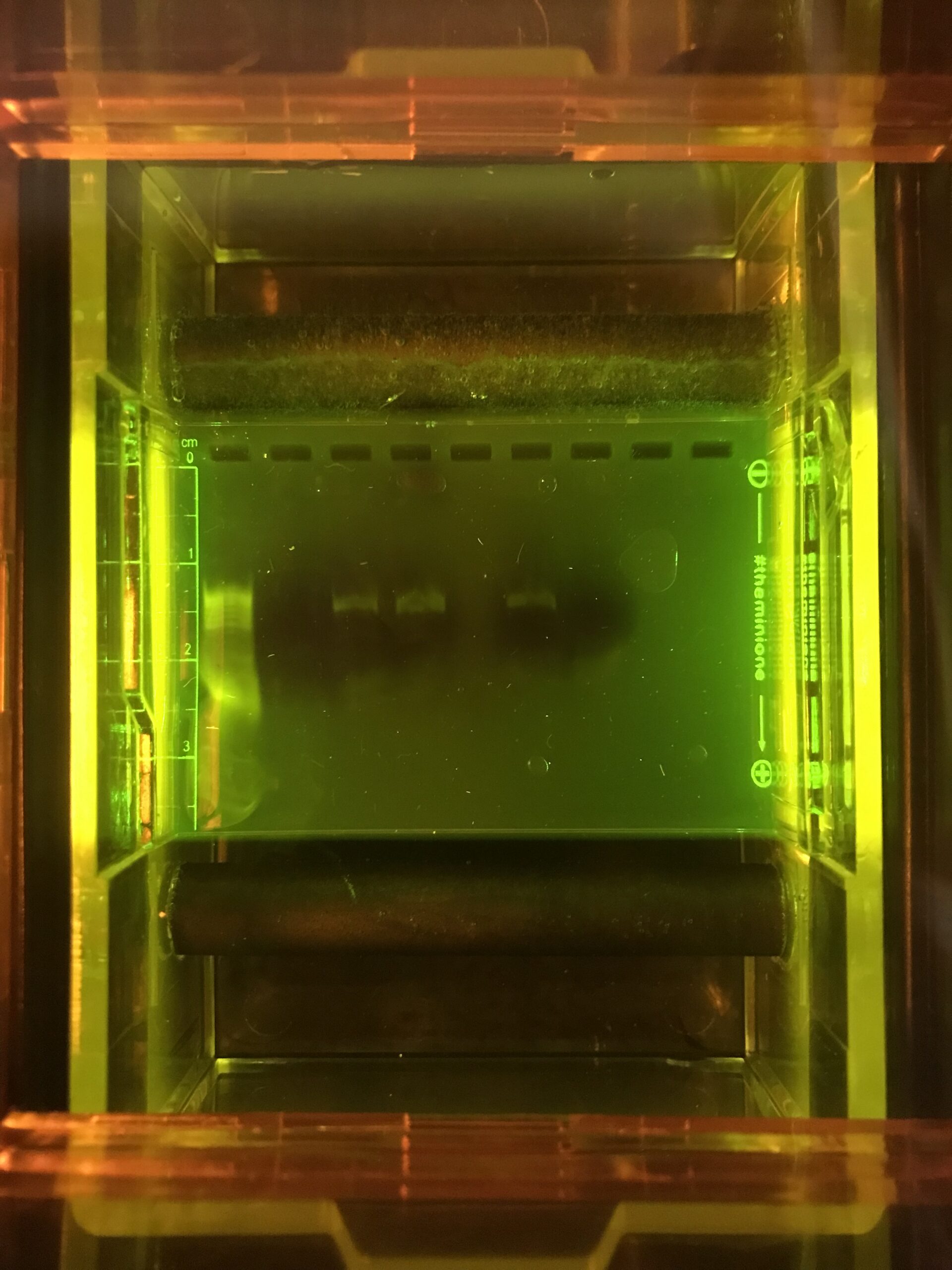
|
| Protocol notes | Wolbachia gel electrophoresis image (left)- Well 1: DNA ladder Well 3: Arthropod DNA Well 4: Positive Wolbachia control Well 5: Negative Wolbachia control
Arthropod gel electrophoresis image (right): Well 1: DNA ladder Well 3: Arthropod DNA Well 4: Positive arthropod control (note: a portion of the positive arthropod control was released outside of the well) Well 6: Negative arthropod control |
Results |
|
| Wolbachia presence | Yes |
| Confidence level | High |
| Explanation of confidence level | Both DNA ladders display DNA bands. Both positive controls displayed DNA bands. One negative control didn’t display DNA bands, one negative control did display DNA bands as a result of contamination by its respective positive control. Both arthropod DNA samples displayed DNA bands that accurately aligned with their respective positive controls. |
| Wolbachia 16S sequence | |
| Arthropod COI sequence |
|
| Summary | The Hymenoptera was found to be postive for Wolbachia. |
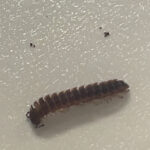 Millipede
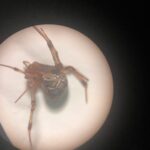 Brown Widow
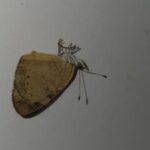 (no title)
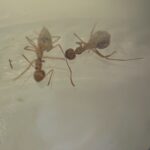 Texas Carpenter Ant
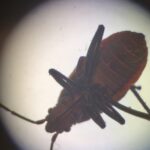 Boxelder Bug (Hemiptera)