Sample information |
|
| Picture |
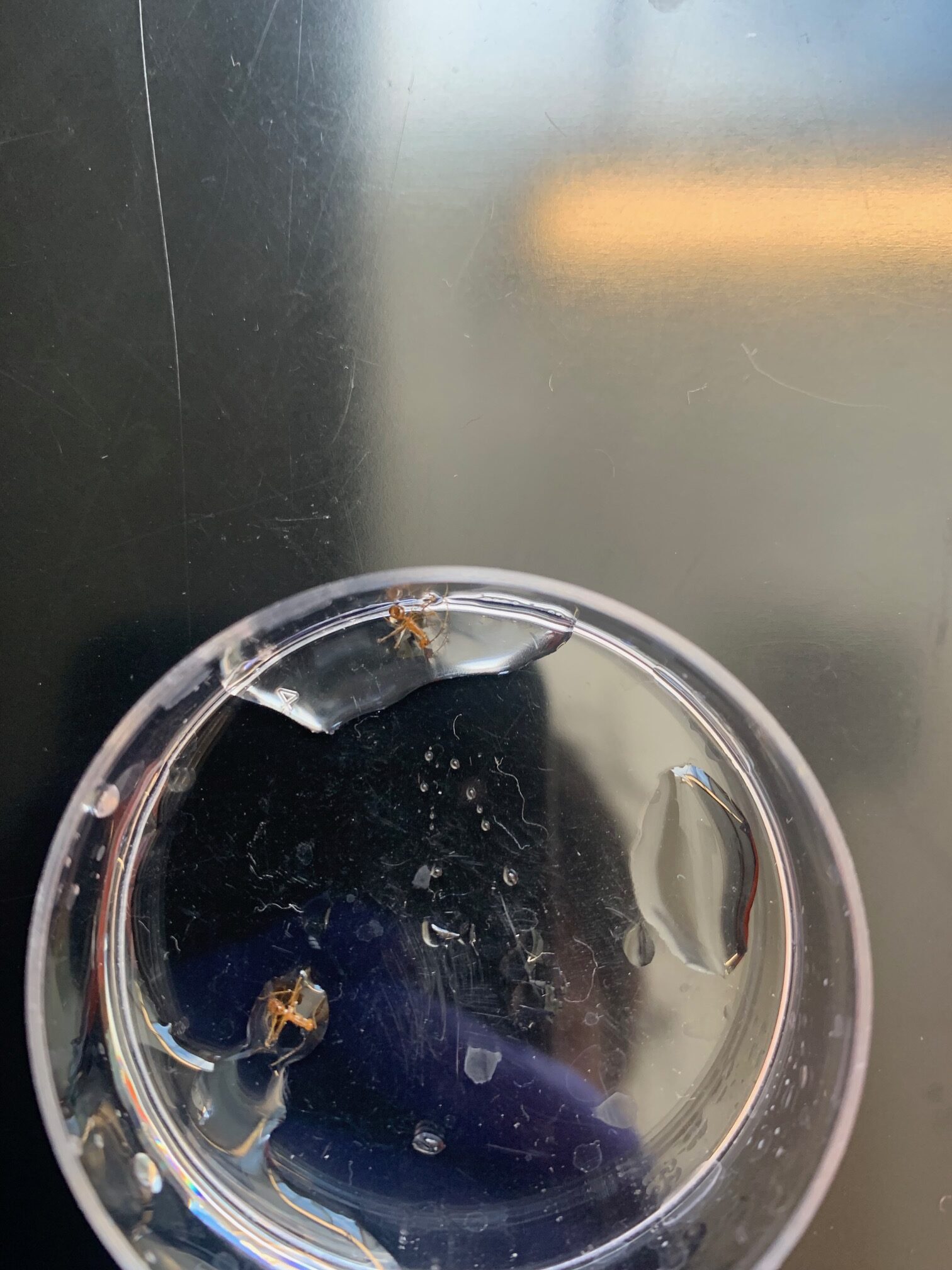

|
|---|---|
| Location | Approximate location: 19.64, -156.00 |
| Collection date | 11/16/2024 |
| Captive / Cultivated? | Wild-caught |
| Group | Hawaii Community College |
| Observations |
|
| Putative identification | Arthropoda Insecta Hymenoptera Formicidae |
Methods |
|
| Extraction kit | tweezers |
| DNA extraction location | Whole arthropod |
| Single or Duplex PCR | Single Reaction |
| Gel electrophoresis system | MiniPCR |
| Buffer | TBE |
| DNA stain | Other |
| Gel images |
|
| Protocol notes | Gel lanes (Bottom gel)
|
Results |
|
| Wolbachia presence | Yes |
| Confidence level | Medium |
| Explanation of confidence level | I’m confident because I extracted the DNA carefully and it shows up on my DNA ladder. It’s a medium confidence level because I think it needs to be checked out from other professions to finalize the Wolbachia positivity. |
| Wolbachia 16S sequence | Download AB1
#4 is between 8 and 9 = 500 to 400 bp. Is also lighter than the rest of the bands. #5 is between 8 and 9 = 500 to 400 bp #6 is clear (control.)
BLAST at The Wolbachia Project BLAST at NCBI
|
| Arthropod COI sequence | Download AB1
#2 is on 6 = 700 bp. Seems to be the clearest. #3 is on 6 = 700 bp.
BLAST at The Wolbachia Project BLAST at NCBI
|
| Summary | The Formicidae was found to be postive for Wolbachia. |
 (no title)
 Yellowjacket Wasp
 Pillbug
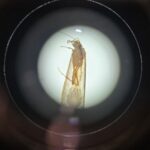 Umpachene Falls Caddisfly
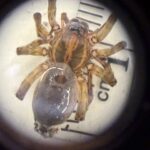 Wolf Spider