Sample information |
|
| Picture |

|
|---|---|
| Location | Approximate location: 37.25, -78.45 |
| Collection date | 10/31/2024 |
| Captive / Cultivated? | Wild-caught |
| Group | Longwood University |
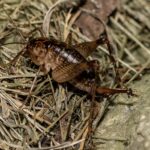
| Observations | The arthropod was caught near wildflowers Lake Mayes. It has large eyes and abdomen with large wings that extend past the abdomen. It was mostly black with a little yellow on the thorax. |
| Putative identification | Arthropoda Insecta Hymenoptera Apidae Xylocopa |
Methods |
|
| Extraction kit | DNeasy (Qiagen) |
| DNA extraction location | Abdomen |
| Single or Duplex PCR | Single Reaction |
| Gel electrophoresis system | |
| Buffer | TAE |
| DNA stain | Ethidium Bromide |
| Gel images |
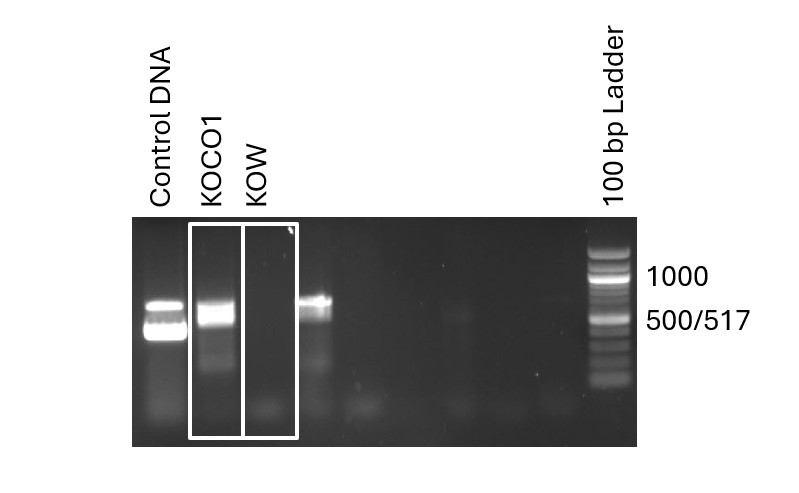
|
| Protocol notes | DNA extraction: The arthropod was cut at the abdomen and the contents were grounded with a pestle thoroughly. Loading Gel Lanes: lane 1- 100bp DNA ladder lane 2-7- other group members’ samples lane 8-9- my arthropod and Wolbachia samples lane 10- DNA positive control
|
Results |
|
| Wolbachia presence | No |
| Confidence level | High |
| Explanation of confidence level | All control bands worked, and the band for the arthropod gene PCR product was visible. I did not encounter any problems with the protocol. Therefore, I am confident that my arthropod is not infected with Wolbachia. |
| Wolbachia 16S sequence | |
| Arthropod COI sequence | Download AB1
|
| Summary | The Xylocopa was found to be negative for Wolbachia. |
 (no title)
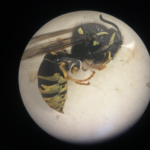 Yellowjacket Wasp
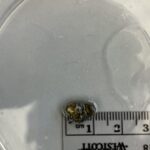 Pillbug
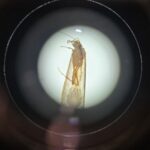 Umpachene Falls Caddisfly
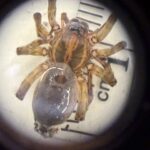 Wolf Spider