Sample information |
|
| Picture |

|
|---|---|
| Location | Approximate location: 33.86, -118.25 |
| Collection date | 04/30/2025 |
| Captive / Cultivated? | Wild-caught |
| Group | California Academy of Mathematics and Science |
| Observations |
|
| Putative identification | Arthropoda Insecta Diptera |
Methods |
|
| Extraction kit | DNeasy (Qiagen) |
| DNA extraction location | Abdomen |
| Single or Duplex PCR | Duplex Reaction |
| Gel electrophoresis system | Standard electrophoresis system Bio-Rad |
| Buffer | 1X TAE |
| DNA stain | Fast Blast |
| Gel images |
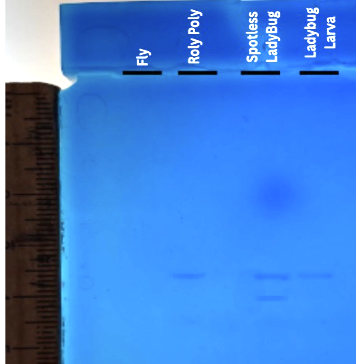
|
| Protocol notes | |
Results |
|
| Wolbachia presence | Unknown |
| Confidence level | High |
| Explanation of confidence level | There were no bands in the lane of the long-legged fly, which means there was either an error in extracting or gel electrophoresis, because the gel cannot confirm if the fly is an arthropod (despite being one), which means it cannot confirm if it has Wolbachia present as well. |
| Wolbachia 16S sequence | |
| Arthropod COI sequence |
|
| Summary | |
 (no title)
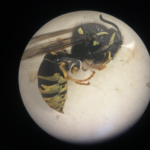 Yellowjacket Wasp
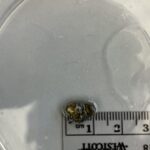 Pillbug
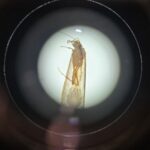 Umpachene Falls Caddisfly
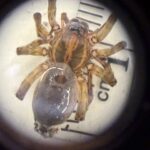 Wolf Spider