Sample information |
|
| Picture |
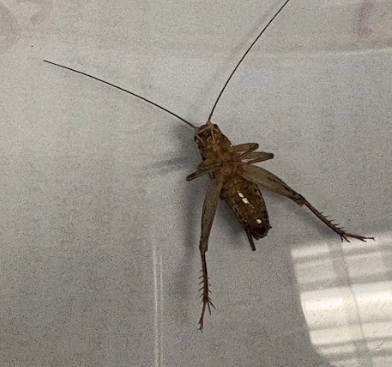
|
|---|---|
| Location | Approximate location: 33.77, -118.19 |
| Collection date | 05/01/2025 |
| Captive / Cultivated? | Wild-caught |
| Group | California Academy of Mathematics and Science |
| Observations | Found in a backyard located in the grass. The temperature was around 64 degrees Fahrenheit. |
| Putative identification | Arthropoda Insecta Orthoptera Gryllidae Gryllus |
Methods |
|
| Extraction kit | DNeasy (Qiagen) |
| DNA extraction location | Partial abdomen |
| Single or Duplex PCR | Duplex Reaction |
| Gel electrophoresis system | MiniOne |
| Buffer | 1X TAE |
| DNA stain | UView |
| Gel images |
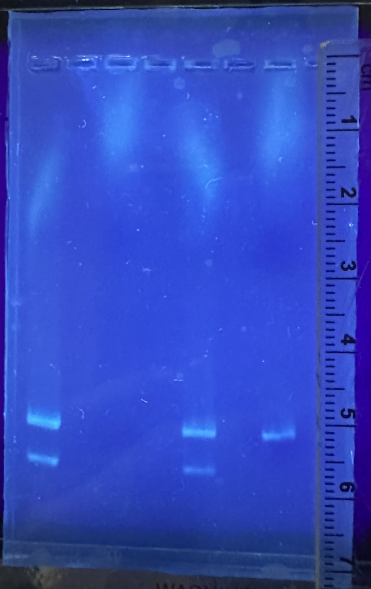
|
| Protocol notes | Lane 1: Long Beach cricket 1, Lane 3: Long beach cricket 2, Lane 5: Hawthorne cricket 1, Lane 7: Hawthorne cricket 2 |
Results |
|
| Wolbachia presence | Unknown |
| Confidence level | High |
| Explanation of confidence level | One Long Beach cricket produced one band at 53 mm, which is similar to the negative control, with a band also at 53 mm. This could mean that LB cricket 2’s DNA extraction was successful and showed that it was negative for Wolbachia. Since we could produce bands for most of the controls besides the ladder, we must have made a mistake with DNA extraction. Additionally, since our ladder didn’t run, but we had bands, this must have resulted in an improper loading of the ladder. The database search did not detect a clear primer binding site, suggesting potential issues with PCR amplification. This is most likely due to a lack of appropriately lysed cells, and we should have increased the grinding time with the pestle. |
| Wolbachia 16S sequence | |
| Arthropod COI sequence |
|
| Summary | |
 (no title)
 Yellowjacket Wasp
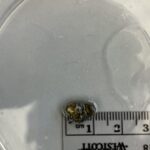 Pillbug
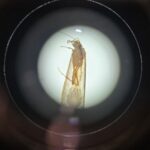 Umpachene Falls Caddisfly
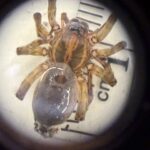 Wolf Spider