Sample information |
|
| Picture |
|
|---|---|
| Location | Approximate location: 19.94, -155.79 |
| Collection date | 11/12/2025 |
| Captive / Cultivated? | Wild-caught |
| Group | Hawaii Community College |
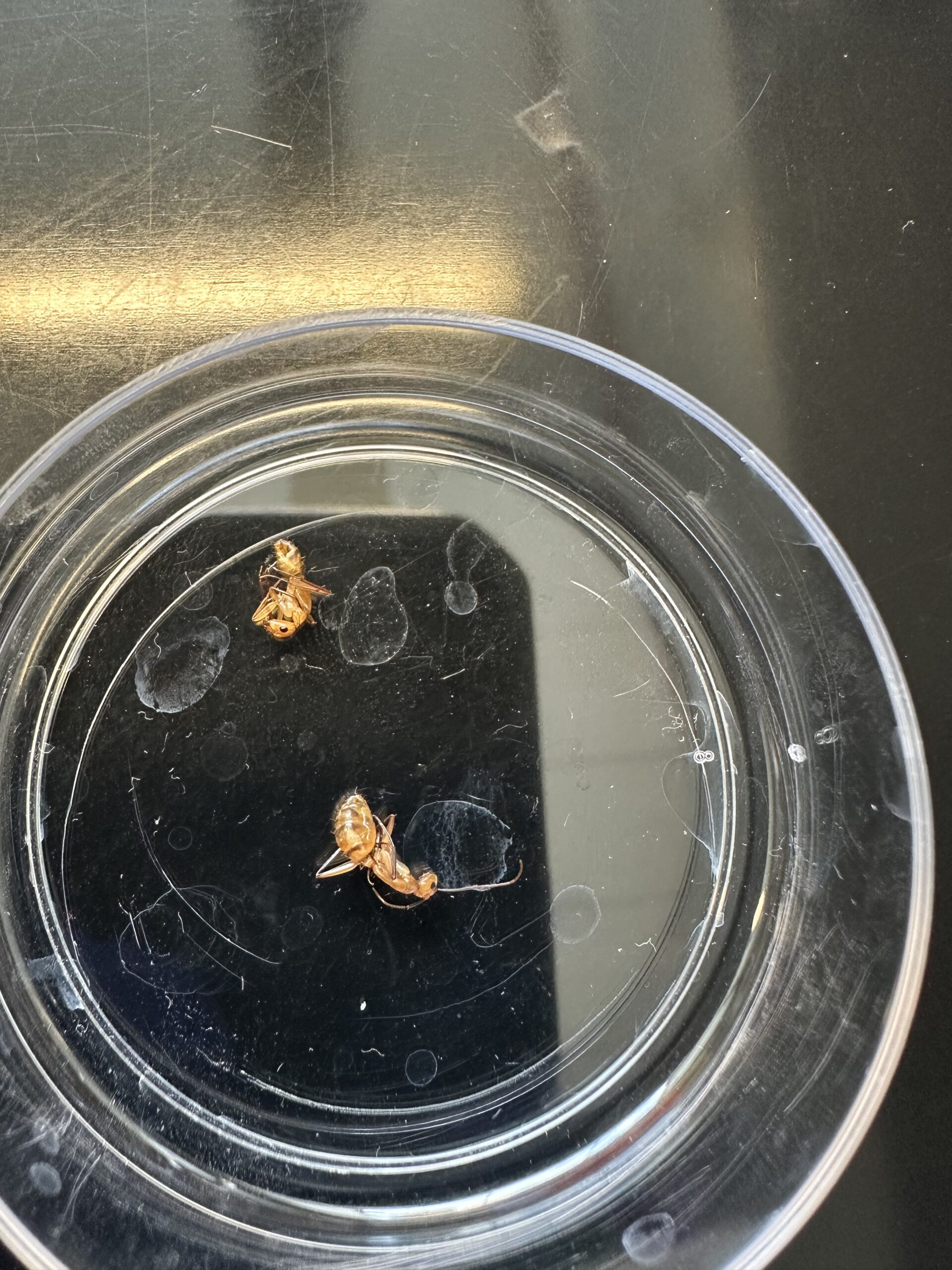
| Observations | The pharaoh ants were caught under a water heater at approximately 8P.M. on Wednesday November 12th and set is an alcohol solution inside the tube. They were then frozen until 11:30 A.M. Thursday November 13th, an hour before DNA extraction. They were alive and active at time of catching them. |
| Putative identification | Arthropoda Insecta Hymenoptera Formicidae Monomorium Monomorium pharaonis |
Methods |
|
| Extraction kit | pcr |
| DNA extraction location | Abdomen |
| Single or Duplex PCR | Single Reaction |
| Gel electrophoresis system | agarose gel electrophoresis |
| Buffer | lysis |
| DNA stain | SYBR Safe |
| Gel images |
|
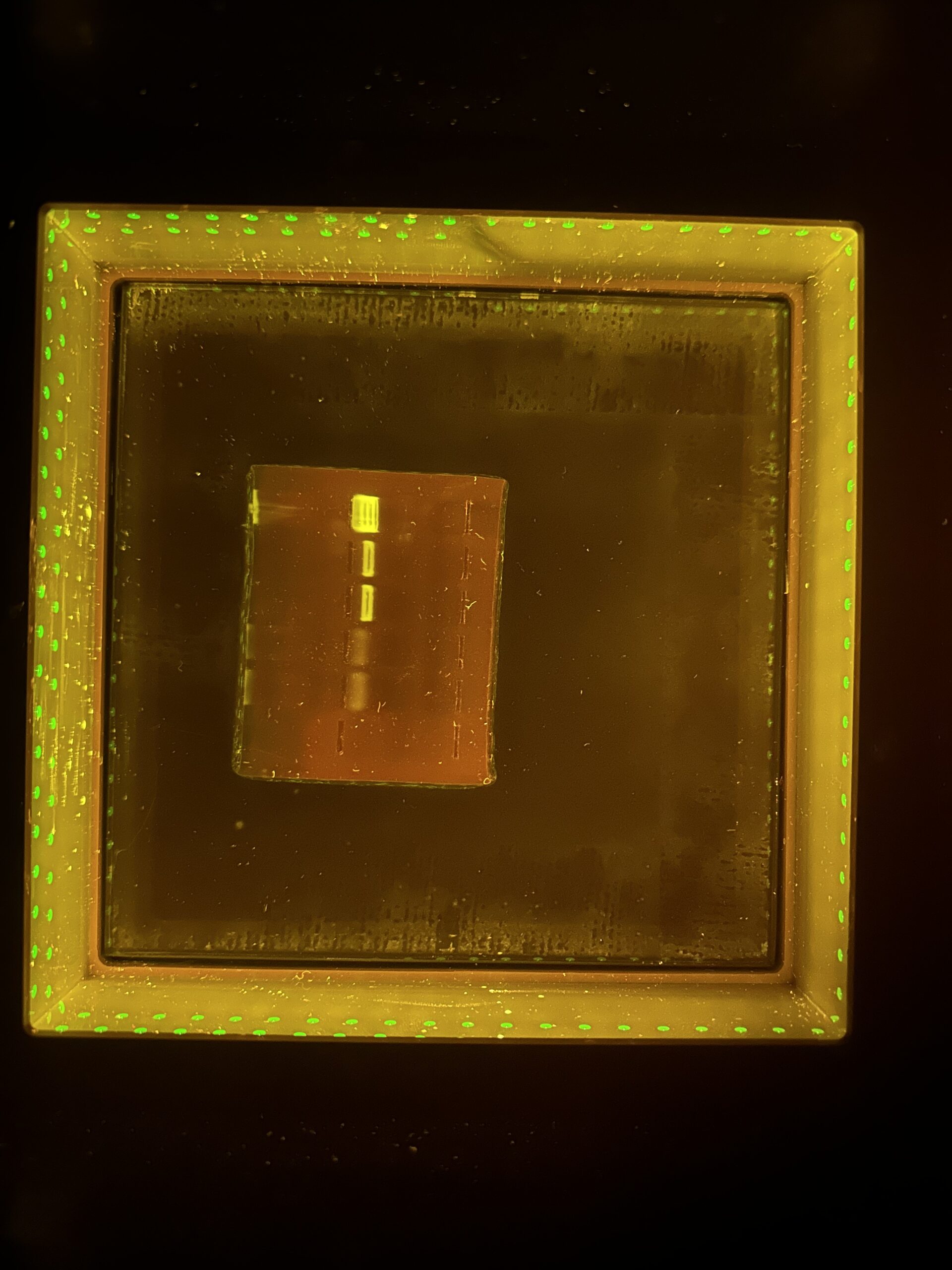
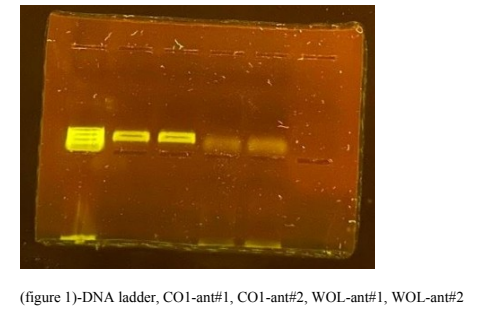
| Protocol notes | (Read from top to bottom) DNA ladder, CO1-ant#1, CO1-ant#2, WOL-ant#1, WOL-ant#2
|
Results |
|
| Wolbachia presence | No |
| Confidence level | High |
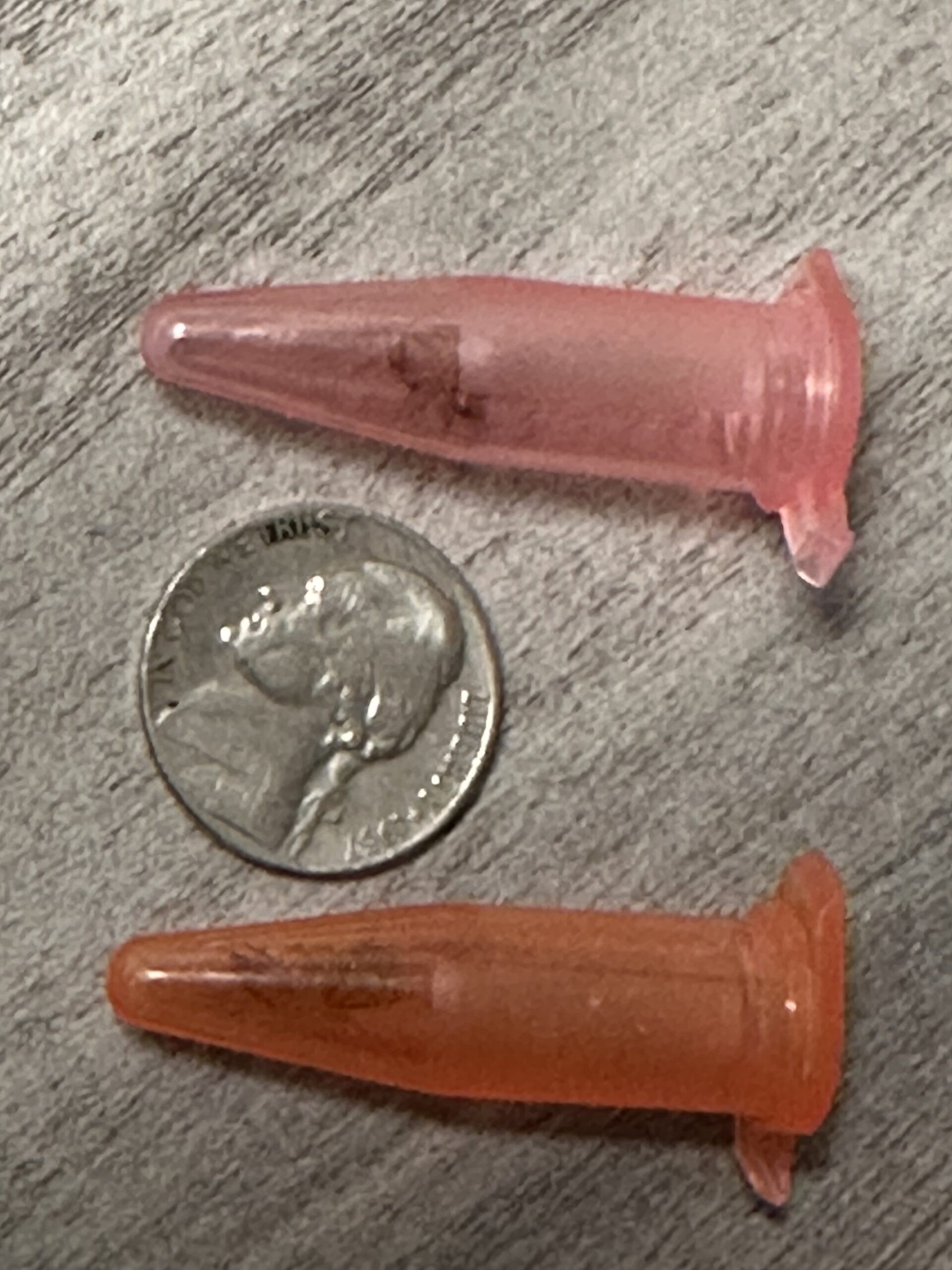
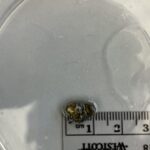
| Explanation of confidence level | The PCR phase successfully amplified the target DNA in the arthropod (CO1) reactions but failed to amplify the Wolbachia reaction for both specimens, meaning no Wolbachia was found in the ants as predicted. (figure 2) Arthropod (CO1) PCR in both ant #1 and #2 yielded positive amplification, indicating the presence of viable arthropod DNA suitable for PCR. This was shown at 708 bp. This result was expected as one of the DNA pellets of ants was visible (figure3) and held up well throughout the DNA extraction process. Wolbachia was absent in both ant #1 and ant #2. This negative result was expected as the percentage of non-infected ants are higher than infected ants. The samples analyzed by agarose gel electrophoresis to separate and visualize the PCR products. The DNA ladder successfully separated into multiple distinct bands, allowing for the estimation of fragment sizes. |
| Wolbachia 16S sequence | |
| Arthropod COI sequence |
|
| Summary | The Monomorium pharaonis was found to be negative for Wolbachia. |
 (no title)
 Yellowjacket Wasp
 Pillbug
 Umpachene Falls Caddisfly
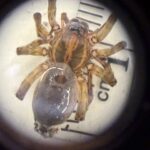 Wolf Spider