Sample information |
|
| Picture |
|
|---|---|
| Location | Approximate location: 40.78, -77.86 |
| Collection date | 09/24/2025 |
| Captive / Cultivated? | Wild-caught |
| Group | Penn State University |
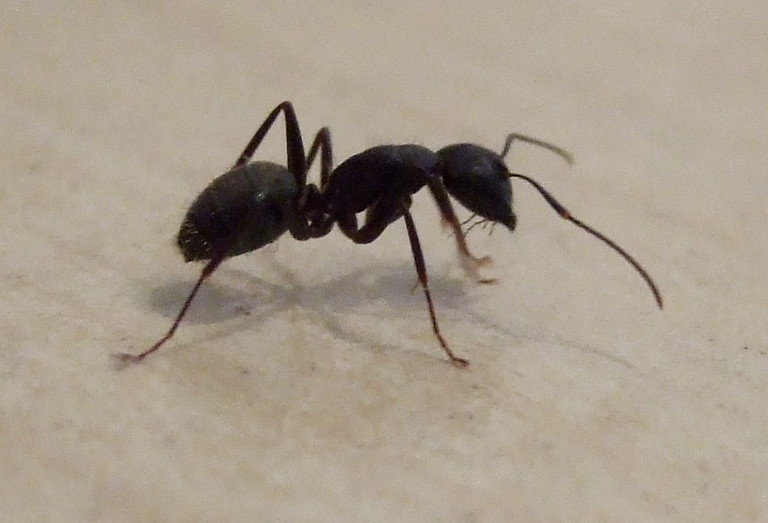
| Observations | The collected arthropod was found on the ground outside Mueller Laboratory on the Penn State University Park campus in State College, Pennsylvania. Collection occurred in the late fall season, under cool dry weather conditions. The specimen was found on a terrestrial surface near concrete walkways surrounding leaves and vegetation. The arthropod appeared ant-like and was actively moving along the surface. |
| Putative identification | Arthropoda Insecta Hymenoptera Formicidae |
Methods |
|
| Extraction kit | DNeasy (Qiagen) |
| DNA extraction location | Abdomen |
| Single or Duplex PCR | Single Reaction |
| Gel electrophoresis system | MiniPCR |
| Buffer | TBE |
| DNA stain | GelGreen |
| Gel images |
|
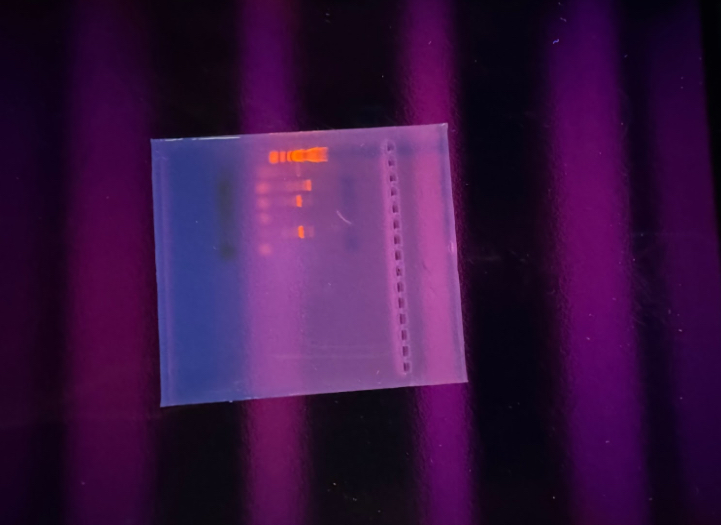
| Protocol notes | The PCR and gel electrophoresis for the arthropod showed that lane 2 (Ant Sample) did not have a visible band for the CO1 gene. Since there was no band for CO1 it suggests that the region did not amplify correctly or that the DNA from the arthropod was too low to be detected. The positive control for CO1 produced a clear band, and the negative control showed no amplification which means that the PCR was free of contamination. The lack of no visible CO1 band is in correlation with the ant sample and not the entire PCR process. On the other hand, the 16S rRNA PCR for Wolbachia showed a faint band in lane 2. This band was weaker than the band in the Wolbachia positive control, it was present for the 16S rRNA target. The negative control lane did not show amplification, which means that the band is not due to contamination. The presence of this band shows possible Wolbachia infection, but the faint band shows that it was present in low concentration. |
Results |
|
| Wolbachia presence | Yes |
| Confidence level | Medium |
| Explanation of confidence level | The presence of this band shows possible Wolbachia infection, but the faint band shows that it was present in low concentration. The band was weaker than expected, and the fragment size of the DNA was amplified in low abundance. This suggests that the Wolbachia DNA may be present in the sample. Data supports the possibility of Wolbachia infection. |
| Wolbachia 16S sequence | |
| Arthropod COI sequence |
|
| Summary | The Formicidae was found to be postive for Wolbachia. |
 (no title)
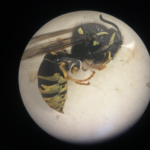 Yellowjacket Wasp
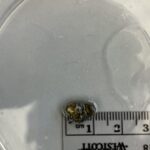 Pillbug
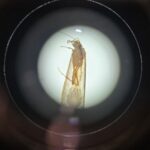 Umpachene Falls Caddisfly
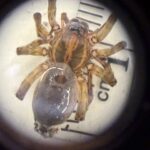 Wolf Spider