Sample information |
|
| Picture |
|
|---|---|
| Location | Approximate location: 42.57, -73.35 |
| Collection date | 02/19/2026 |
| Captive / Cultivated? | Wild-caught |
| Group | Berkshire Community College |
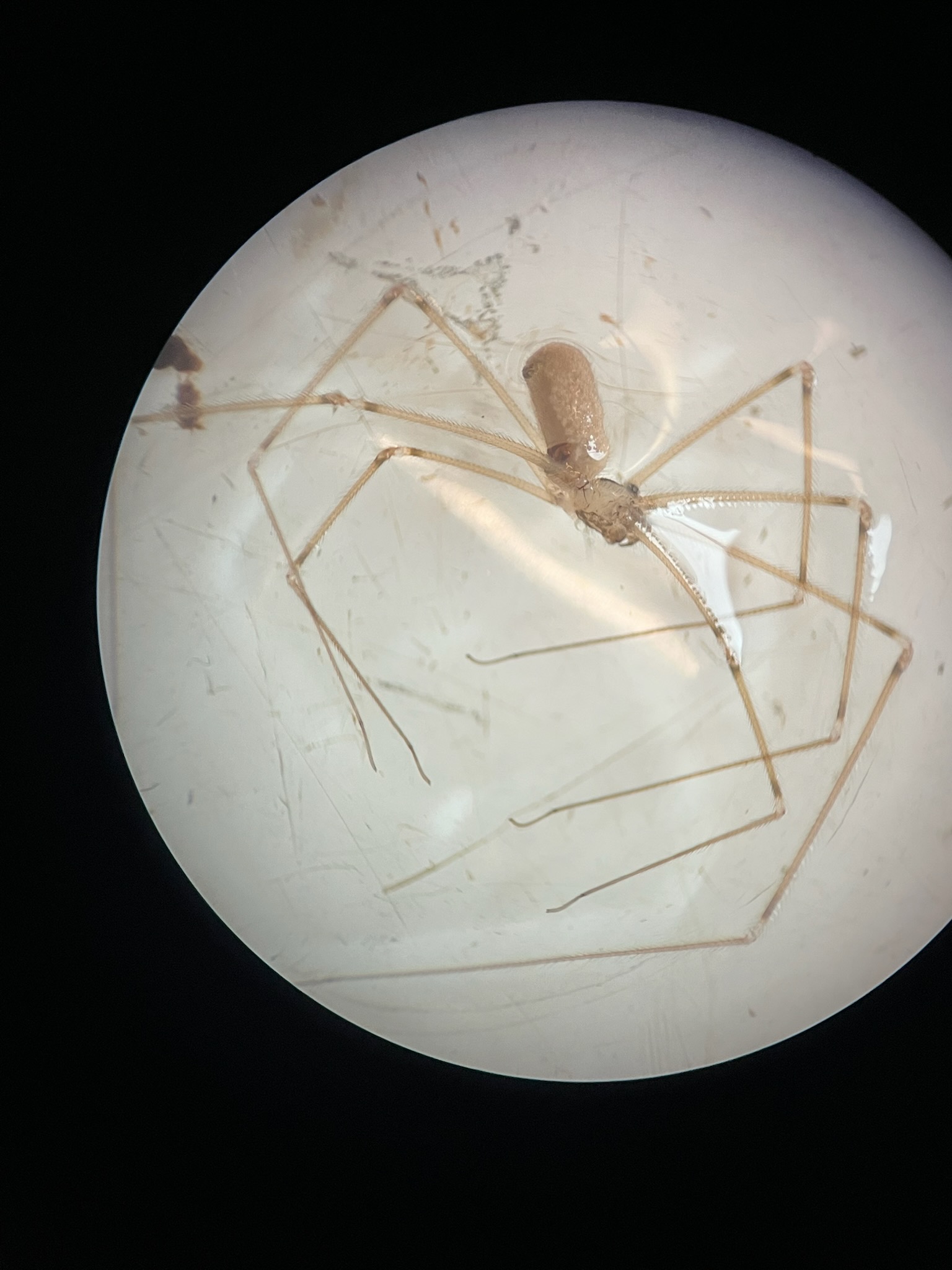
| Observations | Spider was located in house by the front door. It was in a small web. no other spiders were nearby. Specimen has longer cephalothorax, trichobothria on long legs, front facing eyes. specimen is about 1/16 inch in size. |
| Putative identification | Arthropoda Arachnida Araneae |
Methods |
|
| Extraction kit | Monarch DNA extraction (NEB) |
| DNA extraction location | cephalothorax |
| Single or Duplex PCR | Duplex Reaction |
| Gel electrophoresis system | agarose gel electrophoresis |
| Buffer | 1X TAE |
| DNA stain | SYBR Safe |
| Gel images |
|
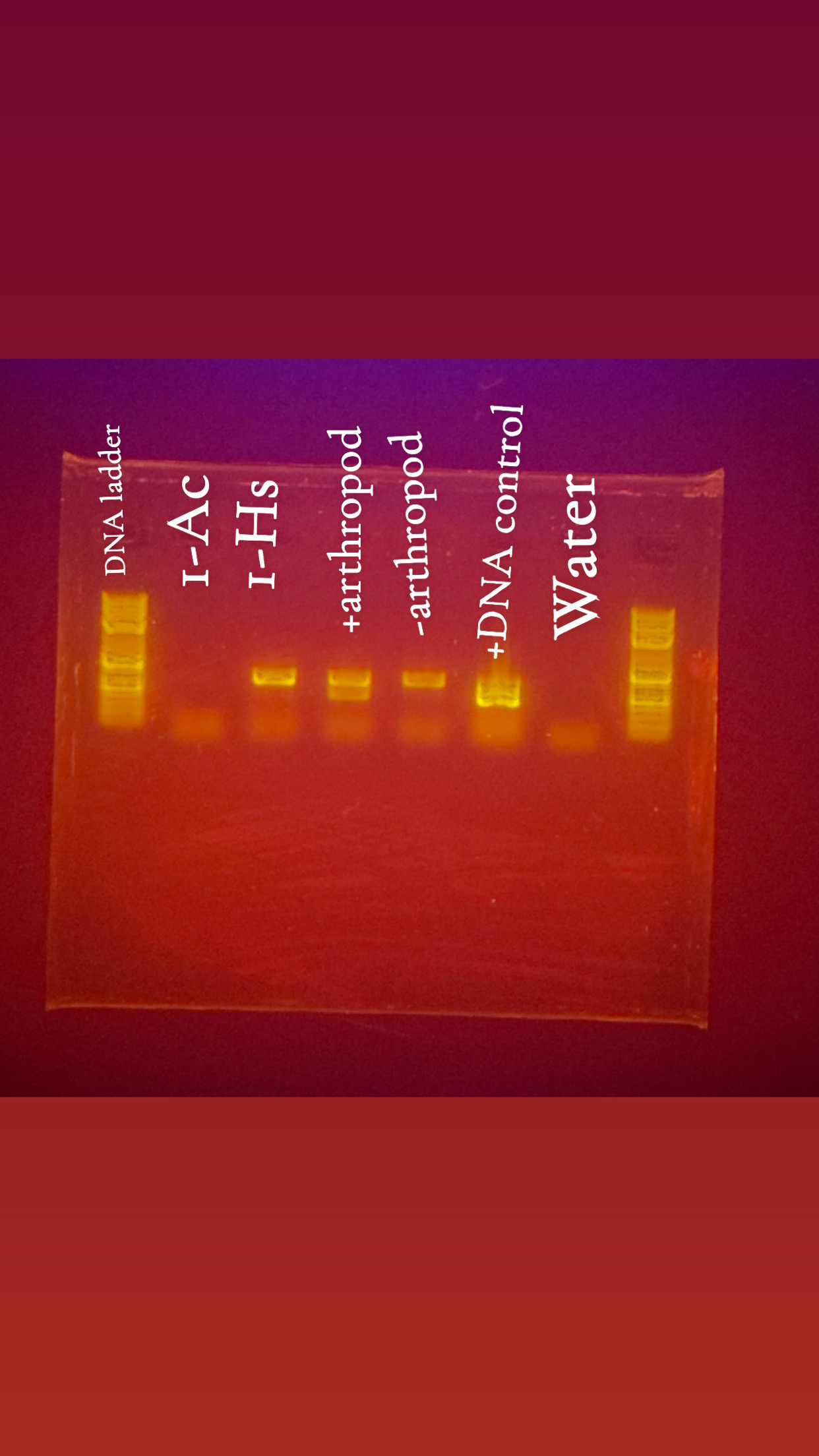
| Protocol notes | For this experiment, DNA was extracted from the indoor arthropods by crushing the tissue and using a lysis buffer to break open the cells, then centrifuging the samples to separate out the DNA. The extracted DNA was then used in PCR to amplify both the CO1 gene (as a control to make sure the DNA extraction worked) and a Wolbachia specific gene. Each PCR reaction included the DNA sample, primers, nucleotides, buffer, and DNA polymerase, and went through repeated cycles of denaturation, annealing, and extension to copy the DNA. After PCR, the products were run on an agarose gel using electrophoresis and visualized under UV light to check for the presence or absence of bands for CO1 and Wolbachia. |
Results |
|
| Wolbachia presence | No |
| Confidence level | High |
| Explanation of confidence level | my confidence level is high because I did two duplex gels, and both came out the same or better. I can trust my results because a classmate also had to do a second duplex gel and we had the same specimen. His was positive and mine was still not. |
| Wolbachia 16S sequence | |
| Arthropod COI sequence |
|
| Summary | The Araneae was found to be negative for Wolbachia. |
 (no title)
 Yellowjacket Wasp
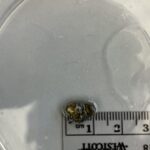 Pillbug
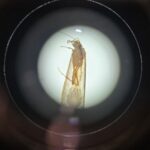 Umpachene Falls Caddisfly
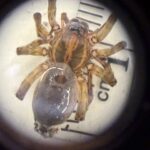 Wolf Spider