Sample information |
|
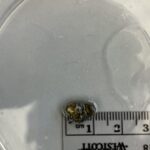
| Picture |
|
|---|---|
| Location | Approximate location: 36.14, -120.36 |
| Collection date | 12/10/2025 |
| Captive / Cultivated? | Wild-caught |
| Group | Coalinga High School |
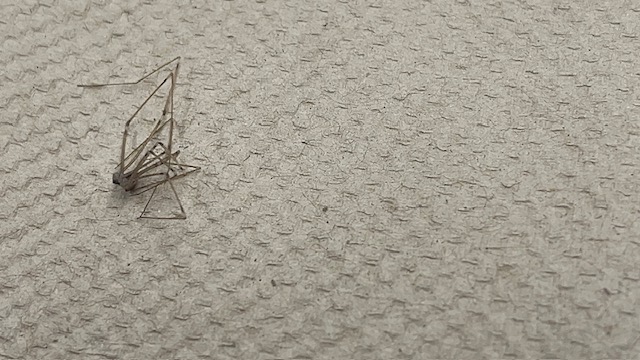
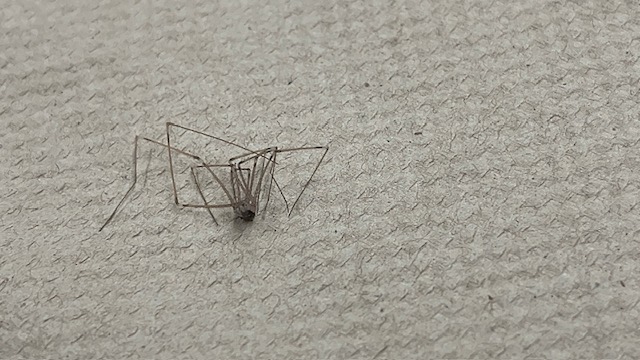
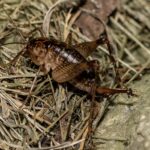
| Observations | When I caught the bug, it was in my house during the wintertime in December. it was about 70 degrees farenheight in my house, and it was sitting in the corner of the wall on top of my dresser in the hallway. It was on its web staying still. |
| Putative identification | Arthropoda Arachnida Araneae |
Methods |
|
| Extraction kit | DNeasy (Qiagen) |
| DNA extraction location | Partial abdomen |
| Single or Duplex PCR | Single Reaction |
| Gel electrophoresis system | MiniOne |
| Buffer | TBE |
| DNA stain | GelGreen |
| Gel images |
|
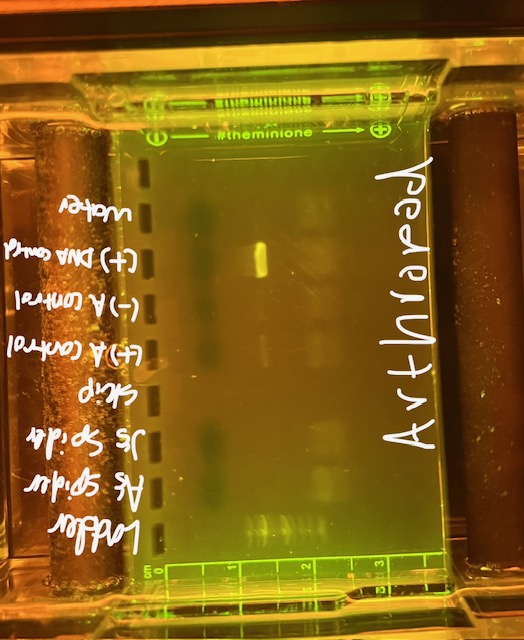
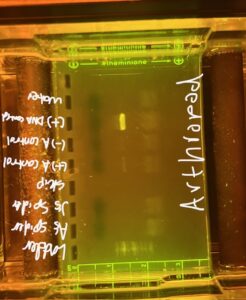
| Protocol notes | Followed miniOne Protocol- Arthropod Gel loading key:
Our Arthropod electroforesis didn’t really go as planned because we didn’t get a DNA band for the spider(A sample), and we know this will affect the results for the Wolbachia lab as well. Also, we contaminated the (-) arthropod control, which is on lane 6, by forgetting to switch tips when we were injecting the liquid into the wells.
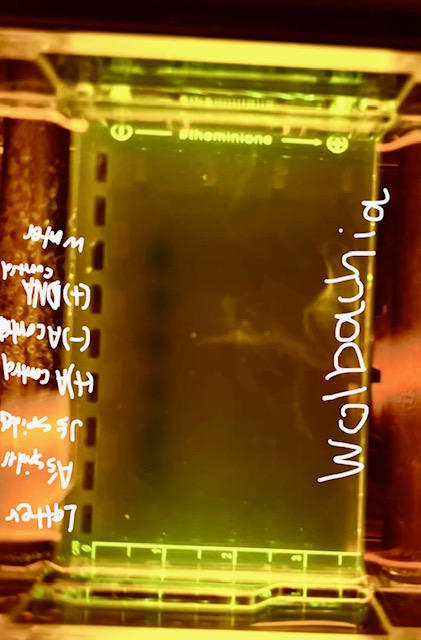
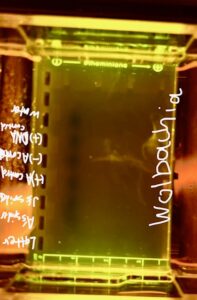
Wolbachia Gel loading key:
Our Wolbochia gel didn’t go well, but we expected this not to go as planned because of our previous Arthropod results( the one I talked about above). We didn’t get any DNA lines for Wolbachia for the spider, as well as for our (+) Arthropod control. The gel was also old, so that could be a reason why we don’t see the line. For our DNA control, we get a very faint line.
|
Results |
|
| Wolbachia presence | Unknown |
| Confidence level | Low |
| Explanation of confidence level | My confidence level is pretty low in this lab. In my group, the Arthropod gel we did did not get any results when it came to the spider DNA. We messed something up during our PCR, which prevented us from obtaining Arthropod DNA; therefore, we cannot say our arthropod is infected with Wolbachia. |
| Wolbachia 16S sequence | |
| Arthropod COI sequence |
|
| Summary | |
 (no title)
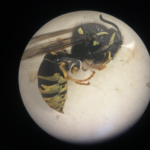 Yellowjacket Wasp
 Pillbug
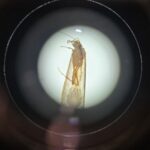 Umpachene Falls Caddisfly
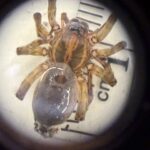 Wolf Spider