Sample information |
|
| Picture |
|
|---|---|
| Location | Approximate location: 33.86, -118.26 |
| Collection date | 04/22/2026 |
| Captive / Cultivated? | Wild-caught |
| Group | California Academy of Mathematics and Science |
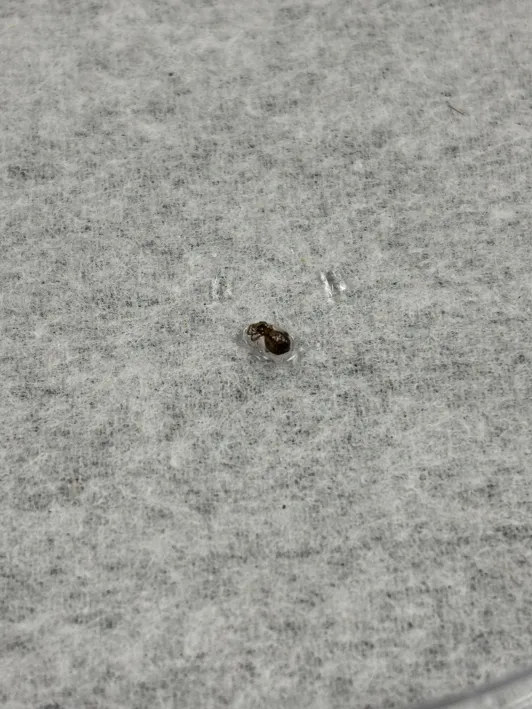
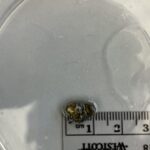
| Observations | Our group found this small spider near a stone tile on the edge of a school garden in the spring on a sunny day near school. We collected it in the morning, 9AM, at around 70 degrees F outside. We attached a picture of the area we collected the pillbug from above, and there did not appear to be additional spiders of its kind in the area. |
| Putative identification | Arthropoda Arachnida Araneae Linyphiidae Mermessus Mermessus fradeorum |
Methods |
|
| Extraction kit | DNeasy (Qiagen) |
| DNA extraction location | Whole arthropod |
| Single or Duplex PCR | Duplex Reaction |
| Gel electrophoresis system | MiniPCR |
| Buffer | 1X TAE |
| DNA stain | uv |
| Gel images |
|
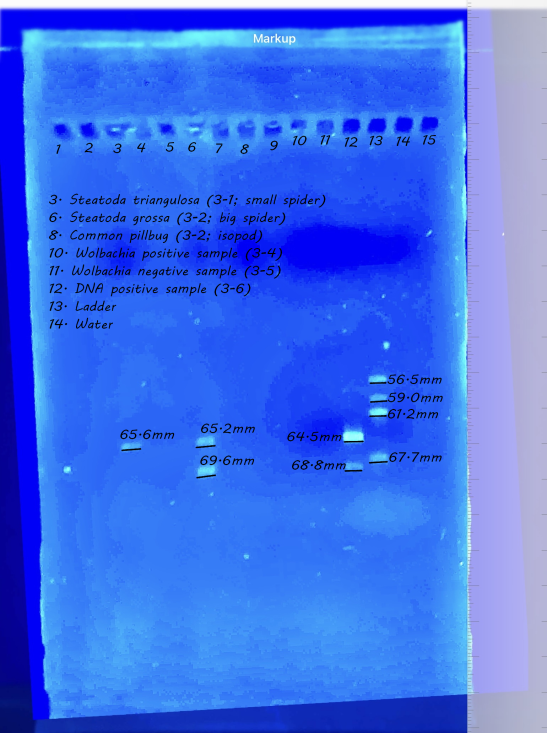
| Protocol notes | DNA Extraction The spider was too small to precisely isolate and separate the abdomen DNA extraction, so the entire specimen was crushed up thoroughly for our sample DNA extraction. Gel Electrophoresis The following lane order for our gel:
Data Analysis We had problems with our positive and negative Wolbachia controls, namely we had to rush part of the process for running our samples due to time constraints. The small spider sample well displayed one single visible band, a different quantity and position as the two visible bands from the positive Wolbachia DNA control. The putative identification for this small spider specimen was revealed to be Mermessus fradeorum, not Steatoda triangulosa. The assumption for the latter considered frequently-appearing native spider species to Southern California, but while the specimen we assessed has no recorded sightings in California, it is still frequently sighted in North America and is extremely small relative to other spiders, making visual detection difficult. This species is confirmed to be infected by Wolbachia for the most part. |
Results |
|
| Wolbachia presence | No |
| Confidence level | High |
| Explanation of confidence level | While the DNA positive sample and ladder went well, the Wolbachia positive and negative samples showed no bands. This is likely a mishap during Wolbachia sample extraction, and keeps us from fully confirming the precision of our samples. Despite this, at least one band should have appeared on both Wolbachia samples, and the single band in our small spider sample (Mermessus fradeorum) indicates that the sample was successfully extracted, but may not contain Wolbachia DNA exactly as the electrophoresis band distance results indicate unequal band sizes between the Mermessus fradeorum sample and the positive Wolbachia DNA control. Furthermore, we did not run into problems with the small spider DNA extraction in the process, and so we can be relatively confident that the small spider (Mermessus fradeorum) was not infected with Wolbachia. While the species is known to be frequently infected by Wolbachia, it could be possible this particular individual sample was not infected, and we have minimal method to precisely confirm either result. |
| Wolbachia 16S sequence | Download FASTA
Download AB1
GGNGTTGCATGGCTGTCGTCAGCTCGTGTCGTGAGATGTTGGGTTAAGTCCCGCAACGAGCGCAACCCTCATCCTTAGTTACCATCAGGTAATGCTGGGGACTTTAAGGAAACTGCCAGTGATAAACTGGAGGAAGGTGGGGATGATGTCAAGTCATCATGGCCCTTATGGAGTGGGCTACACACGTGCTACAATGGTGGCTACAATGGGCTGCAAAGTCGCGAGGCTAAGCTAATCCCTTAAAGGCCATCTCAGTTCGGATTGTACTCTGCAACTCGAGTGCATGAAGTTGGAATCGCTAGTAATCGTGGATCAGCACGCCACGGTGAATACGTTCTCGGGTCTTGTACACACTGCCCGTCACGCCATGGGAATTGGNTTC
BLAST at The Wolbachia Project BLAST at NCBI
|
| Arthropod COI sequence | Download FASTA
Download AB1
GGGGNTTGATCTGCTATAGTAGGAACGGCAATAAGAGTATTAATTCGAATTGAATTAGGACAAGTTGGAAGACTTTTGGGAGATGATCAATTATATAATGTTATTGTTACAGCTCATGCTTTTGTTATAATCTTTTTTATAGTAATACCTATTTTAATTGGGGGATTTGGAAATTGATTAGTGCCTATAATATTGGGTGCACCTGATATAGCTTTTCCTCGTATAAATAATTTAAGATTTTGATTATTACCCCCATCTTTGTTATTATTATTTATTTCTAGAATAGATGAAATAGGAGTTGGGGCTGGTTGAACTGTTTATCCACCTCTAGCTTCTTTAGAAGGTCATTCTGGTAGTTCAATAGATTTTGCAATTTTTTCTTTGCATTTAGCTGGTGCTTCTTCAATTATAGGGGCTATTAATTTTATTTCTACAATTTTAAATATACGAGGATATGGAATAAGAATAGAAAAAATTCCTTTATTTGTTTGGTCTGTTTTAATTACTGCTGTTTTGTTATTATTATCTTTACCTGTTTTAGCAGGTGCTATTACTATACTTTTAACTGATCGAAATTTTAATACTTCGTTTTTTGATCCTTCTGGGGGAGGGGATCCCGTGTTATTTCAACATTTATTTTGATTTTTTGGTCACCTGNAAAA
BLAST at The Wolbachia Project BLAST at NCBI
|
| Summary | The Mermessus fradeorum was found to be negative for Wolbachia. |
 (no title)
 Yellowjacket Wasp
 Pillbug
 Umpachene Falls Caddisfly
 Wolf Spider