Sample information |
|
| Picture |
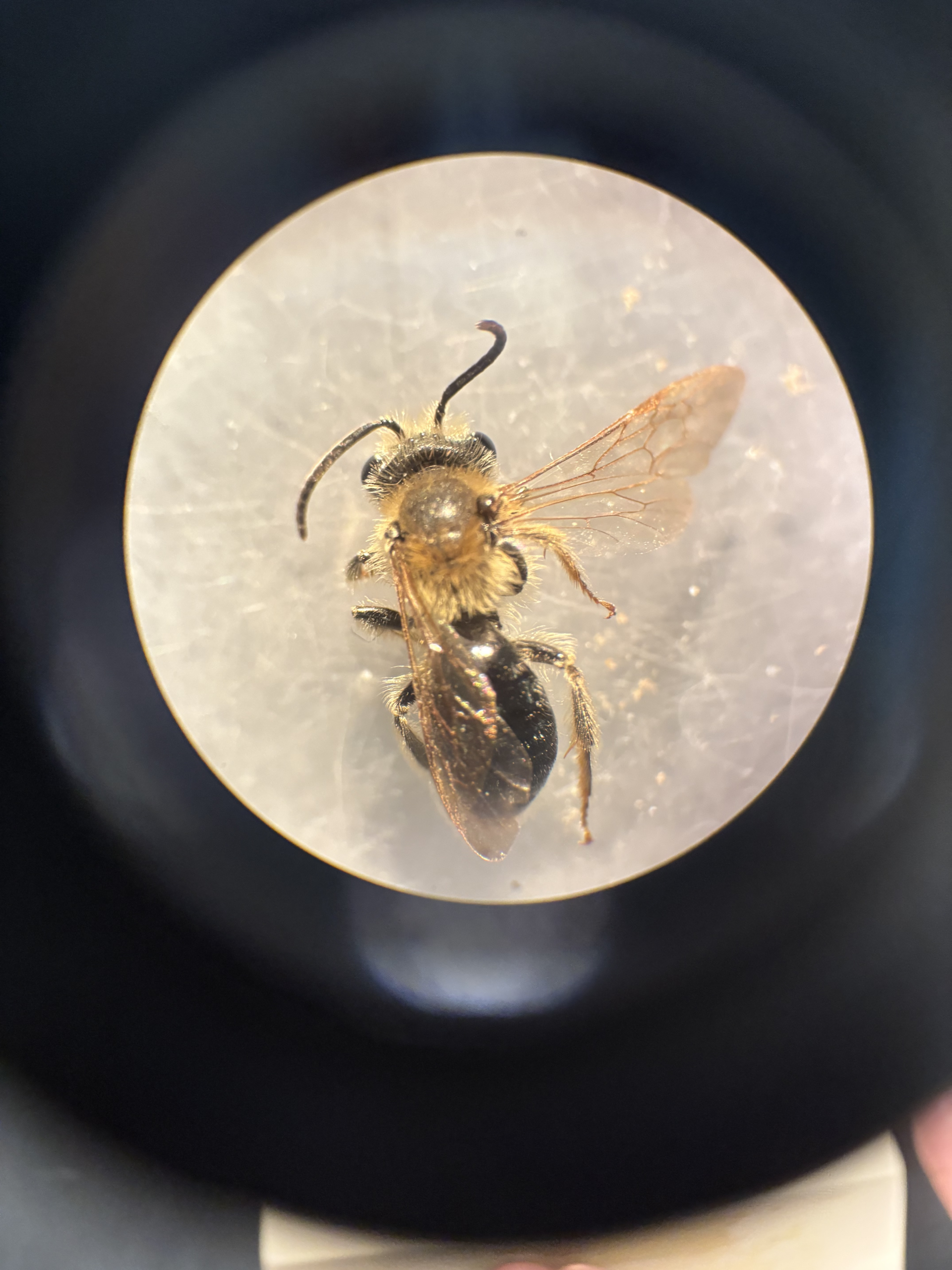
|
|---|---|
| Location | No map location data available. |
| Collection date | |
| Captive / Cultivated? | Wild-caught |
| Group | Thomas Jefferson High School for Science and Technology |
| Observations | A small bee with one of its wings missing and an antenna bent. The bee seems to be fuzzy with a little hump on its back. The bee was captured in the grass by a small brook near the school. |
| Putative identification | Arthropoda Insecta Hymenoptera Colletidae |
Methods |
|
| Extraction kit | DNeasy (Qiagen) blood and tissue kit |
| DNA extraction location | Abdomen |
| Single or Duplex PCR | Single Reaction |
| Gel electrophoresis system | MiniPCR |
| Buffer | TBE |
| DNA stain | SYBR Safe |
| Gel images |
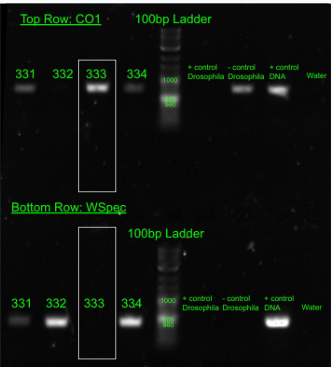
|
| Protocol notes | To obtain the DNA, we cut a portion of the bee’s abdomen. None of the exoskeletons was included. Extraction of the soft tissue from Bee 333 went well. After extracting the DNA, we performed a Wolbachia-specific PCR amplification and analyzed the results by gel electrophoresis. Some of the mistakes in this lab may have resulted from our releasing the contents of our pipette too soon for gel electrophoresis in CO1, sending it over the well rather than into it, or pushing the pipette too deeply and accidentally puncturing the gel. |
Results |
|
| Wolbachia presence | No |
| Confidence level | Medium |
| Explanation of confidence level | In our gel electrophoresis, the Wolbachia band for bee 333 did not light up, which would typically suggest an absence of Wolbachia. However, the gel results for the controls did not match expectations, indicating possible errors in the procedure. |
| Wolbachia 16S sequence | |
| Arthropod COI sequence | Download AB1
|
| Summary | The Colletidae was found to be negative for Wolbachia. |
 (no title)
 Yellowjacket Wasp
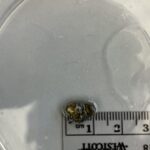 Pillbug
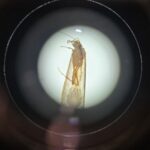 Umpachene Falls Caddisfly
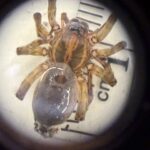 Wolf Spider