Sample information |
|
| Picture |
|
|---|---|
| Location | Approximate location: 39.08, -77.15 |
| Collection date | 09/15/2026 |
| Captive / Cultivated? | Captive / Cultivated |
| Group | Edmund Burke School |
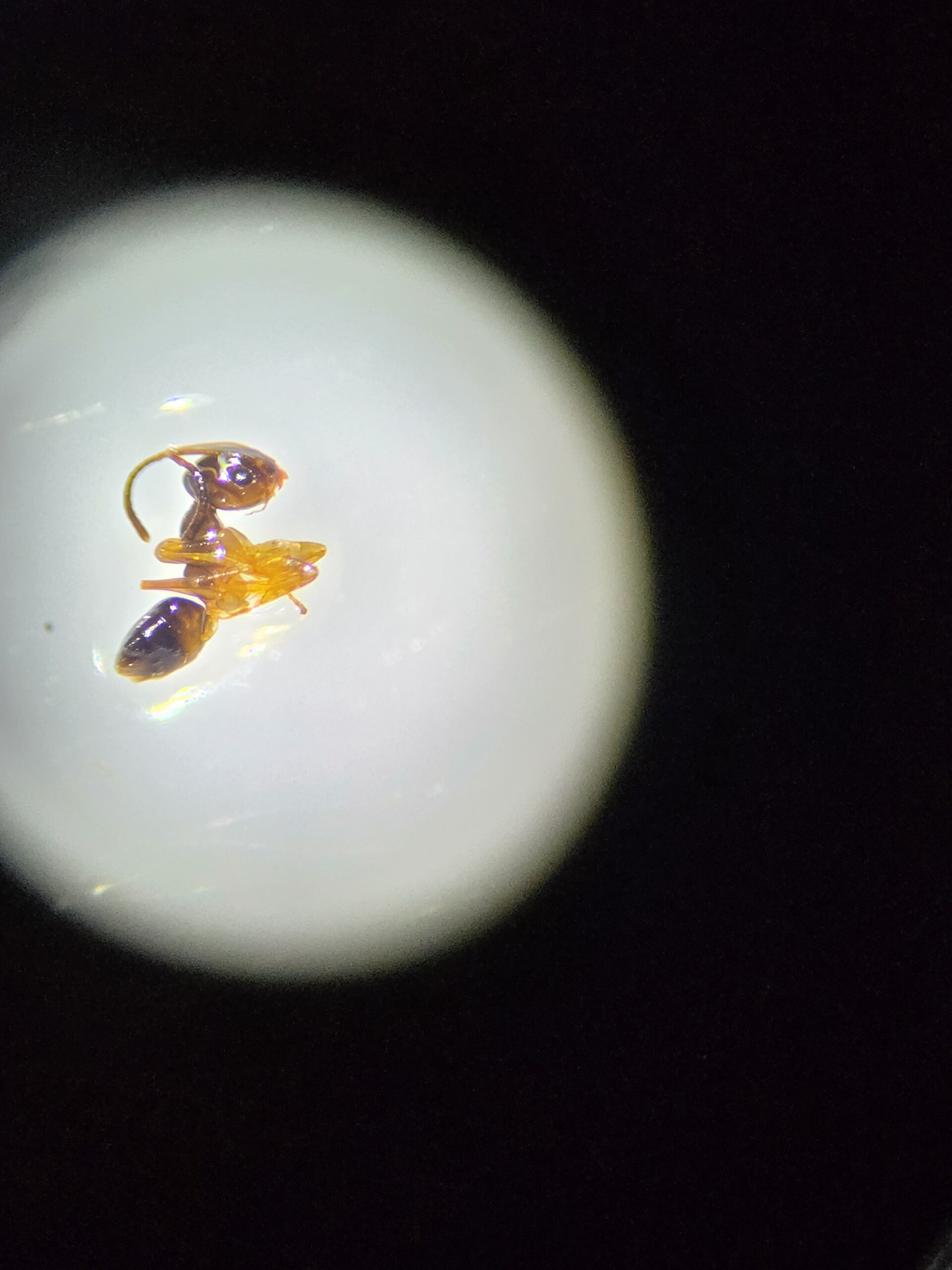
| Observations | Caught in Fall, 79 degrees Fahrenheit, in urban area. Caught at the base of a tree outside of the Edmund Burke School towards Howard field. Brown ant, 6 legs, no wings, 2 antenna, oval abdomen, 3 main body segments. |
| Putative identification | Arthropoda Insecta Hymenoptera Formicidae Tapinoma Tapinoma sessile |
Methods |
|
| Extraction kit | DNeasy (Qiagen) |
| DNA extraction location | Whole arthropod |
| Single or Duplex PCR | Single Reaction |
| Gel electrophoresis system | MiniOne |
| Buffer | TBE |
| DNA stain | GelGreen |
| Gel images |
|
| Protocol notes | DNA Extraction: DNA Extraction overall went well. E3 was extremely difficult to crush, and all the liquids ended up more viscous than before. E4 and E5 also ended with a ton of foamy bubbles on the top. When crushing E4, a lot of the liquid ended up outside the tube.
PCR: We dropped E4 tube in the waste, but was sealed and there was no cross contamination to our knowledge.
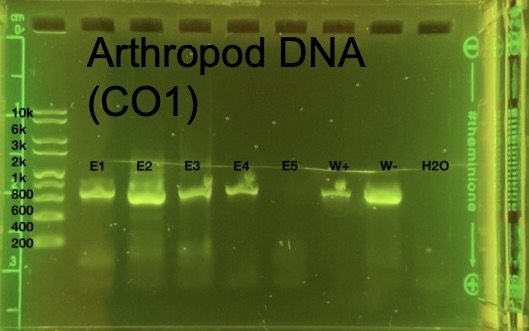
Gel electrophoresis, Arthropod CO1: For the Arthropod electrophoresis, we filled the first lane with a ladder solution, the next 5 with the respective bug DNA samples from CO1 PCR (E1, E2, E3, E4, E5), and the next 3 with a Wolbachia +, – control, and a H20. The controls all worked. Wolbachia + and – both showed a prominent band, while the water showed nothing, meaning the electrophoresis was likely successful without cross contamination.
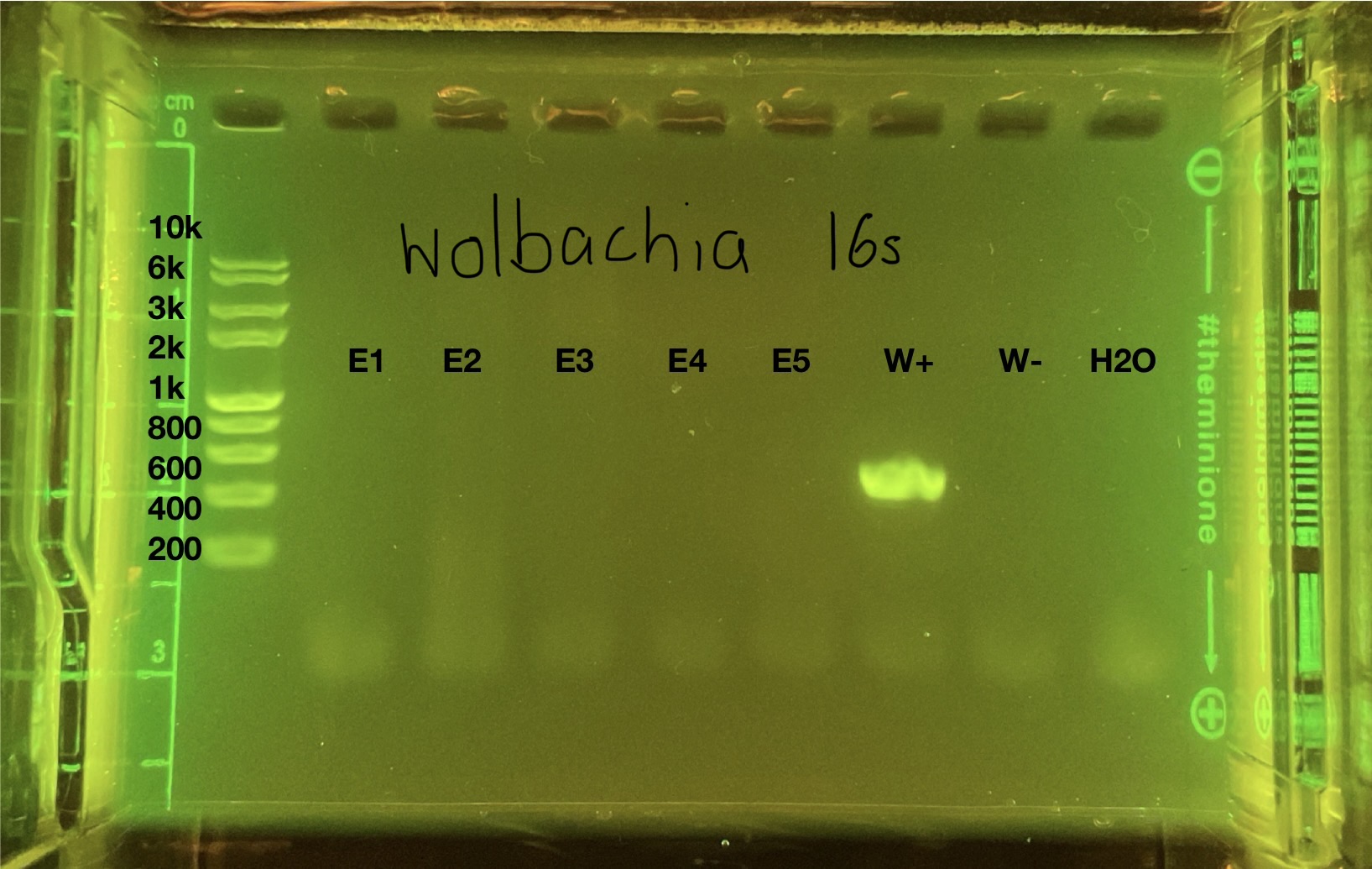
Gel electrophoresis, Wolbachia: We filled the first lane with a ladder solution, the next 5 with the respective DNA samples from Wolbachia PCR (E1, E2, E3, E4, E5), and the last 3 with a Wolbachia +, – control, and water. When filling the Wolbachia + control we poked a hole in the lane. Even with that complication, the + control worked with a prominent band, while the – and water displayed no band, letting us confidently believe there was no cross contamination. |
Results |
|
| Wolbachia presence | No |
| Confidence level | High |
| Explanation of confidence level | Specifically for E4, there was only one error, and it did not impact our results. Additionally, in every experiment, the controls acted exactly as they should have. Because the controls showed where they should, we can be confident there was no overarching problem with the PCR or Gel electrophoresis processes. Because the water and the other controls didn’t show when they shouldn’t, we can be confident in saying there was no cross contamination. |
| Wolbachia 16S sequence | |
| Arthropod COI sequence | Download FASTA
Download AB1
|
| Summary | The Tapinoma sessile was found to be negative for Wolbachia. |
 E4 Tapinoma sessile
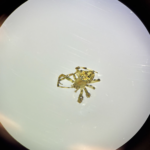 C-1 – Neoscona pratensis
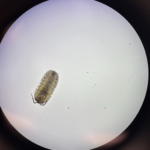 C-3 – Armadillidium nasatum, Armadillidium vulgare
 JWO 35 – Western Conifer Seedbug
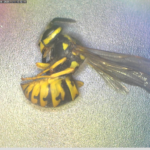 JWO 34 – Yellowjacket