Sample information |
|
| Picture |
|
|---|---|
| Location | Approximate location: 34.00, -84.47 |
| Collection date | 11/13/2023 |
| Captive / Cultivated? | Captive / Cultivated |
| Group | Walton High School |
| Observations | Colony collected underneath a rock. Temperature was about 53 degrees celsius. The colony was active but lethargic. Even so, they were aware when the rock was removed. The collected individual was a worker ant about 7mm long. It was completely black and had sensory hairs lined up along their back and down their legs. |
| Putative identification | Arthropoda |
Methods |
|
| Extraction kit | DNeasy (Qiagen) blood + tissue kit with modification P2 for ATL + N3 for AL |
| DNA extraction location | Abdomen |
| Single or Duplex PCR | Single Reaction |
| Gel electrophoresis system | MiniOne |
| Buffer | TBE |
| DNA stain | GelGreen |
| Gel images |
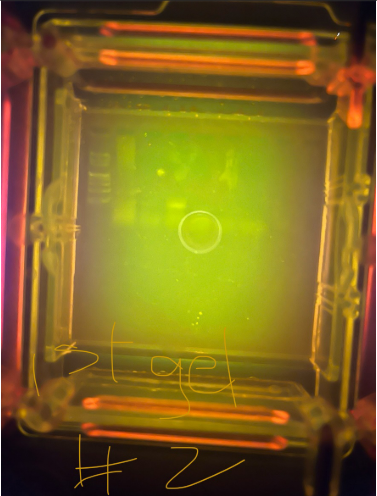
|
| Protocol notes | We did not have any distinct bands; a possible cause of this is that we did not get a chance to see the fresh PCR product and had to wait about a day, which could have resulted in diffusion. Another is that there was an error in amplification or set up, resulting in a failure of replication, in which case the bands seen are just the stain, or possibly non-specific DNA products. This organism is the 3rd column from the left. |
Results |
|
| Wolbachia presence | No |
| Confidence level | Low |
| Explanation of confidence level | |
| Wolbachia 16S sequence | |
| Arthropod COI sequence |
|
| Summary | The Arthropoda was found to be negative for Wolbachia. |
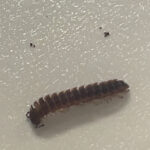 Millipede
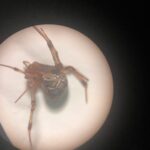 Brown Widow
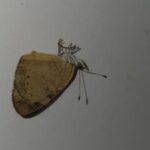 (no title)
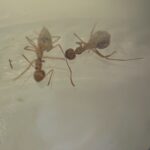 Texas Carpenter Ant
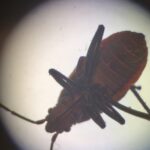 Boxelder Bug (Hemiptera)