Sample information |
|
| Picture |

|
|---|---|
| Location | Approximate location: 41.03, -112.26 |
| Collection date | 03/23/2021 |
| Captive / Cultivated? | Wild-caught |
| Group | Venture High School |
| Observations | from a distance it looked, small, shinny, and smooth, it was black and had a hard exoskeleton When I took a look up close he was a lot cooler, the legs were kind of curled, and his back had these grayish white spots that I did not spot before, there are these little hare like things on each of its legs he looks kind of like a spider but black, round, and has less body parts |
| Putative identification | Arthropoda Insecta Coleoptera |
Methods |
|
| Extraction kit | DNeasy (Qiagen) |
| DNA extraction location | Whole arthropod |
| Single or Duplex PCR | |
| Gel electrophoresis system | MiniPCR |
| Buffer | TBE |
| DNA stain | GelGreen |
| Gel images |
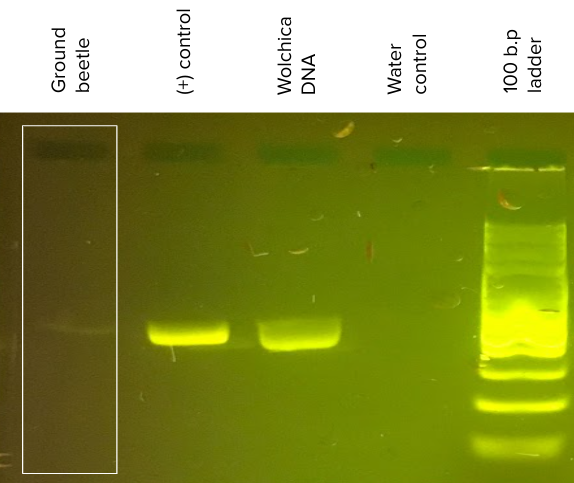
|
| Protocol notes | we followed recommended contentions for wolbachia primer’s we only used the standerd reagent from miniCPR |
Results |
|
| Wolbachia presence | Yes |
| Confidence level | Low |
| Explanation of confidence level | the band was very faint that it was hard to tell whether or not there was wolchaia but, it was only because I did not have enough DNA left |
| Wolbachia 16S sequence | |
| Arthropod COI sequence |
|
| Summary | The Coleoptera was found to be postive for Wolbachia. |
 (no title)
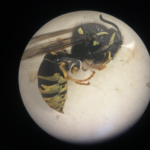 Yellowjacket Wasp
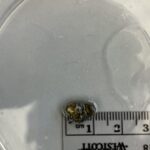 Pillbug
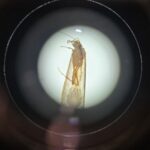 Umpachene Falls Caddisfly
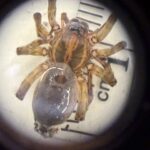 Wolf Spider