Sample information |
|
| Picture |
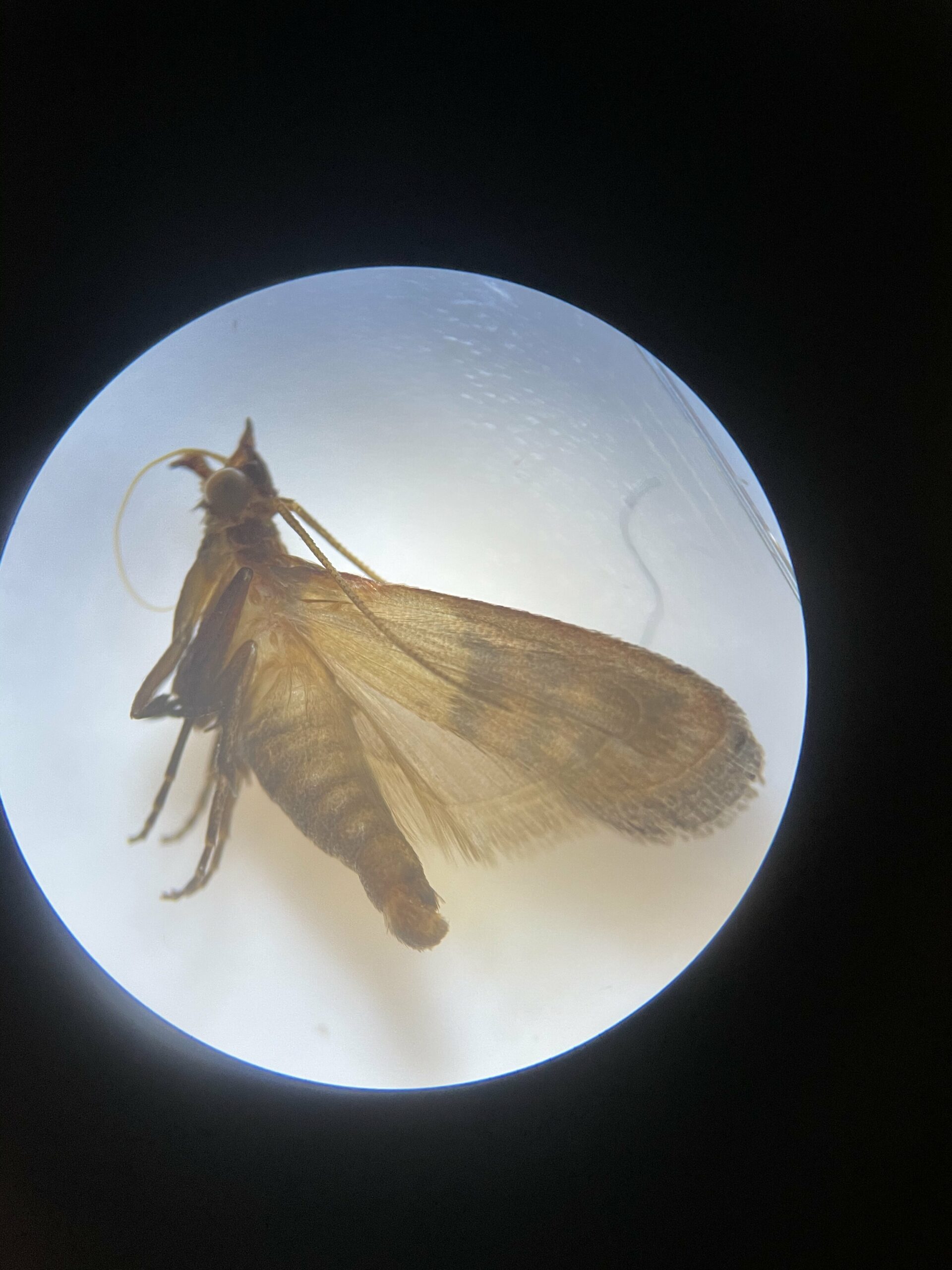
|
|---|---|
| Location | Approximate location: 37.22, -76.65 |
| Collection date | 06/26/2021 |
| Captive / Cultivated? | Wild-caught |
| Group | Hampton Roads Academy |
| Observations | The bug has a large abdominal area, a pair of antennae, 6 legs, and sturdy wings. |
| Putative identification | Arthropoda Insecta Lepidoptera |
Methods |
|
| Extraction kit | Edwards Buffer |
| DNA extraction location | Abdomen |
| Single or Duplex PCR | |
| Gel electrophoresis system | MiniOne |
| Buffer | TBE |
| DNA stain | GelGreen |
| Gel images |
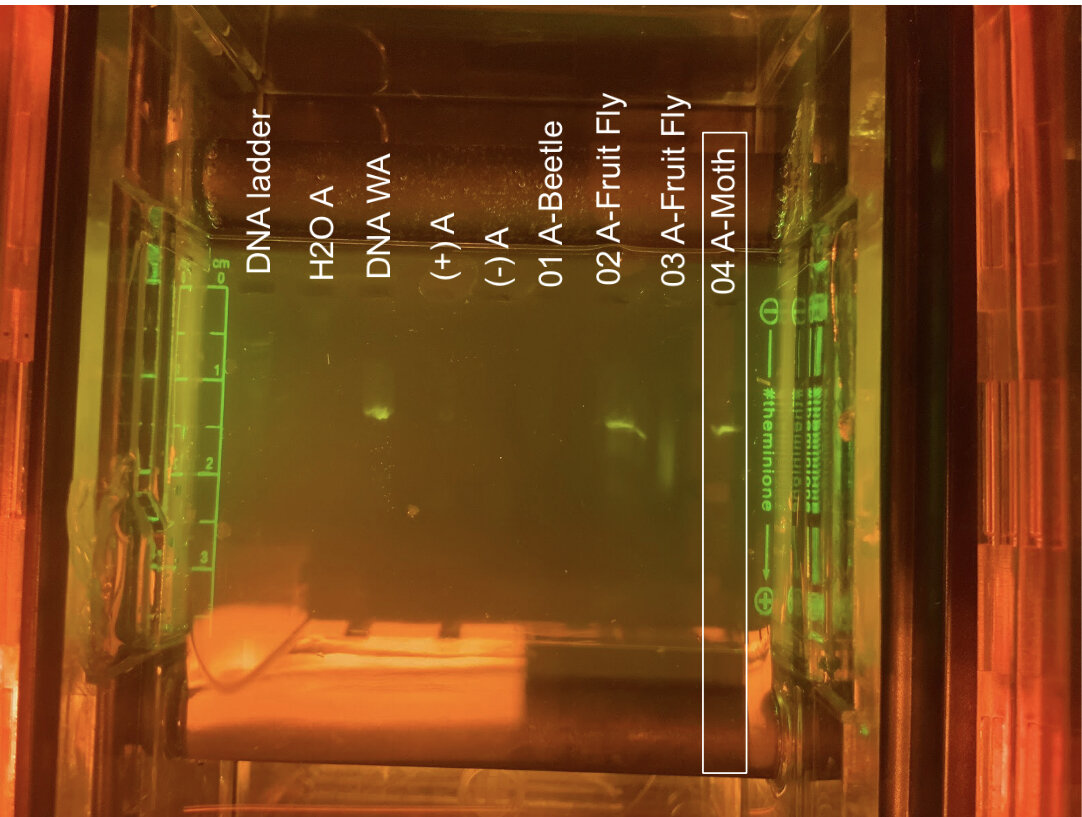
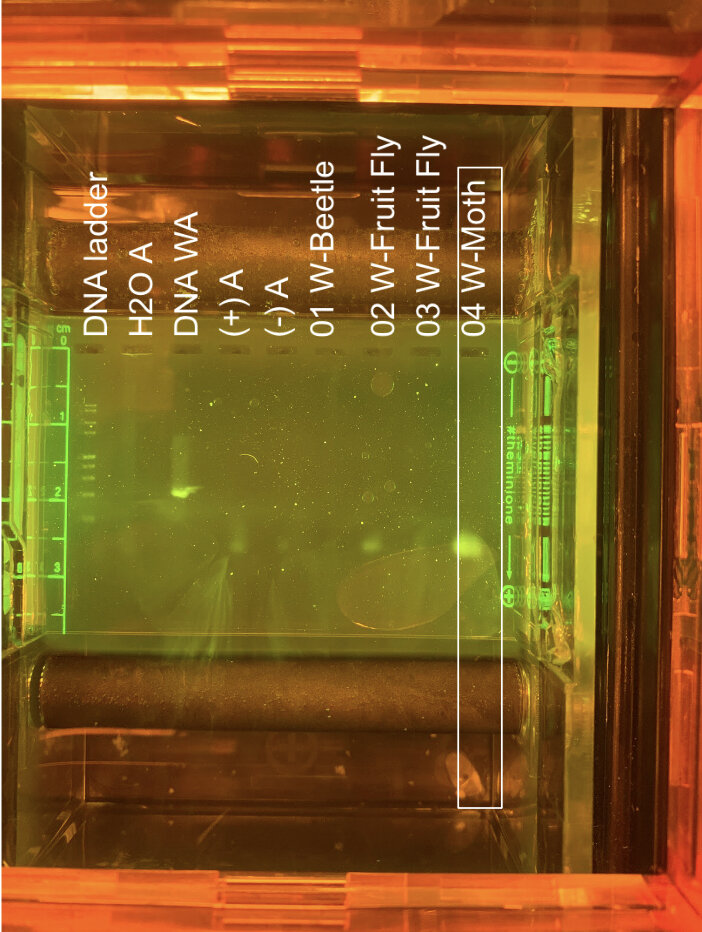
|
| Protocol notes | My pellet was barely visible after centrifuging the tubes for 5 minutes. In the moment I thought I had messed up somehow, but it turned out that the pellet was just a bright color, therefore making it difficult to see. I also feel as though I forgot to set the pipette to the right measurements when using it. |
Results |
|
| Wolbachia presence | No |
| Confidence level | Low |
| Explanation of confidence level | DNA ladder in arthropod gel was not properly loaded. Positive and negative controls did not work. Wolbachia gel positive control did not work; there may have been problems with the DNA extraction. |
| Wolbachia 16S sequence | |
| Arthropod COI sequence |
|
| Summary | The Lepidoptera was found to be negative for Wolbachia. |
 (no title)
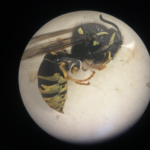 Yellowjacket Wasp
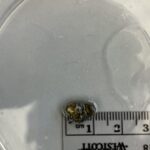 Pillbug
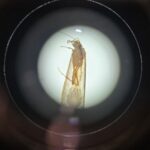 Umpachene Falls Caddisfly
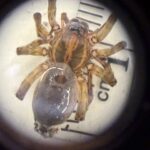 Wolf Spider