Sample information |
|
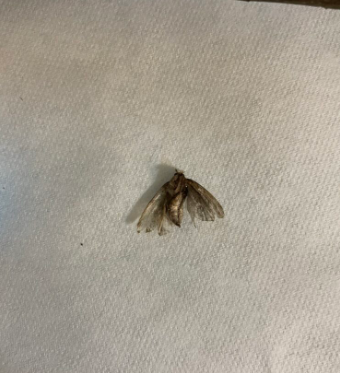
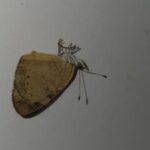
| Picture |
|
|---|---|
| Location | No map location data available. |
| Collection date | |
| Captive / Cultivated? | Wild-caught |
| Group | The School for Science and Math at Vanderbilt |
| Observations | |
| Putative identification | Arthropoda Insecta Lepidoptera |
Methods |
|
| Extraction kit | DNeasy (Qiagen) |
| DNA extraction location | Partial abdomen |
| Single or Duplex PCR | Single Reaction |
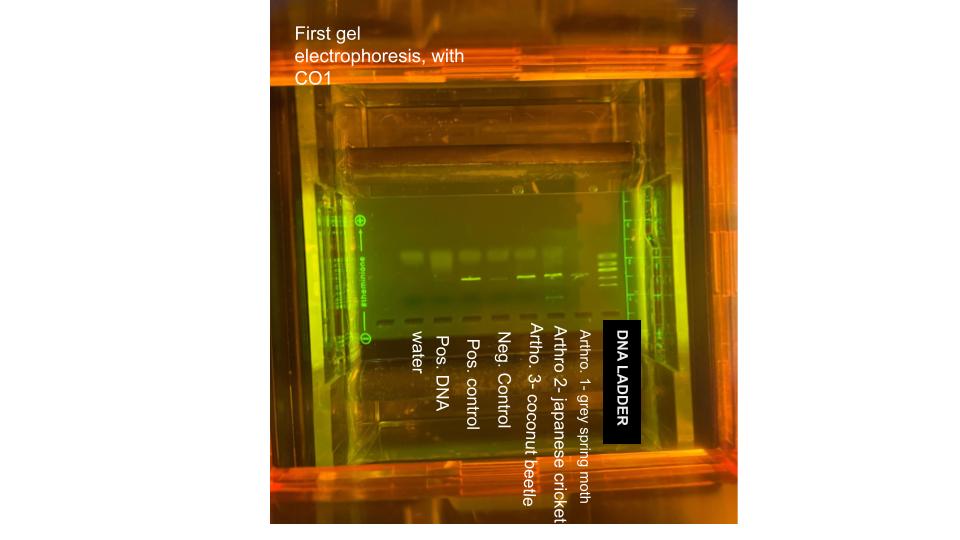
| Gel electrophoresis system | MiniOne |
| Buffer | TBE |
| DNA stain | GelGreen |
| Gel images |

|
| Protocol notes | |
Results |
|
| Wolbachia presence | No |
| Confidence level | Medium |
| Explanation of confidence level | although the nucleotide sequences proved that the morphology was incorrect, there is more trust in the nucleotide sequence then but because it is only a 98 percent of a match, the remaining 2 percent could be a potential situation where nobody has investigated or experimented with my certain type of anthropod. |
| Wolbachia 16S sequence | |
| Arthropod COI sequence |
|
| Summary | The Lepidoptera was found to be negative for Wolbachia. |
 Millipede
 Brown Widow
 (no title)
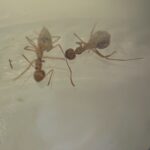 Texas Carpenter Ant
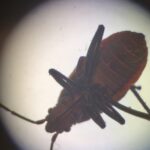 Boxelder Bug (Hemiptera)