Sample information |
|
| Picture |
|
|---|---|
| Location | Approximate location: 41.79, -87.60 |
| Collection date | 08/08/2023 |
| Captive / Cultivated? | Wild-caught |
| Group | Thrive Scholars |
| Observations | |
| Putative identification | Arthropoda Malacostraca Isopoda Armadillidae Armadillidium |
Methods |
|
| Extraction kit | DNeasy (Qiagen) |
| DNA extraction location | Whole arthropod |
| Single or Duplex PCR | Single Reaction |
| Gel electrophoresis system | Standard electrophoresis system |
| Buffer | TBE |
| DNA stain | GelRed |
| Gel images |
|
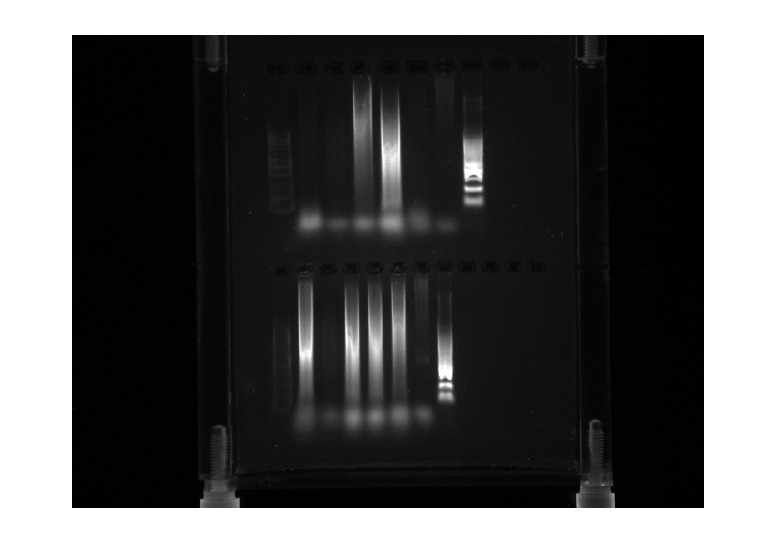
| Protocol notes | We followed the protocol on the website. The top lanes use the arthropod primer and the bottom lanes use the wolbachia primer. |
Results |
|
| Wolbachia presence | No |
| Confidence level | Low |
| Explanation of confidence level | The pill bug is Wolbachia negative because there is no DNA band on Lane 3 of the Wolbachia gel. However, the confidence level is low because there is no DNA on lane 3 on arthropod gel even though the specimen is an arthropod. This suggests that there may be cross-contamination during the gel electrophoresis. There is a low confidence because the gel has a streaky band. |
| Wolbachia 16S sequence | |
| Arthropod COI sequence |
|
| Summary | The Armadillidium was found to be negative for Wolbachia. |
 Millipede
 Brown Widow
 (no title)
 Texas Carpenter Ant
 Boxelder Bug (Hemiptera)