Sample information |
|
| Picture |
|
|---|---|
| Location | Approximate location: 38.94, -77.06 |
| Collection date | 09/19/2023 |
| Captive / Cultivated? | Wild-caught |
| Group | Edmund Burke School |
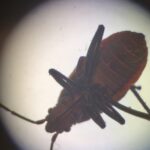
| Observations | Arthropod caught on cement paving surrounded by grass and trees. This took place at the end of summer/beginning of fall. the temperature outside was around 80 degrees. The Arthropod is a reddish black color, with 6 legs, a large abdomen, a smaller thorax, and two antennae. |
| Putative identification | Arthropoda Insecta Hymenoptera Formicidae Camponotus Camponotus chromaiodes |
Methods |
|
| Extraction kit | DNeasy (Qiagen) |
| DNA extraction location | Abdomen |
| Single or Duplex PCR | Single Reaction |
| Gel electrophoresis system | MiniOne |
| Buffer | TBE |
| DNA stain | GelGreen |
| Gel images |
|
| Protocol notes | |
Results |
|
| Wolbachia presence | Yes |
| Confidence level | High |
| Explanation of confidence level | |
| Wolbachia 16S sequence | Download AB1
|
| Arthropod COI sequence | Download AB1
|
| Summary | The Camponotus chromaiodes was found to be postive for Wolbachia. |
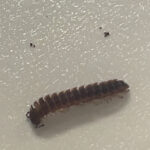 Millipede
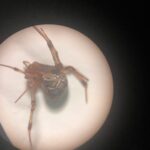 Brown Widow
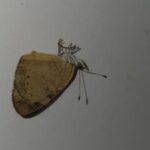 (no title)
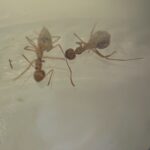 Texas Carpenter Ant
 Boxelder Bug (Hemiptera)