Sample information |
|
| Picture |
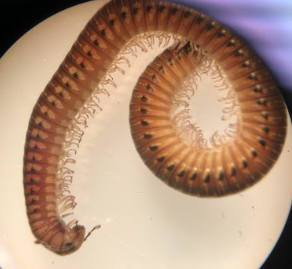
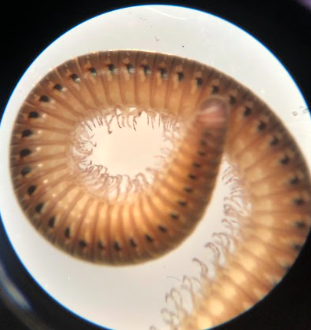
|
|---|---|
| Location | Approximate location: 33.99, -84.44 |
| Collection date | 11/12/2024 |
| Captive / Cultivated? | Wild-caught |
| Group | Walton High School |
| Observations | Medium brown body Light brown and black spots decorate the specimen’s back Ombre light to medium brown legs 2 antennae coming out of the head with 5 segments each Many segments making up its body |
| Putative identification | Arthropoda Diplopoda Julida Julidae |
Methods |
|
| Extraction kit | DNeasy (Qiagen) |
| DNA extraction location | Gonads dissected |
| Single or Duplex PCR | Single Reaction |
| Gel electrophoresis system | MiniPCR |
| Buffer | TBE |
| DNA stain | GelGreen |
| Gel images |
|
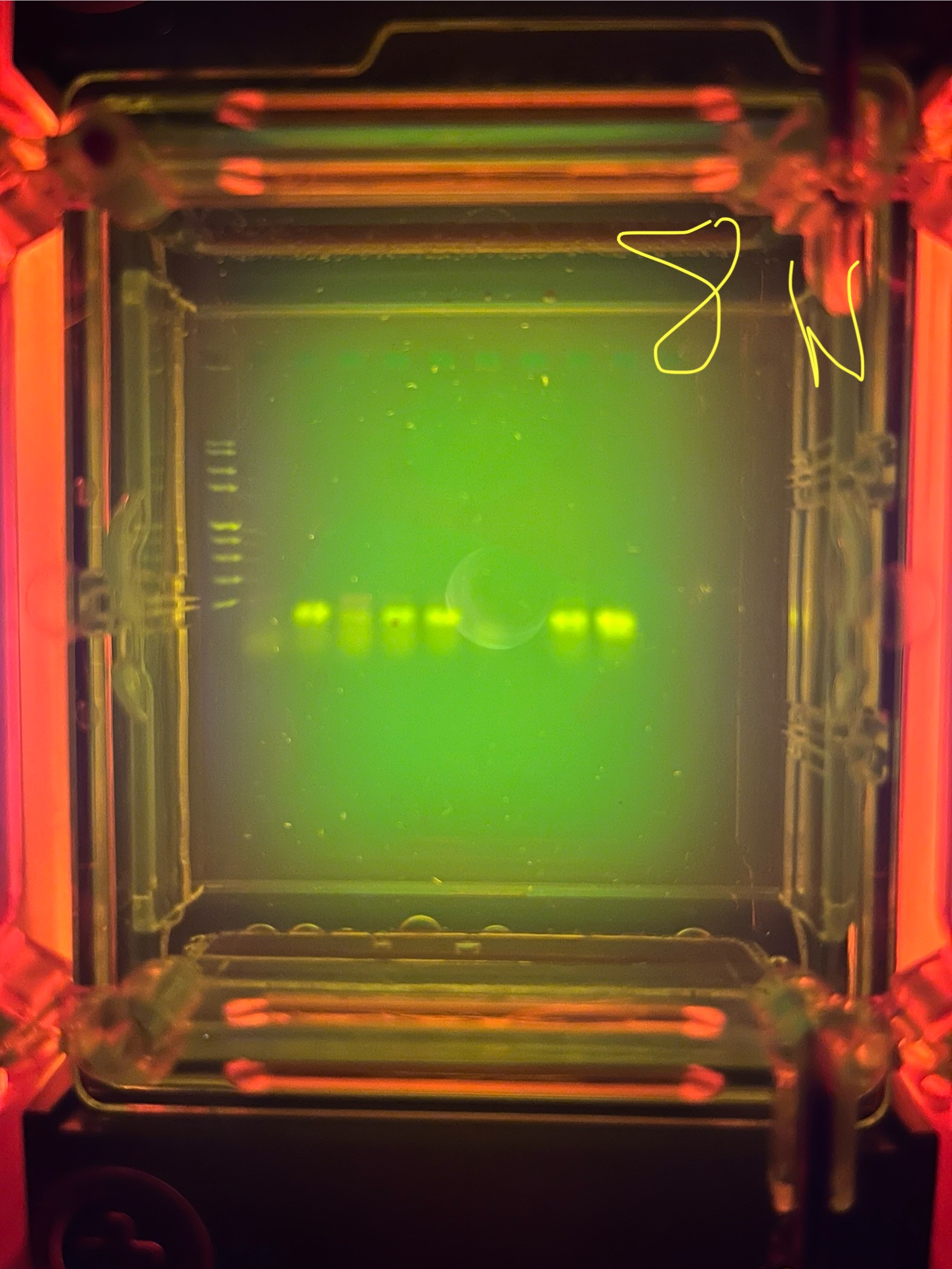
| Protocol notes | Mini gel was ran separately from arthropod so results show only for Wolbachia. Lane 2 shows negative for Wolbachia. |
Results |
|
| Wolbachia presence | No |
| Confidence level | High |
| Explanation of confidence level | The second lane shows no distinct line anywhere, and Wolbachia was the only amplified DNA, so there is no Wolbachia present. |
| Wolbachia 16S sequence | |
| Arthropod COI sequence |
|
| Summary | The Julidae was found to be negative for Wolbachia. |
 (no title)
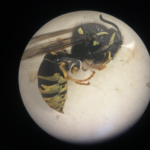 Yellowjacket Wasp
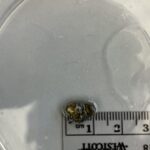 Pillbug
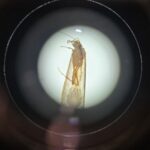 Umpachene Falls Caddisfly
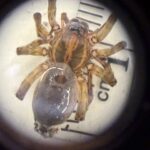 Wolf Spider