Sample information |
|
| Picture |
|
|---|---|
| Location | Approximate location: 36.14, -120.36 |
| Collection date | 11/10/2025 |
| Captive / Cultivated? | Wild-caught |
| Group | Coalinga High School |
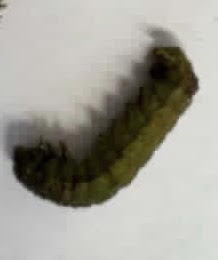
| Observations | In my observations was that when it was alive the caterpillar was a green shade and then later on when it died it turned to a black color as if it had burned or if someone had toasted it alive. |
| Putative identification | Arthropoda |
Methods |
|
| Extraction kit | DNeasy (Qiagen) |
| DNA extraction location | Abdomen |
| Single or Duplex PCR | Single Reaction |
| Gel electrophoresis system | MiniOne |
| Buffer | TBE |
| DNA stain | GelGreen |
| Gel images |
|
| Protocol notes | Followed Mini one Protocol. |
Results |
|
| Wolbachia presence | Unknown |
| Confidence level | Medium |
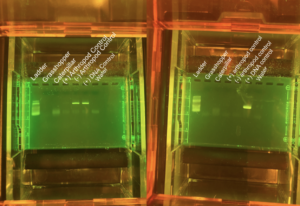
| Explanation of confidence level | My confidence level is on medium because I think we did something wrong when we were grinding the DNA and didn’t grind it long enough for it to actually work. Our caterpillar and positive control band did not show up for Wolbachia electrophoresis gel. This is why we are unsure if the caterpillar has Wolbachia because the positive control didn’t work. Arthropod Wolbachia
|
| Wolbachia 16S sequence | |
| Arthropod COI sequence |
|
| Summary | |
 (no title)
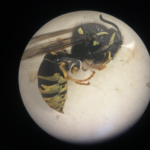 Yellowjacket Wasp
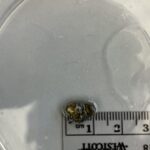 Pillbug
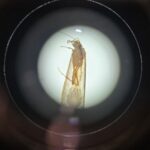 Umpachene Falls Caddisfly
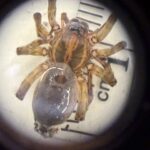 Wolf Spider