Sample information |
|
| Picture |
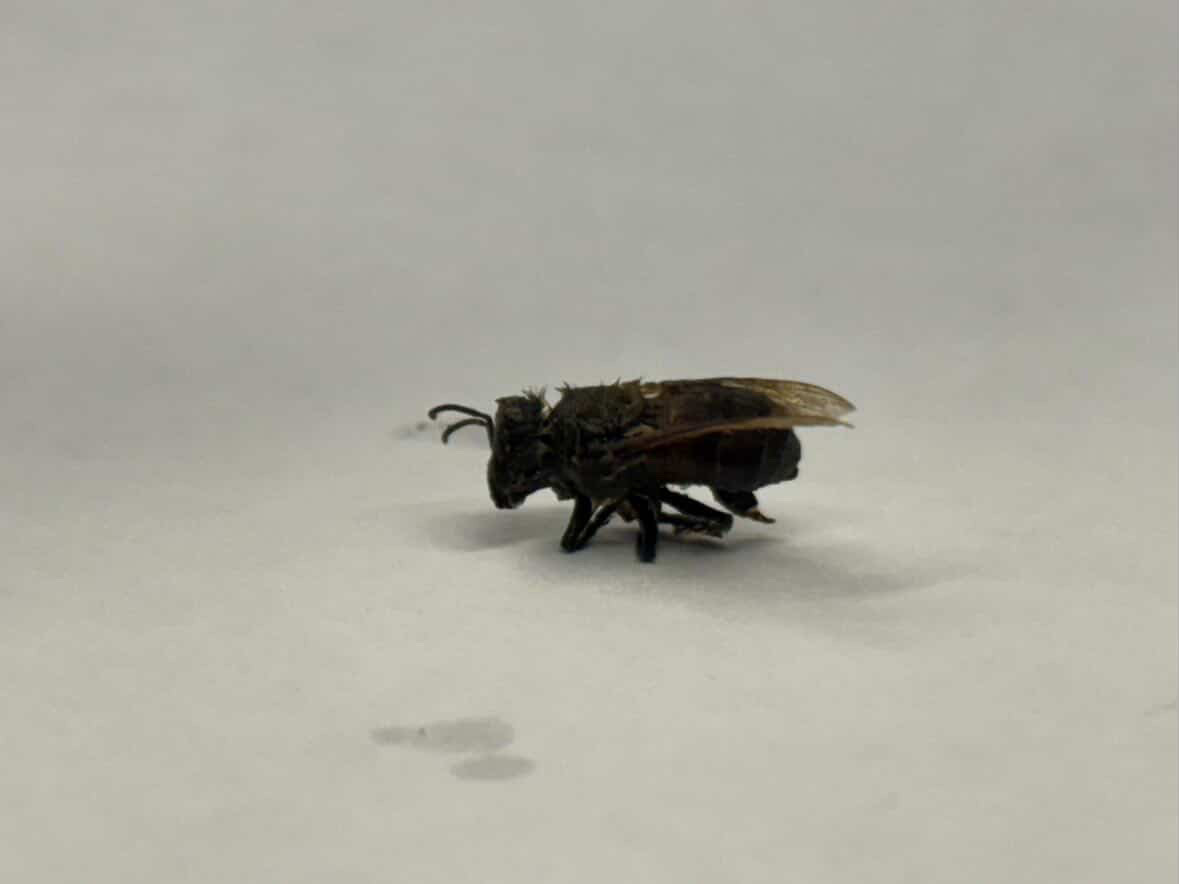
|
|---|---|
| Location | Approximate location: 36.14, -120.36 |
| Collection date | 12/13/2025 |
| Captive / Cultivated? | Wild-caught |
| Group | Coalinga High School |
| Observations | The bee was found in a backyard next to a pool after it had rained. |
| Putative identification | Arthropoda Insecta Hymenoptera Apidae Apis Apis mellifera |
Methods |
|
| Extraction kit | DNeasy (Qiagen) |
| DNA extraction location | Abdomen |
| Single or Duplex PCR | Single Reaction |
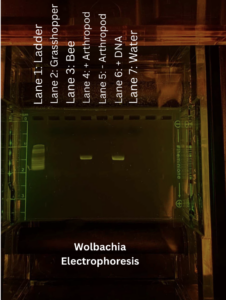
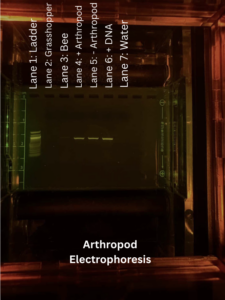
| Gel electrophoresis system | MiniOne |
| Buffer | TBE |
| DNA stain | GelGreen |
| Gel images |
|
| Protocol notes | Followed MiniOne Protocol Lane 1: DNA Ladder Lane 2: Sample 1, Grasshopper Lane 3: Sample 2, Bee Lane 4: Positive arthropod control Lane 5: Negative arthropod control Lane 6: DNA positive control Lane 7: Water
|
Results |
|
| Wolbachia presence | No |
| Confidence level | High |
| Explanation of confidence level | Our confidence level is high because all of our controls came out the way they were supposed to come out. Then, when we tested the bee for arthropod DNA, we found a band. After we tested it for Wolbachia DNA, no band was detected. Because everything came out the way they were supposed to, we can confidently say that the bee doesn’t have Wolbachia.
|
| Wolbachia 16S sequence | |
| Arthropod COI sequence |
|
| Summary | The Apis mellifera was found to be negative for Wolbachia. |
 (no title)
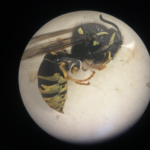 Yellowjacket Wasp
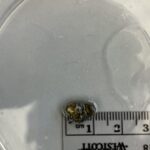 Pillbug
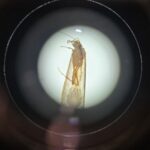 Umpachene Falls Caddisfly
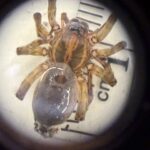 Wolf Spider